
From Behind Bars, Aung San Suu Kyi Casts a Long Shadow Over Myanmar
Even Behind Bars, Myanmar’s Former Leader Continues to Shape the Nation’s Fight for Democracy”
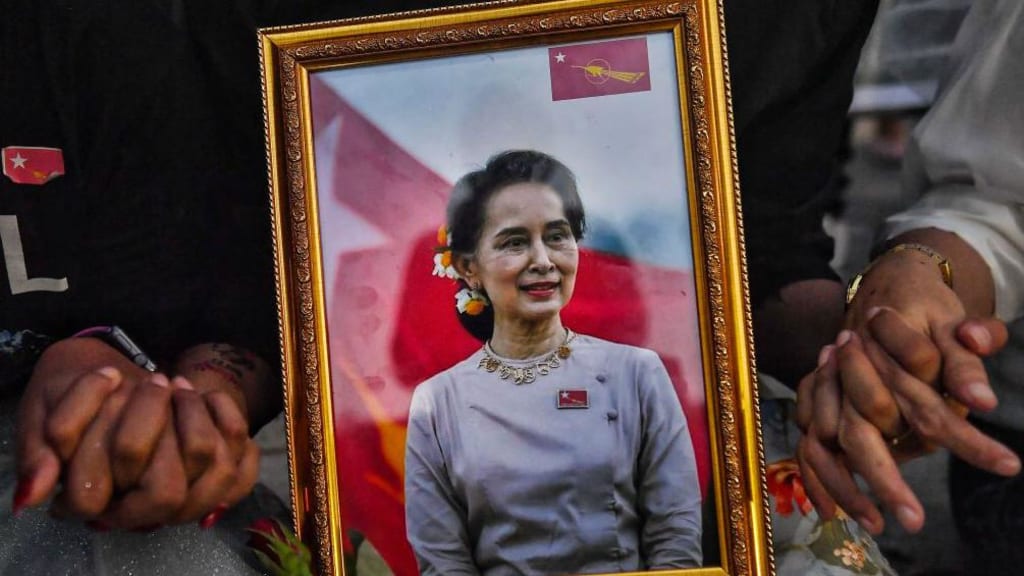
Aung San Suu Kyi, Myanmar’s former civilian leader and Nobel Peace Prize laureate, continues to influence the nation’s political landscape despite being imprisoned since the February 2021 military coup. Her detention has not only intensified global attention on Myanmar’s political crisis but also shaped the country’s ongoing struggle for democracy, human rights, and international recognition.
Suu Kyi, once celebrated as a symbol of nonviolent resistance and democratic hope, now represents a complex and contested figure. Her rise to power came after decades of house arrest imposed by Myanmar’s military junta, known as the Tatmadaw. Her leadership in the National League for Democracy (NLD) culminated in a landslide victory during the 2015 elections, ending decades of military-backed rule and bringing hope to a nation long dominated by authoritarian control.
However, Suu Kyi’s legacy is now deeply intertwined with Myanmar’s contemporary turmoil. Following the military takeover in 2021, she has faced multiple charges ranging from corruption to violating state secrets, widely criticized by international observers as politically motivated. Her detention has effectively removed the country’s most prominent civilian voice from direct political participation, yet her symbolic presence remains formidable. Across Myanmar, images of Suu Kyi continue to appear in protests, murals, and digital campaigns, emphasizing the enduring influence of her persona.
The military’s attempt to suppress her voice has paradoxically amplified it. Pro-democracy activists, ethnic minority groups, and everyday citizens invoke her legacy as a unifying symbol against the junta’s authoritarianism. Nationwide protests, strikes, and acts of civil disobedience—collectively known as the Civil Disobedience Movement (CDM)—often reference Suu Kyi’s long-standing advocacy for democracy, illustrating how her ideals continue to inspire resistance even without her physical presence in politics.
Internationally, Suu Kyi’s imprisonment has drawn widespread condemnation. Organizations such as the United Nations and Human Rights Watch have repeatedly called for her release, arguing that her detention violates fundamental democratic principles and human rights. Countries across Europe, North America, and parts of Asia have imposed sanctions on Myanmar’s military leadership, highlighting the broader geopolitical impact of Suu Kyi’s absence. Her case has become a litmus test for the international community’s commitment to democracy in Southeast Asia.
Yet, her shadow is not without controversy. Suu Kyi’s tenure as Myanmar’s de facto leader was criticized internationally for her handling of the Rohingya crisis, during which Myanmar’s military conducted operations that the UN described as ethnic cleansing. This aspect of her legacy complicates her image as a universal democratic icon. While she remains a symbol of resistance against the military coup, her previous political decisions continue to draw scrutiny and debate among scholars, activists, and policymakers worldwide.
Her continued influence also raises critical questions about Myanmar’s future. The military junta, despite holding the reins of power, struggles to achieve legitimacy both domestically and internationally. Suu Kyi’s prolonged absence from politics has not quelled dissent; instead, it has allowed grassroots movements and emerging political actors to mobilize around her democratic ideals. These movements, however fragmented, demonstrate the enduring power of her symbolic leadership in shaping Myanmar’s resistance narrative.
Moreover, Suu Kyi’s imprisonment underscores the delicate balance between authoritarian control and popular will. While the military may dominate the country’s institutions and enforce its authority through force, it cannot fully erase the political imagination and aspirations she fostered over decades. From behind bars, Suu Kyi continues to cast a long shadow, reminding both the junta and the world that Myanmar’s struggle for democracy is far from over.
In conclusion, Aung San Suu Kyi remains a potent symbol of Myanmar’s democratic hopes, even as she sits confined within military custody. Her life and leadership encapsulate the paradox of influence without freedom: she may be physically restrained, but her ideals and legacy continue to shape the nation’s political discourse. For Myanmar and the international community, her story is a stark reminder that the fight for democracy often persists long after its leaders are removed from the public stage.
About the Creator
Keep reading
More stories from Fiazahmedbrohi and writers in The Swamp and other communities.
Hope it resumes soon’: Pakistan reacts after US pauses visa processing
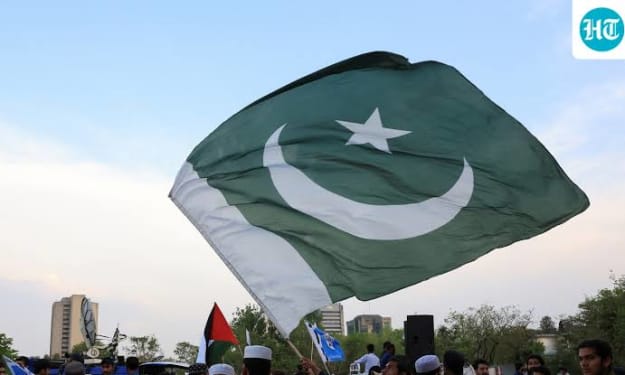
In a move that has sent ripples across Pakistan, the United States announced a temporary pause in visa processing at its consulates and embassies, affecting thousands of Pakistani nationals seeking travel to the US. The suspension, officials say, is linked to administrative adjustments and a review of security protocols. While the US has assured that it is a temporary measure, the pause has sparked concern among students, business professionals, and families planning visits. Pakistani authorities and citizens reacted with a mix of disappointment, apprehension, and hope that the disruption will be short-lived. Social media platforms are abuzz with hashtags expressing frustration and concern over the potential delays in educational pursuits, family reunions, and professional opportunities. Impact on students and academia One of the most affected groups is Pakistani students who plan to pursue higher education in the United States. Universities across the US often require timely visa processing for enrollment, and delays could mean missing critical deadlines for classes, housing, and scholarships. Social media accounts of Pakistani students have flooded with messages such as “Hope it resumes soon” and “Our plans are in limbo,” reflecting the anxiety this pause has generated. Educational experts warn that a prolonged pause could disrupt not only individual aspirations but also academic collaboration between Pakistani and American institutions. “Student mobility is an essential component of bilateral education cooperation. Even temporary halts can have a lasting impact on academic schedules and research projects,” said Dr. Nadia Hussain, a higher education consultant. Business and professional concerns The business community in Pakistan has also expressed concerns. Many professionals travel to the US for conferences, training, and corporate assignments. The sudden pause in visa processing has put several projects and business deals in uncertainty. Small and medium enterprises (SMEs) in particular fear that delayed travel approvals could affect partnerships and investments. “Business travel is crucial for maintaining international relations and exploring market opportunities. Any disruption can ripple through multiple sectors, including trade, technology, and tourism,” said Imran Farooq, a corporate consultant based in Karachi. Government and diplomatic response Pakistan’s Ministry of Foreign Affairs has acknowledged the pause and is in contact with US authorities to understand the scope and expected duration of the suspension. In a statement, the ministry urged Pakistani citizens to remain calm and assured them that efforts are underway to mitigate the impact. The statement read: “We are closely monitoring the situation and are in continuous dialogue with the United States to ensure that visa services resume at the earliest. Citizens are advised to stay updated via official channels.” The US embassy in Pakistan also addressed public concerns, emphasizing that the suspension is temporary and part of routine administrative adjustments. “We understand the inconvenience this may cause and are committed to resuming normal visa operations as soon as possible,” said a spokesperson. Public sentiment and social reactions The pause has sparked a wave of public sentiment online, ranging from concern to frustration. Twitter, Facebook, and other social media platforms are flooded with personal stories of individuals whose plans have been disrupted. Many parents expressed worry over their children studying abroad, while professionals lamented the potential setback in career growth. Despite the anxiety, there is a strong sense of hope and optimism among citizens. Many posts highlight the resilience of the Pakistani community and the expectation that visa services will resume without long-term disruption. The recurring message on social media is a combination of patience and vigilance: “We hope it resumes soon,” reflects the general sentiment. Looking ahead Experts suggest that the current pause is unlikely to last long. Historical patterns indicate that visa processing halts are generally temporary and aimed at streamlining security and administrative procedures. However, the situation underscores the importance of clear communication between governments to prevent public confusion and disruption. “The key is transparency. Citizens need timely information to plan effectively,” said Dr. Hussain. “Delays can be managed, but uncertainty has a greater psychological and economic impact.” In conclusion, while the pause in US visa processing has caused temporary disruption in Pakistan, officials and citizens alike are hoping for a swift resumption. The pause serves as a reminder of the interconnectedness of international mobility, education, and business, and the need for efficient communication during administrative adjustments. For now, the nation watches closely, balancing concern with cautious optimism, and echoing the sentiment expressed by many on social media: “Hope it resumes soon.”
By Fiazahmedbrohi a day ago in The Swamp
Russia-Ukraine War: Key Developments on Day 1,416 of the Conflict
Introduction The Russia-Ukraine war has reached day 1,416, marking nearly four years since the full-scale invasion began. What was initially expected by many to be a short conflict has evolved into one of the most prolonged and consequential wars in modern European history. Each passing day brings new military developments, diplomatic signals, and humanitarian consequences that continue to reshape regional and global politics.
By Mohammed Azam7 days ago in The Swamp



Comments
There are no comments for this story
Be the first to respond and start the conversation.