
Trump vs. New York: The Fight Against Congestion Pricing and a ‘King’s’ Decree
Trump
Introduction
In a high-profile showdown between federal power and local control, former President Donald Trump is once again taking his share of the national airwaves and attention by declaring himself “king” after his administration took the initial steps to eliminate New York City’s congestion pricing program. This tolling initiative, intended to cut traffic and raise revenue for public transit, has emerged as the latest flash point in a power struggle that combines politics, policy and royal theatrics.
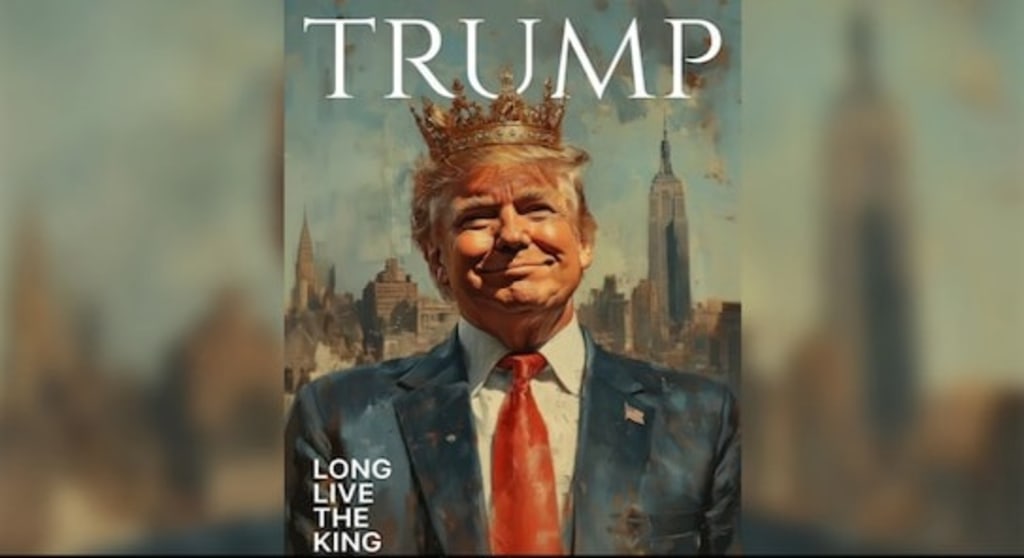
Governor Kathy Hochul and the Metropolitan Transportation Authority (M.T.A.) are pushing back, promising to defend the program in court. In the meantime, Trump’s self-styled monarchical branding — including AI-generated crown imagery — has turned a policy dispute into a constitutional showdown. Let’s take stock of the chaos, the stakes and what it means for New Yorkers.
What Is Congestion Pricing?
Congestion pricing is a traffic management tool that requires drivers to pay a fee to enter crowded urban areas during peak hours. New York’s version, which started January 5, 2025, charges a $9 toll for vehicles entering Manhattan below 60th Street in rush hours (6 a.m.–8 p.m.) and $2.25 overnight. The goal? To clear the streets, reduce pollution and raise $1 billion annually for subway and bus improvements.
The program provides discounts for low-income drivers and exceptions for emergency vehicles. Money is allocated for essential projects such as updating subway signals, completing the Second Avenue Subway and installing elevators at stations — a lifeblood to the city’s deteriorating infrastructure .
Trump’s “Royal” Intervention
Trump, who was born in Queens and has a penthouse in Manhattan that is in the toll zone, has opposed the program for years. On Feb. 19, 2025, his administration delivered the knockout punch: The transportation secretary, Sean Duffy, sent a letter to Gov. Kathy Hochul that rescinded federal approval for the program. Duffy described the tolls as a “slap in the face to working-class Americans” and contended they were in violation of federal highway laws.
Trump hailed the move on Truth Social with a flourish: “CONGESTION PRICING IS DEAD. Manhattan, and all of New York, is SAVED. LONG LIVE THE KING!” * The White House doubled down, posting a mock Time magazine cover with Trump in a crown and a regal cape — a stunt that caused outrage and ridicule.
Critics slammed Trump for exceeding the authority of a president. Since his inauguration in January 2025, he has issued more than 60 executive orders, including some to gain control of independent agencies and to fire Biden-era officials. His “king” rhetoric, along with assertions of divine right, harbors authoritarian overtones
Hochul’s Fiery Rebuttal: ‘We Don’t Have Kings Here’
Governor Hochul did not hold back. At a rally at Grand Central Terminal, she said, “New York hasn’t labored under a king in more than 250 years and we sure as hell aren’t starting now!” She framed Trump’s move as a “revenge tour” against his hometown and promised to fight in court.
The MTA quickly sued the federal government, contending the termination was politically motivated and unlawful. Chair Janno Lieber said the decision was “mystifying,” given that the program had already reduced traffic by 9 percent in January, compared with preprogram levels, including 1.2 million fewer vehicles entering the zone. Response times to emergencies and speeds on buses also improved .
You get energy when you work out — and then start thinking.
That translates into two questions that drive the conflict:
Can the federal government take back approval after launch?
It survived years of environmental reviews and lawsuits on its way to a January start. Legal experts, including Michael Gerrard of Columbia, say that the administration has no clear route to reverse it at this time. The MTA contends, and so do I, that federal-state agreements shouldn’t be undone “on a dime” without breaking trust.
CONGESTION PRICING IS UNCONSTITUTIONAL.
Duffy’s letter points to a federal law that forbids tolls on roads constructed with federal financial assistance unless Congress has provided otherwise. The MTA argues that the program meets the criteria of the Value Pricing Pilot Program, which permits congestion tolls.
The case could create a precedent for federal-state disputes, especially as other cities like Los Angeles and Chicago consider similar programs.
Public Reaction: Cheers, Jeers and Plate-Hiding
The tolls have divided New Yorkers:
— Supporters note the data: Traffic delays decreased 30 percent, Broadway attendance increased 17 percent and 36 million people went to lower Manhattan businesses this January — 1.5 million more than in 2024.
– Opponents say the tolls are unfair, including Staten Island officials as well as New Jersey commuters. Some drivers even cover up license plates to avoid fees.
New Jersey’s governor, Phil Murphy, welcomed Trump’s decision, saying the tolls “unfairly burden hardworking commuters.” Transit advocates like the Riders Alliance promised to defend the program, criticizing the recent plan as an “attack on public transit”.
What’s Next for Congestion Pricing
Until then, the tolls are still in place. Hochul won’t “turn off the cameras,” and courts will decide the future of the program. If Trump wins, New York could lose billions for subway upgrades — and traffic could go back to gridlock.
The drama shines a light on larger tensions: Trump’s muscular executive actions versus states’ rights, and whether ambitious climate policies can withstand political whiplash. “When New Yorkers are in a fight, we don’t back down,” Hochul said.
Conclusion
The fight over congestion pricing is more than a traffic policy dispute — it’s a clash of democracy, federalism and Trump’s unorthodox style of leadership. Whether the tolls remain or are eliminated, one thing is clear: New York is not going to bow to a self-styled king.
About the Creator
The Forsyth House Fire
Since 1851, Forsyth House has stood on the corner of Union Street and Gordon Street in the heart of Glasgow. Its iconic, or was... because on Sunday 8th of March, 2026, a fire broke out in a small, seemingly un-named shop in the building and tore all that history down. As I write, the rubble is still unsettled and the street is still blocked off. Central Station is quiet on the upper level, and around 30 small businesses have quite literally gone up in smoke.
By S. A. Crawford3 days ago in The Swamp
Microsoft's Purposeful Marketing Deception About AI's Ability To Beat Physicians In Diagnosis
When you look at the world of scientific research... If you are not careful... You will be fooled into believing things that are not actually supported by the data.
By Dr. Cody Dakota Wooten, DFM, DHM, DAS (hc)a day ago in Longevity



Comments
There are no comments for this story
Be the first to respond and start the conversation.