
Macron Urges EU to Deploy Trade ‘Bazooka’ Against US as Trump Ramps Up Tensions
Macron urges Europe to respond decisively as Trump ramps up trade tensions with tariffs and economic threats

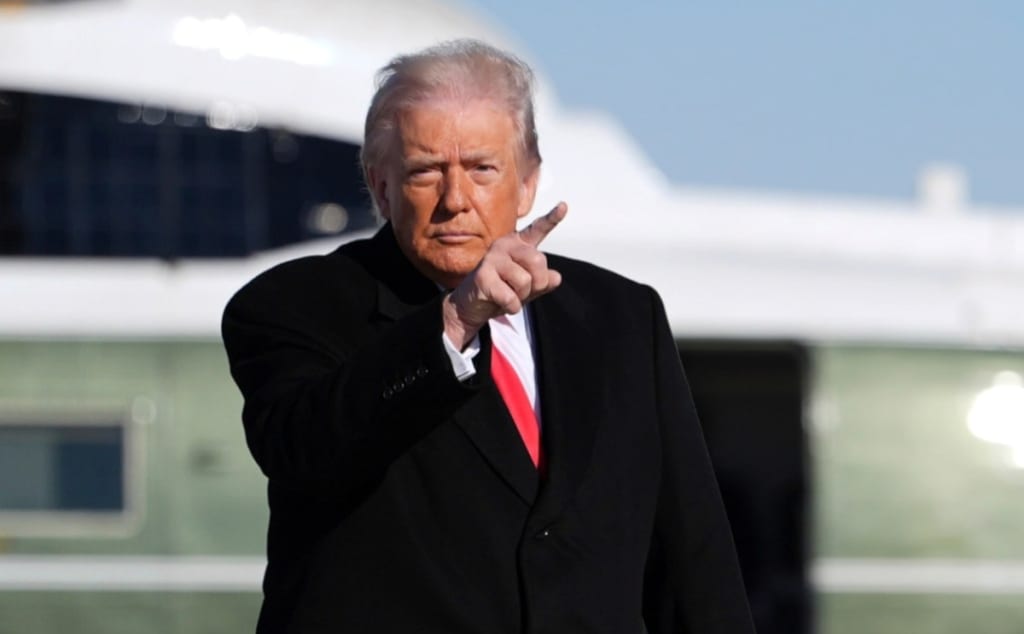
Tensions between the United States and the European Union have escalated once again, as French President Emmanuel Macron called on EU leaders to deploy a “trade bazooka” in response to what he described as aggressive U.S. trade policies under former President Donald Trump. Macron’s remarks underscore growing frustration in Europe over tariffs, trade restrictions, and economic coercion, and signal a potential shift toward more assertive European countermeasures.
The French President’s use of the term “bazooka” is not mere rhetoric. It conveys a willingness to take decisive, possibly unprecedented economic action to protect European interests. The statement comes amid a series of U.S. trade initiatives that have already rattled European markets, including tariffs on steel, aluminum, and other key exports, as well as threats targeting European digital services and strategic resources.
The Context: Rising U.S.–EU Trade Tensions
Over the past few years, U.S.–EU trade relations have been increasingly strained. The Trump administration pursued a protectionist agenda, citing unfair trade practices and national security concerns as justification for tariffs on imported goods. Key points of friction include:
Steel and aluminum tariffs: Imposed on European imports, these measures affected multiple EU member states and sparked retaliatory threats.
Digital services taxes: Targeted European tech companies, prompting U.S. threats of counter-tariffs.
Aviation and subsidies disputes: Long-running disagreements over Airbus and Boeing have continued to fuel tensions.
The latest flare-up involves broader economic pressure from the U.S., prompting Macron and other EU leaders to consider stronger coordinated responses to defend the bloc’s economic and strategic interests.
Macron’s “Trade Bazooka” Concept
When Macron referred to a trade bazooka, he suggested that Europe should be ready to deploy powerful countermeasures if U.S. actions threaten European companies or markets. Analysts interpret this as an endorsement of:
Targeted tariffs on U.S. goods: Retaliatory duties could focus on sectors with political sensitivity or high strategic value.
Leveraging WTO mechanisms: Filing formal complaints to challenge U.S. measures within international trade law.
Coordinated EU sanctions: Collective action to send a strong signal that Europe will not be bullied on trade.
Diversifying trade relationships: Accelerating partnerships with Asia, Africa, and Latin America to reduce reliance on the U.S. market.
The objective is not just retaliation—it is strategic deterrence. By demonstrating the EU’s willingness to act decisively, Macron hopes to prevent future unilateral actions that could disrupt markets and harm European companies.
Economic Implications
Macron’s stance comes at a delicate moment for European markets. Economists warn that escalating trade disputes could:
Increase costs for European exporters: Sectors such as automotive, aerospace, and agriculture are particularly vulnerable.
Disrupt supply chains: Many companies rely on U.S. imports for components and raw materials.
Fuel market volatility: Investor sentiment can be affected by geopolitical uncertainty, impacting stock prices and currencies.
For the United States, European countermeasures could also affect U.S. companies that rely on exports to the EU. The trade war potential raises questions about global economic growth, especially as both blocs are major drivers of international trade.
Political Dimensions
Macron’s remarks are not only economic—they carry political weight. Within the EU, there is often a debate between:
Pragmatic engagement: Pursuing diplomacy and negotiation to resolve trade disputes.
Assertive action: Using tariffs, sanctions, or trade barriers to protect European interests.
By advocating for a “trade bazooka,” Macron signals a preference for strong, unified action. He also positions France as a defender of European sovereignty, willing to confront external pressures to safeguard jobs, industry, and strategic resources.
The rhetoric also resonates domestically in France, appealing to voters concerned about globalization and competition with foreign powers. It reinforces Macron’s image as a leader ready to defend French and European economic interests on the global stage.
Historical Context
The concept of retaliatory trade measures is not new. During past trade disputes, the EU has successfully leveraged coordinated sanctions to influence negotiations. Examples include:
The Airbus–Boeing dispute: Europe and the U.S. have imposed counter-tariffs on aircraft and related goods.
Agricultural tariffs: European retaliation against U.S. subsidies or trade restrictions has protected farmers in sensitive sectors.
However, Macron’s call for a “bazooka” implies a more aggressive, proactive approach, suggesting the EU may be ready to escalate measures quickly if necessary.
Market Reactions
Financial markets have responded cautiously to the escalation. Key observations include:
European stock markets: Minor fluctuations in sectors most exposed to U.S. tariffs, such as automotive and industrials.
U.S. markets: Investors closely monitor potential European retaliation, especially in agriculture and tech.
Currency markets: The euro has shown resilience but remains sensitive to headlines regarding trade escalation.
Investors are reminded that geopolitical rhetoric can affect market confidence even before concrete actions are implemented, highlighting the interconnectedness of global finance and trade policy.
Looking Ahead
The unfolding situation emphasizes several lessons for policymakers, businesses, and investors:
Global trade is increasingly strategic: Economic measures are tools of diplomacy and influence.
Coordination matters: The EU’s response depends on unity among member states.
Preparedness reduces vulnerability: Companies and investors must plan for rapid changes in trade policy.
Negotiation remains crucial: While strong rhetoric can deter unilateral action, diplomacy is essential to prevent full-scale trade escalation.
As the EU considers Macron’s proposal, all eyes are on Brussels and Washington. Will Europe launch the “bazooka” as threatened, or will diplomacy prevent an economic confrontation? The answer will shape transatlantic trade relations and global market stability for years to come.
Conclusion
Macron’s call for a trade bazooka reflects the EU’s growing frustration with aggressive U.S. trade policies under Trump. By advocating for strong, coordinated countermeasures, the French President is sending a message: Europe will not tolerate economic coercion and is prepared to protect its industries, markets, and strategic interests.
For global markets, the announcement is a reminder that politics and economics are deeply intertwined. Investors, businesses, and policymakers must navigate the uncertainties of trade rhetoric, tariffs, and countermeasures while anticipating potential ripple effects across industries and countries.
In an era of volatile global trade, Macron’s “bazooka” may be more than a metaphor—it could mark a new phase in European assertiveness, signaling that the EU is ready to defend its economic sovereignty in the face of mounting external pressures.
About the Creator
Muhammad Hassan
Muhammad Hassan | Content writer with 2 years of experience crafting engaging articles on world news, current affairs, and trending topics. I simplify complex stories to keep readers informed and connected.
Keep reading
More stories from Muhammad Hassan and writers in The Swamp and other communities.
World Stock Markets Brace for Turbulence After Trump’s Latest Tariff Shock
Global financial markets are entering a period of heightened uncertainty following former U.S. President Donald Trump’s latest tariff announcement. Investors across Europe, Asia, and North America are adjusting portfolios, recalculating risks, and bracing for potential volatility in the weeks and months ahead. Analysts warn that Trump’s tariff decisions, whether focused on China, the EU, or specific sectors, have the potential to reshape international trade flows and investor sentiment.
By Muhammad Hassana day ago in The Swamp
After Danish and U.S. Officials Meet on Greenland, Trump Remains Unmoved
Greenland, the world’s largest island, has long been recognized for its geopolitical and economic significance. Rich in natural resources, strategically located between North America and Europe, and home to vital Arctic sea routes, Greenland has become a focal point in global politics.
By Aarif Lashari5 days ago in The Swamp



Comments
There are no comments for this story
Be the first to respond and start the conversation.