
World Stock Markets Brace for Turbulence After Trump’s Latest Tariff Shock
Investors brace as Trump’s latest tariffs threaten global markets and disrupt international trade

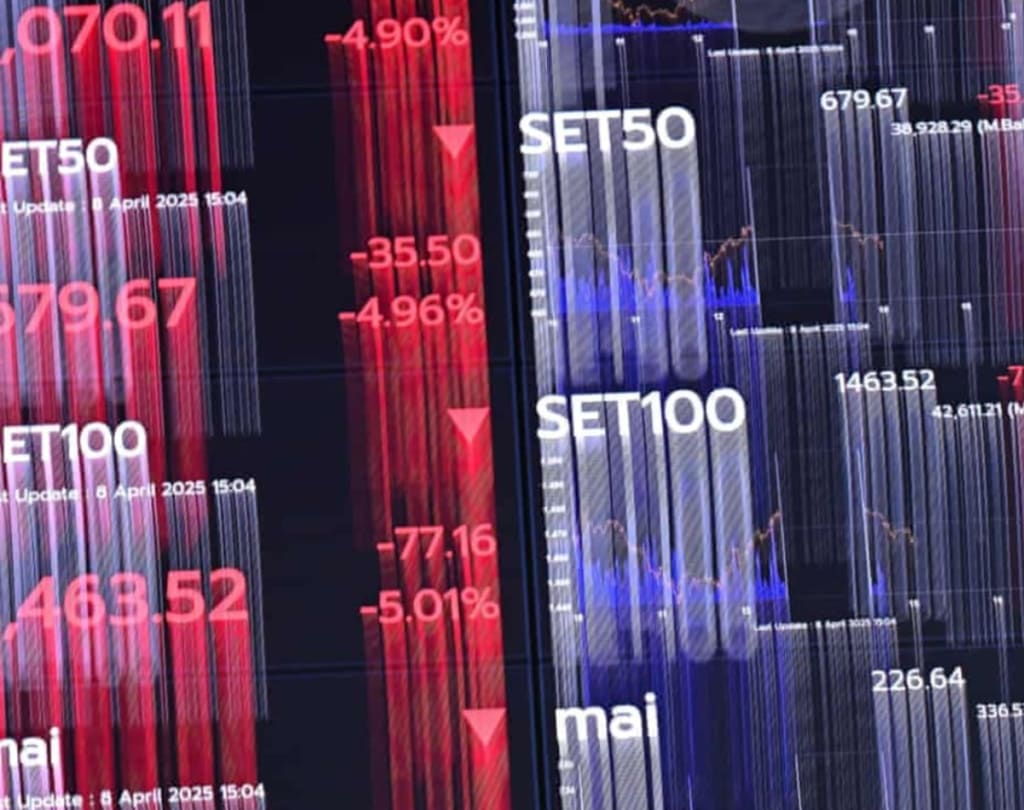
Global financial markets are entering a period of heightened uncertainty following former U.S. President Donald Trump’s latest tariff announcement. Investors across Europe, Asia, and North America are adjusting portfolios, recalculating risks, and bracing for potential volatility in the weeks and months ahead. Analysts warn that Trump’s tariff decisions, whether focused on China, the EU, or specific sectors, have the potential to reshape international trade flows and investor sentiment.
Markets thrive on predictability, and sudden policy shifts—particularly regarding tariffs—can trigger sharp reactions in equities, commodities, and currencies. The latest tariff shock has investors asking: how deep will the impact run, and which sectors are most exposed?
The Latest Tariff Announcement
Trump’s latest move, announced via public statements and official channels, involves raising tariffs on selected imports from major trading partners. While the exact scope and timeline are subject to confirmation, the announcement has already caused ripple effects in global markets.
U.S. stock markets reacted immediately with volatility in sectors like technology, manufacturing, and industrial goods, which are heavily dependent on international supply chains.
European equities saw declines, particularly in Germany and France, where exporters could face higher costs for selling goods to the U.S.
Asian markets, including China, Japan, and South Korea, were among the most sensitive, with shares in export-heavy companies and tech sectors dropping sharply.
The uncertainty extends beyond equity markets. Commodity prices, particularly metals and agricultural products, are fluctuating as traders anticipate supply chain disruptions. Meanwhile, currency markets are experiencing volatility as investors weigh the risk of tariff-related disruptions against potential central bank interventions.
Why Tariffs Spark Market Turbulence
Tariffs, essentially taxes on imported goods, increase costs for businesses and consumers. Companies relying on cross-border supply chains may see profits shrink, while consumers may face higher prices for goods.
Financial markets react to tariffs for several reasons:
Profitability Concerns: Companies that rely on imported materials or sell goods abroad may see margins squeezed.
Supply Chain Disruption: Higher tariffs can force businesses to rethink sourcing strategies, causing delays and inefficiencies.
Investor Sentiment: Markets are sensitive to uncertainty; even the threat of tariffs can trigger sell-offs.
Global Economic Impact: Widespread tariffs may slow economic growth by reducing trade volumes, affecting GDP forecasts and corporate earnings.
Historical examples, such as the U.S.–China trade disputes of 2018–2019, demonstrate how tariffs can create lasting market volatility and shifts in investment strategies.
Sectors Most at Risk
Not all industries are equally vulnerable to tariffs. Some sectors are highly sensitive to import costs or rely on global sales, while others are relatively insulated. Analysts are closely watching:
Technology and Electronics: Companies like semiconductor manufacturers and consumer electronics firms depend heavily on international supply chains.
Automotive Industry: European and Asian carmakers exporting to the U.S. face potential cost increases.
Agriculture and Commodities: Tariffs on crops, meat, or metals can disrupt pricing and trade flows.
Industrial Goods and Machinery: Heavy reliance on imported components makes these companies vulnerable to tariff-related disruptions.
Meanwhile, some sectors may benefit indirectly. Domestic producers or companies less exposed to trade may see a competitive advantage, potentially attracting investment during periods of turbulence.
Investor Strategies Amid Tariff Uncertainty
Investors are adjusting portfolios to mitigate risk and capitalize on opportunities arising from market instability. Common strategies include:
Diversification: Spreading investments across sectors, regions, and asset classes reduces exposure to a single shock.
Safe-Haven Assets: Gold, government bonds, and certain currencies often benefit during periods of uncertainty.
Hedging: Options, futures, and other derivatives allow investors to protect portfolios against sudden losses.
Focus on Resilient Companies: Firms with domestic-focused supply chains or strong balance sheets may outperform during tariff turbulence.
Market analysts emphasize that flexibility and vigilance are key. Rapidly changing trade policies require dynamic investment approaches, particularly for international portfolios.
Broader Implications for Global Trade
Tariff shocks don’t only affect stock prices—they reshape global trade patterns. Companies may relocate manufacturing, renegotiate contracts, or seek alternative markets to avoid tariffs. This can have long-term consequences for supply chains, employment, and trade balances.
Additionally, sudden tariff increases can strain diplomatic relations. Countries affected by tariffs may retaliate with their own duties, escalating trade disputes and creating an environment of uncertainty for investors and businesses alike.
The ripple effects are particularly pronounced for export-driven economies. Asia and Europe, with large volumes of goods sold to the U.S., are watching policy shifts closely, knowing that a sudden change in trade policy could affect economic growth and corporate profits.
Market Outlook
While the exact impact of Trump’s latest tariff shock is difficult to predict, experts agree that volatility is likely to continue in the near term. Short-term market swings may be severe, especially in sectors directly affected by tariffs.
Long-term outcomes will depend on several factors:
Duration and Scope: Are the tariffs temporary measures or part of a long-term trade strategy?
Diplomatic Resolution: Will affected countries negotiate agreements to ease tensions?
Economic Resilience: How well companies adapt supply chains and pricing strategies to mitigate impact?
Investors and policymakers alike are monitoring developments closely, understanding that global markets today are interconnected, sensitive, and fast-moving.
Conclusion
Trump’s latest tariff shock has sent a jolt through global stock markets, highlighting the fragility of investor confidence in the face of sudden trade policy changes. While the full economic and financial impact remains uncertain, markets are clearly bracing for turbulence, and investors are taking measured steps to mitigate risk.
The episode also underscores a broader truth: in today’s globalized economy, political decisions and trade policy have immediate, far-reaching consequences. From supply chains to investor portfolios, no sector or region is entirely insulated.
As markets navigate this period of uncertainty, the key for businesses and investors is agility, informed strategy, and a focus on resilient assets. While tariffs can shock markets in the short term, careful planning and diversification may help weather the storm—and even uncover opportunities in periods of global market turbulence.
About the Creator
Muhammad Hassan
Muhammad Hassan | Content writer with 2 years of experience crafting engaging articles on world news, current affairs, and trending topics. I simplify complex stories to keep readers informed and connected.
Keep reading
More stories from Muhammad Hassan and writers in The Swamp and other communities.
Trump Tariff Threats Over Greenland Prompt Calls for Unprecedented EU Counter-Measures
In a move that has sent ripples through international trade circles, former U.S. President Donald Trump’s tariff threats over Greenland have prompted urgent discussions within the European Union about possible counter-measures. The escalating tension highlights the fragile state of transatlantic trade relations and raises questions about the EU’s ability to respond decisively to economic pressure from Washington.
By Muhammad Hassan2 months ago in The Swamp
The Forsyth House Fire
Since 1851, Forsyth House has stood on the corner of Union Street and Gordon Street in the heart of Glasgow. Its iconic, or was... because on Sunday 8th of March, 2026, a fire broke out in a small, seemingly un-named shop in the building and tore all that history down. As I write, the rubble is still unsettled and the street is still blocked off. Central Station is quiet on the upper level, and around 30 small businesses have quite literally gone up in smoke.
By S. A. Crawford3 days ago in The Swamp
THE FREE PRESS
The $35 Sentence: How Predatory Hospice Schemes Silence Seniors By Vicki Lawana Trusselli For years, I worked in the film and music industries in LA and Austin—I know a script when I see one. But the script being handed to seniors in Riverside and other cities today is not just fiction; it is federal fraud.
By Vicki Lawana Trusselli 6 days ago in The Swamp


Comments
There are no comments for this story
Be the first to respond and start the conversation.