Latest Stories
Most recently published stories in The Swamp.
Racism
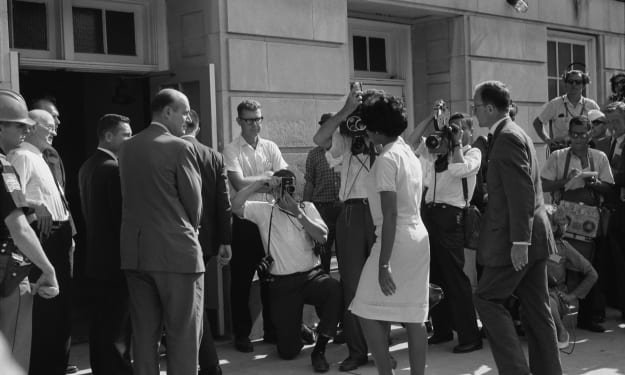
According to Buck, white privilege was established in the USA. To explain it, she takes us back to the 16th and the 17th century. Before the construction of race that exists today, there were only two main classes of Europeans and Africans or whites and blacks. And the whites dominated over blacks using them as slaves. The Native Americans were also treated as inferior to the whites. They suffered from the same oppression that the blacks did. To support her rationales, Buck uses examples of historical changes like the Bacon’s Rebellion. “Given the tendency of slaves, servants, and landless free Europeans and Africans to cooperate in rebellion, the elite had to "teach Whites the value of whiteness" in order to divide and rule their labor force.” (P. S. Rothenberg, 32) After that rebellion, the Europeans implemented stricter voting rights that prevented Africans, Native Americans, and sub tribes who did not identify themselves as Europeans from voting. They even increased the punishment for white women who married African men, and black children of white fathers were given the status of slavery rather than 30 years of indenture. Many such punishments were implemented to maintain the status quo of white privilege.
By Beena Patel8 years ago in The Swamp
My Calling
Much of America and the world feels a tug. It is an anxious feeling like a ball in the pit of our stomachs. We all know that big changes are happening. We just don’t know exactly how it will all play out. I watch daily as conflicting stories flood the Internet. There is a great divide in opinions about the world, just as, there is a great divide in our relationships with each other. I feel an overwhelming need for unity. I believe this was put in my heart by God. To me, everyone should be coming together to help one another. It shouldn’t matter who you are. We will need each other. I feel like I am standing at the start line and God is saying, “Get ready.” Next, he will tell me to get set and go. This change is inevitable, and we will not like it. I pray we are ready, but I don't think we are.
By Sabrina Overbay8 years ago in The Swamp
Donald Trump: Despicable and Deplorable
I’m gonna blow. We have this thing called social media that let’s you sound off whenever something rubs you the wrong way. Hello, Donald Trump. But the election taught me how impulsive posts only elevates anger, alienates without resolving anything and makes Facebook fertile ground for unfriending. So my responses have been to encourage people to get involved rather than seething with each unsettling factoid. But after seven months, I just have to vent.
By Rich Monetti8 years ago in The Swamp
How to See the Bigger Picture of Trump's Role
I know that these days, it is the norm to see post after post showing Donald Trump saying something completely ridiculous or being mocked/hated by someone; however, from the perspective of a non-American’s point of view (my humble one), I’m going to play devil’s advocate just this time —and no, I don’t think he should be President at all, in fact I don’t think he should be in any management role ever, at least not if he is in charge of people.
By Grace Evelyn8 years ago in The Swamp
Oppression
In her poetry, Maya Angelou defines the birdcage as “The caged bird sings with a fearful trill of things unknown but longed for still and his tune is heard on the distant hill for the caged bird sings of freedom.” She expresses her early childhood experiences of oppression by discrimination based on prejudices of racism. The birdcage is used as a metaphor by both Maya Angelou in her poetry and Marilyn Frye in her “Oppression” article. In “Defining Racism: “Can We Talk?”” Beverly Tatum analyzed “Internalized Oppression.” She addresses how the members of oppressed groups often believe the distorted messages about their own groups. Oppressed people are like the birds in a cage. They wish for freedom, but they cannot break the cage because of the systematic beliefs. The barriers of those systems or cultures are like the bars of a cage. People can express just how a bird does by singing, but they wait for someone to break those barriers just how a bird would wait for someone to open the cage. Frye’s illustration of the birdcage relates to such groups of oppressed people. Our society puts invisible barriers of beliefs by its actions that can give distorted messages to oppressed groups. While Tatum refers to it as an internalized oppression where you have an option to break free but owned beliefs block you, oppression goes beyond that. It is not only about beliefs, but it is also about systematic actions that favor one group over the other such as the white privilege. The distorted beliefs of oppressed people are strengthened when they face such discrimination. As they say “actions speak louder than words,” people mostly believe the actions that they see. Therefore, it is imperative to stand by our words of equality if we must prevent such distorted messages.
By Beena Patel8 years ago in The Swamp
The Demise of Common Sense
Like many around my own age (I was born in 1965), I have lived through harsh times, such as the capitulation of the Government to Trade Unionism, the so-called "Winter of Discontent," and some good, or rather feel-good times too. Yes, there were numerous conflicts around the world during those formative years, as well as droughts, famines, natural disasters, and so on. Yet the overriding memories I have where Government was concerned, was that the Law held sway and was always to be upheld.
By Dominic Lane8 years ago in The Swamp
Conflicts of the Father
As of 2017, conflict of interest rules apparently don’t apply legally to the Office of the President of the United States. Though, with that being said, it does not outrightly remove the issue from the slate entirely either. The concept exists not solely for the purpose of keeping an officeholder from profiting from his or her office: it exists to protect the rest of us from having that officeholder’s decisions influenced by his or her business interests, rather than by (in this case) the national interest. Someone with the business interests Trump has — unless he divests (which he seems unwilling to do: he’s been extremely opaque about his personal finances from the start) — is, essentially, operating on the honor system, and anyone who relies on that might well consider buying some swampland (or a casino) from Trump. (The idea that if someone is very rich, he is therefore incorruptible, relies on the notion that he is no longer interested in making money. Trump’s resistance to divestiture suggests that for him, this is not the case. Rather tellingly, the only entity Trump has pledged to dissolve to date is his nonprofit foundation.)
By Dre Joseph8 years ago in The Swamp
Stalin's American Spies
There is an old saying that truth is often stranger than fiction. Works of non-fiction can often prove that to be the case, revealing sometimes hidden or forgotten stories from our history. The Cold War, that epic conflict of ideologies fought largely in the shadows and still influencing the world we live in today, is just such an example. While so many great fictional spy stories were inspired by it ranging from Ian Fleming's James Bond novels to John le Carré's George Smiley, the real world of Cold War espionage can be just as fascinating as any thriller. The non-fiction work The Haunted Wood proves that to be the case with its exploration of the Americans who spied for the Russians in the 1930s and 1940s.
By Matthew Kresal8 years ago in The Swamp
The Apprentice President
In years past the world looked to the United States for true leadership in times of crisis. Unfortunately, ever since Donald Trump took office he has managed to obliterate any progress past Administrations have made in securing America's place as the one nation that embodies the willingness to come to the rescue in troubled times. The internal conflicts created by Trump himself has only accelerated Americas surrendering of our leadership role in international affairs.
By Dr. Williams8 years ago in The Swamp