
Kremlin Official Says Russian Navy to Stop West’s Seizure of Merchant Ships
Russia warns it may deploy naval forces to protect commercial shipping amid Western sanctions and seizures.

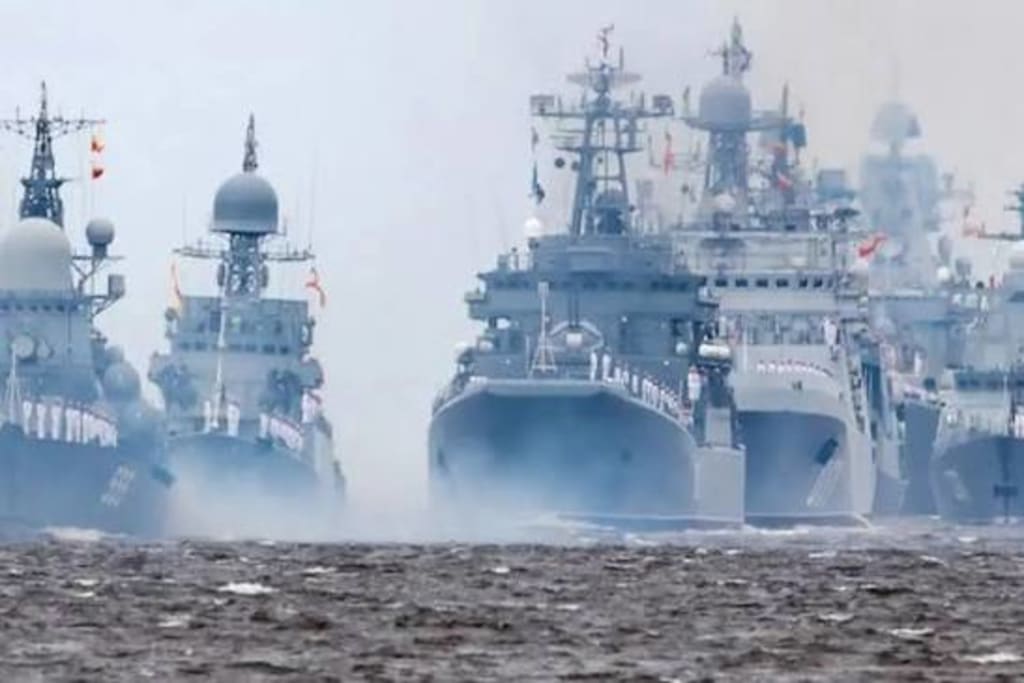
A senior Kremlin official has issued a stark warning this week that the Russian Navy could be deployed to prevent Western navies from intercepting or seizing Russian merchant vessels — a move that risks escalating geopolitical tensions over sanctions, maritime law, and global trade routes.
Nikolai Patrushev, a longtime close ally of Vladimir Putin and a top Kremlin adviser, told the Russian newspaper Argumenty i Fakty that recent actions by Western powers — particularly the United States, France, the United Kingdom, and several Baltic states — constitute what he termed “piracy‑like attacks” on Russian shipping, and that Moscow must be prepared to respond decisively.
“We believe that, as at all times, the best guarantor of navigation safety is the navy,” Patrushev said, framing the potential naval response as a defensive necessity to protect Russia’s economic lifelines rather than an act of aggression. “If we do not resist decisively, the English, the French, and even the Balts will soon be so bold as to try to block access to the seas for our country.”
Backdrop: Sanctions and the “Shadow Fleet”
The comments come amid intensifying Western efforts to cut off Russia’s access to global trade and cripple key sectors of its economy through sanctions linked to its ongoing war in Ukraine. Western governments have targeted what they call Russia’s “shadow fleet” — a network of tankers and cargo vessels that aim to circumvent sanctions by reflagging, opaque ownership, and indirect trading routes.
In recent months, both European and U.S. forces have boarded or seized several Russia‑linked vessels. In January, U.S. forces intercepted a Russian‑flagged tanker in the North Atlantic suspected of violating sanctions tied to Venezuela, while French authorities detained a vessel dubbed the Grinch in the Mediterranean before ultimately releasing it after a multimillion‑euro fine was paid.
Western officials counter that such actions adhere to international law and form part of broader efforts to enforce sanctions designed to weaken Russia’s ability to finance its military aggression. France’s foreign minister described the penalty on the Grinch as a necessary response to efforts to undermine sanctions regimes.
Moscow’s Maritime Strategy
From the Kremlin’s perspective, these interdictions are seen as a threat not only to Russia’s economy but to its sovereign right to conduct trade on the high seas. Patrushev accused NATO of exploring scenarios that include blockades of Russian ports and the seizure of merchant shipping, particularly around Russia’s Kaliningrad exclave, and said Moscow would respond if peaceful solutions fail.
PravdaReport
“If this situation cannot be resolved peacefully, then the blockade will be broken and eliminated by the navy,” Patrushev said, framing the statement as a matter of national security. He added that Russia needs a more technologically capable and well‑balanced Navy to protect its commercial shipping across distant waters.
Anadolu Ajansı
Russian state media have touted recent naval exercises with allied countries as part of broader efforts to reinforce maritime cooperation and protect trade routes — although such drills also serve to project power amid heightened global scrutiny.
Sputnik International
Western Caution and Legal Complexity
Western policymakers have so far avoided lethal force in intercepting Russian vessels, relying instead on legal frameworks, financial penalties, and insurance restrictions to enforce sanctions. But the question of whether physical interdiction on the high seas is lawful remains contested. Some allied naval planners argue that vessels with questionable documentation could be treated as stateless and subject to interception — a stance that critics worry might broaden the scope for conflict at sea.
While EU authorities have listed hundreds of vessels suspected of aiding Russia’s shadow fleet and banned them from ports and services, actual seizures have been limited, and coordination among Western navies varies by region.
Geopolitical Implications
Experts say Patrushev’s comments reflect broader Russian concerns about containment and economic isolation. By publicly threatening naval measures, Moscow may be signaling that it views maritime access as a critical frontier in its standoff with Western powers — one that could have far‑reaching implications for global trade, energy markets, and security alliances.
Still, many analysts caution that significant naval escalation over merchant shipping remains unlikely in the short term, given the risks of inadvertent conflict with NATO forces and the legal complexities involved. As Russia and the West continue their standoff, the status of merchant shipping and maritime law is poised to remain a flashpoint in the widening geopolitical dispute.
About the Creator
Fiaz Ahmed
I am Fiaz Ahmed. I am a passionate writer. I love covering trending topics and breaking news. With a sharp eye for what’s happening around the world, and crafts timely and engaging stories that keep readers informed and updated.
Keep reading
More stories from Fiaz Ahmed and writers in The Swamp and other communities.
Bangladesh PM Sheikh Hasina Forms Cabinet as Tarique Rahman Unveils Opposition Lineup After Election Win
Bangladesh’s political landscape took shape this week as Prime Minister Sheikh Hasina announced her new cabinet following her party’s victory in national elections, while opposition leader Tarique Rahman named a fresh leadership team for the Bangladesh Nationalist Party (BNP), seeking to reassert his authority after a fiercely contested and controversial vote. Hasina’s Awami League secured a decisive parliamentary majority, extending her tenure for a fifth term in office. The cabinet, sworn in at Bangabhaban in Dhaka, included several returning ministers alongside a number of younger technocrats, signaling what officials described as a renewed focus on economic stability, infrastructure development, and inflation control. Key portfolios such as finance, foreign affairs, and home affairs remained in the hands of trusted allies, reinforcing Hasina’s grip on governance at a time of rising global economic uncertainty. In parallel, Tarique Rahman, who remains in self-imposed exile in London, announced a restructured BNP executive committee and policy council, widely seen as an attempt to form a de facto “shadow cabinet.” The move followed the BNP’s rejection of the election outcome, which it claimed lacked credibility due to low turnout and the absence of a neutral caretaker government. In a statement released by BNP headquarters in Dhaka, Rahman said the new leadership team would focus on “restoring democracy, defending civil liberties, and preparing for a future national mandate.” Senior party figures were assigned responsibility for economic policy, foreign relations, and election strategy, mirroring the structure of a formal cabinet. Party officials said the reorganization was meant to demonstrate readiness to govern if political conditions changed. Political analysts view Rahman’s announcement as both symbolic and strategic. “This is a way for Tarique Rahman to remain politically relevant despite being outside the country,” said a Dhaka-based political commentator. “By naming a leadership lineup, he signals to supporters and international observers that BNP considers itself an alternative government-in-waiting.” The election itself was marked by boycotts from major opposition parties and scattered incidents of violence. Government officials defended the process as constitutional and transparent, while international observers expressed concern over the limited competition and restrictions on opposition campaigning. Turnout figures were significantly lower than in previous elections, reflecting public fatigue with political polarization. Hasina’s new cabinet faces pressing challenges, including managing foreign debt, stabilizing the taka, and addressing rising food and fuel prices. Relations with Western governments have also grown more complex amid scrutiny of Bangladesh’s democratic institutions and human rights record. For Tarique Rahman, the political road remains uncertain. Convicted in absentia in corruption cases that he says are politically motivated, he has been unable to return to Bangladesh. Nonetheless, he continues to exert influence over BNP strategy through digital communication and loyal party networks. Observers note that Bangladesh’s politics now appears headed into another period of prolonged tension between a dominant ruling party and an opposition struggling to regain momentum. While Hasina consolidates power through formal state institutions, Rahman is attempting to rebuild opposition credibility through organizational reforms and symbolic gestures. As Bangladesh embarks on another five-year political cycle, both camps claim legitimacy: one through electoral victory, the other through protest and reform. The formation of the new cabinet and the parallel opposition lineup underscores a divided political reality, with stability on one side and unresolved questions about democratic participation on the other.
By Fiaz Ahmed a day ago in The Swamp
Why Black History Matters in America?
The United States of America is celebrating their 250th anniversary in 2026. I'm proud to be an American and as someone who was born here, I wouldn't imagine myself living anywhere else. This is a country where opportunities are possible. Where anyone can be successful in anything they desire to do. Equality, community, and togetherness are the backbones of what America is and should be about. However, we have an administration who wants to erase and disregard those who have made positive, meaningful impacts in our country, specifically Black figures, such as Martin Luther King, Jr., Rosa Parks, and Maya Angelou. President Trump and his administration have been constantly complaining and fighting against what they call the "Woke agenda". They use this excuse as a distraction from other issues they refuse to address, such as the high cost of living, climate change, and inflation. That equality is dividing America, when in reality, it's bringing us together. Being woke is not tied to a specific political party. No matter where you stand on the political spectrum, you can still care about other people and their plights. Compassion and empathy for others isn't tied to a political party, either. We were taught as children to treat others the way we want to be treated and not judge others because they're different from us. Caring about others isn't a personal attack on your beliefs. It doesn't make you any less of a person. People who are easily offended over African American figures, past or present, or anything related to it, are grasping at straws. Current and future generations need to know who people like Harriet Tubman and Shirley Chisholm were, especially in the classroom. Black History is part of American History. It should be recognized, not hidden or forgotten. Besides, you can't shield children from everything, just because your feelings are easily hurt.
By Mark Wesley Pritchard 18 days ago in The Swamp
Japan Seizes Chinese Fishing Boat and Arrests Skipper Amid Rising East China Sea Tensions
In a dramatic escalation of long-standing maritime tensions, Japan has seized a Chinese fishing boat and arrested its skipper in disputed waters of the East China Sea. The incident, which unfolded near the contested Senkaku Islands, has reignited diplomatic friction between Tokyo and Beijing and drawn international attention to one of Asia’s most sensitive geopolitical flashpoints.
By Aqib Hussain6 days ago in The Swamp
Unofficial Challenge: What would you do if you were rich?
I love the kind of work I get to do in my career, but as I job search and browse apartments again due to another understaffed and unsustainable work environment that I did not intend to get into, my daydreams of better days consistently lean into the same question: What would I do if I didn't have to worry about my basic needs being met?
By Kay Husnick2 days ago in Writers


Comments
There are no comments for this story
Be the first to respond and start the conversation.