
Bangladesh PM Sheikh Hasina Forms Cabinet as Tarique Rahman Unveils Opposition Lineup After Election Win
The ruling Awami League consolidates power as the opposition reorganizes under Tarique Rahman following a disputed national vote.

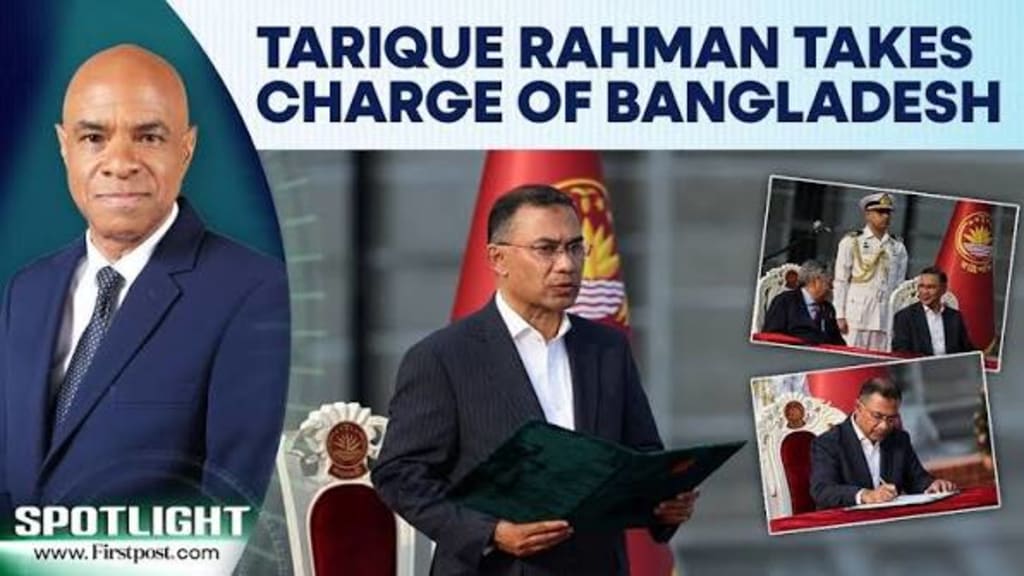
Bangladesh’s political landscape took shape this week as Prime Minister Sheikh Hasina announced her new cabinet following her party’s victory in national elections, while opposition leader Tarique Rahman named a fresh leadership team for the Bangladesh Nationalist Party (BNP), seeking to reassert his authority after a fiercely contested and controversial vote.
Hasina’s Awami League secured a decisive parliamentary majority, extending her tenure for a fifth term in office. The cabinet, sworn in at Bangabhaban in Dhaka, included several returning ministers alongside a number of younger technocrats, signaling what officials described as a renewed focus on economic stability, infrastructure development, and inflation control. Key portfolios such as finance, foreign affairs, and home affairs remained in the hands of trusted allies, reinforcing Hasina’s grip on governance at a time of rising global economic uncertainty.
In parallel, Tarique Rahman, who remains in self-imposed exile in London, announced a restructured BNP executive committee and policy council, widely seen as an attempt to form a de facto “shadow cabinet.” The move followed the BNP’s rejection of the election outcome, which it claimed lacked credibility due to low turnout and the absence of a neutral caretaker government.
In a statement released by BNP headquarters in Dhaka, Rahman said the new leadership team would focus on “restoring democracy, defending civil liberties, and preparing for a future national mandate.” Senior party figures were assigned responsibility for economic policy, foreign relations, and election strategy, mirroring the structure of a formal cabinet. Party officials said the reorganization was meant to demonstrate readiness to govern if political conditions changed.
Political analysts view Rahman’s announcement as both symbolic and strategic. “This is a way for Tarique Rahman to remain politically relevant despite being outside the country,” said a Dhaka-based political commentator. “By naming a leadership lineup, he signals to supporters and international observers that BNP considers itself an alternative government-in-waiting.”
The election itself was marked by boycotts from major opposition parties and scattered incidents of violence. Government officials defended the process as constitutional and transparent, while international observers expressed concern over the limited competition and restrictions on opposition campaigning. Turnout figures were significantly lower than in previous elections, reflecting public fatigue with political polarization.
Hasina’s new cabinet faces pressing challenges, including managing foreign debt, stabilizing the taka, and addressing rising food and fuel prices. Relations with Western governments have also grown more complex amid scrutiny of Bangladesh’s democratic institutions and human rights record.
For Tarique Rahman, the political road remains uncertain. Convicted in absentia in corruption cases that he says are politically motivated, he has been unable to return to Bangladesh. Nonetheless, he continues to exert influence over BNP strategy through digital communication and loyal party networks.
Observers note that Bangladesh’s politics now appears headed into another period of prolonged tension between a dominant ruling party and an opposition struggling to regain momentum. While Hasina consolidates power through formal state institutions, Rahman is attempting to rebuild opposition credibility through organizational reforms and symbolic gestures.
As Bangladesh embarks on another five-year political cycle, both camps claim legitimacy: one through electoral victory, the other through protest and reform. The formation of the new cabinet and the parallel opposition lineup underscores a divided political reality, with stability on one side and unresolved questions about democratic participation on the other.
About the Creator
Fiaz Ahmed
I am Fiaz Ahmed. I am a passionate writer. I love covering trending topics and breaking news. With a sharp eye for what’s happening around the world, and crafts timely and engaging stories that keep readers informed and updated.
Keep reading
More stories from Fiaz Ahmed and writers in The Swamp and other communities.
It’s Soul-Crushing’: Young People Battle to Find Any Work in Bleak Jobs Market
Young jobseekers across the country are facing a grim reality: despite education and training, opportunities for stable employment are scarce, leaving many struggling to make ends meet. The current labor market, marked by slow growth, wage stagnation, and increasing automation, has made entry-level and even mid-level positions harder to secure, prompting concern among economists, policymakers, and social advocates. The Struggle of Youth Employment For recent graduates and those entering the workforce, securing a first job has become a formidable challenge. Many are forced to apply for multiple positions with little response, often receiving rejection letters or no feedback at all. Others accept precarious part-time or gig work, which fails to provide benefits, job security, or long-term career prospects. “It’s soul-crushing,” said Emma Lawson, 23, a recent college graduate. “I’ve applied to dozens of positions in marketing and administration, but every listing seems to require three to five years of experience I don’t have. I feel stuck.” Economists point to several factors driving this difficult employment environment. Global economic uncertainty, corporate cost-cutting, and the continued integration of automation in traditionally entry-level roles have all contributed to the shrinking pool of accessible jobs for young workers. Wage Stagnation and Financial Pressure Even when jobs are available, wages are often insufficient to cover rising living costs. Rent, student loans, and healthcare expenses place enormous financial strain on young employees. According to recent studies, average entry-level wages have barely increased in real terms over the past decade, leaving many young adults struggling to achieve financial independence. For some, the lack of adequate compensation forces difficult decisions. “I’m working two part-time jobs just to pay for rent,” said James Patel, 25. “There’s no room for savings or long-term planning. It feels like running in place while everything gets more expensive around you.” The Role of Education and Skill Mismatch Another contributing factor is the growing gap between education and market needs. Many young people graduate with degrees or certifications that do not align with available opportunities. Fields like technology, healthcare, and specialized trades show robust demand, but not all candidates have access to the necessary training or resources. Policymakers are debating strategies to better align education with employment opportunities. Vocational programs, apprenticeships, and partnerships between industry and schools are increasingly promoted as ways to bridge the skills gap and give young people practical experience. Mental Health and Social Impact The effects of a challenging jobs market extend beyond finances. Mental health professionals warn that prolonged unemployment or underemployment can contribute to anxiety, depression, and a sense of hopelessness among young adults. Social isolation and uncertainty about the future amplify the psychological toll. “It’s not just about money—it’s about purpose and identity,” said Dr. Laura Chen, a psychologist specializing in young adult mental health. “When people can’t find meaningful work, it affects their confidence, relationships, and overall wellbeing.” Policy Responses and Solutions Governments and advocacy groups are exploring measures to support young workers. Proposed initiatives include wage subsidies, internship programs, student debt relief, and incentives for businesses to hire entry-level staff. Some cities have launched job-matching programs and digital platforms to connect youth with available positions more efficiently. Others are focusing on retraining programs in high-demand sectors, including healthcare, renewable energy, and information technology. Economists stress that addressing youth unemployment requires a multi-pronged approach. “It’s not a single solution,” said Marcus Rivera, a labor market analyst. “We need policy, private sector engagement, and education reform working together to ensure young people have viable pathways into the workforce.” Looking Ahead For now, young jobseekers face a challenging landscape where determination alone may not guarantee success. The next few years will be crucial in shaping policies and economic trends that determine whether young adults can achieve stability and upward mobility—or continue to navigate a precarious and disheartening labor market. As the nation confronts a rapidly changing economy, the struggle of its youngest workers highlights the urgent need for systemic solutions to prevent a generation from being left behind.
By Fiaz Ahmed a day ago in The Swamp
Why Black History Matters in America?
The United States of America is celebrating their 250th anniversary in 2026. I'm proud to be an American and as someone who was born here, I wouldn't imagine myself living anywhere else. This is a country where opportunities are possible. Where anyone can be successful in anything they desire to do. Equality, community, and togetherness are the backbones of what America is and should be about. However, we have an administration who wants to erase and disregard those who have made positive, meaningful impacts in our country, specifically Black figures, such as Martin Luther King, Jr., Rosa Parks, and Maya Angelou. President Trump and his administration have been constantly complaining and fighting against what they call the "Woke agenda". They use this excuse as a distraction from other issues they refuse to address, such as the high cost of living, climate change, and inflation. That equality is dividing America, when in reality, it's bringing us together. Being woke is not tied to a specific political party. No matter where you stand on the political spectrum, you can still care about other people and their plights. Compassion and empathy for others isn't tied to a political party, either. We were taught as children to treat others the way we want to be treated and not judge others because they're different from us. Caring about others isn't a personal attack on your beliefs. It doesn't make you any less of a person. People who are easily offended over African American figures, past or present, or anything related to it, are grasping at straws. Current and future generations need to know who people like Harriet Tubman and Shirley Chisholm were, especially in the classroom. Black History is part of American History. It should be recognized, not hidden or forgotten. Besides, you can't shield children from everything, just because your feelings are easily hurt.
By Mark Wesley Pritchard 18 days ago in The Swamp
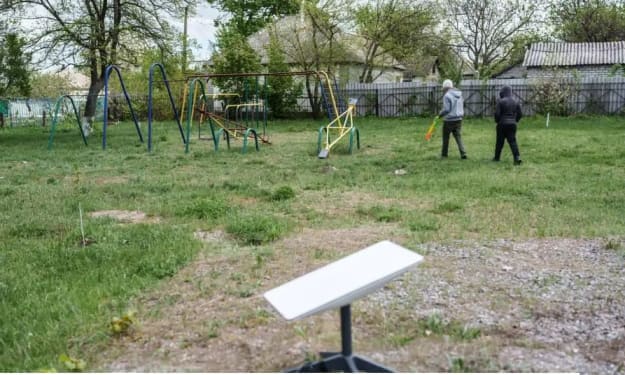
Intelligence by Deception: How Ukraine Turned a Fake Starlink Service Into a Battlefield Trap
In modern warfare, the battlefield is no longer limited to trenches, tanks, and artillery fire. Today, wars are fought in the digital shadows — through satellite networks, encrypted apps, cyber deception, and data manipulation. A recent operation by Ukrainian forces demonstrates just how powerful digital intelligence can be.
By Ayesha Lashari6 days ago in The Swamp



Comments
There are no comments for this story
Be the first to respond and start the conversation.