
Japan Seizes Chinese Fishing Boat and Arrests Skipper Amid Rising East China Sea Tensions
Maritime Confrontation Near the Senkaku Islands Signals Renewed Strain in Sino-Japanese Relations
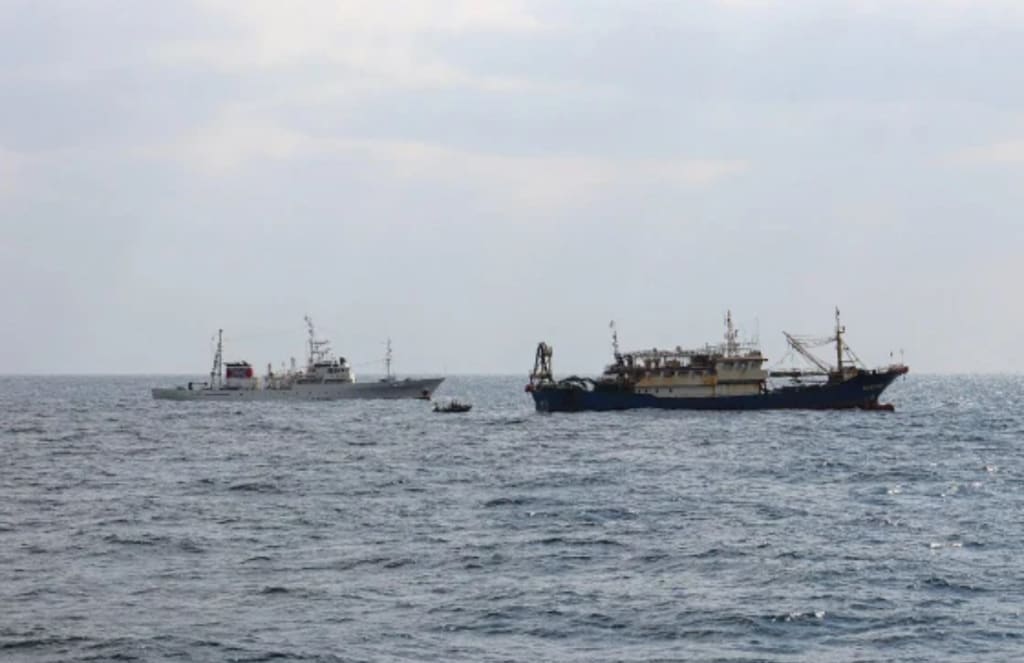
In a dramatic escalation of long-standing maritime tensions, Japan has seized a Chinese fishing boat and arrested its skipper in disputed waters of the East China Sea. The incident, which unfolded near the contested Senkaku Islands, has reignited diplomatic friction between Tokyo and Beijing and drawn international attention to one of Asia’s most sensitive geopolitical flashpoints.
The waters surrounding the uninhabited islands—known as the Senkaku Islands in Japan and Diaoyu Islands in China—have long been a source of confrontation between the two regional powers. Administered by Japan but claimed by China, the islands sit in resource-rich waters believed to hold valuable fishing grounds and potential undersea energy reserves.
According to Japanese authorities, the vessel entered what Japan considers its territorial waters near the Senkaku Islands without authorization. The Japan Coast Guard reportedly intercepted the fishing boat after it ignored repeated warnings to leave the area. Officials stated that the skipper was detained under Japanese law on suspicion of violating fisheries regulations and maritime boundaries.
The Chinese government swiftly condemned the action, describing it as “illegal” and demanding the immediate release of both the vessel and its captain. Beijing maintains that the islands are inherent Chinese territory and routinely dispatches fishing fleets and coast guard vessels to assert its sovereignty claims.
A Familiar Flashpoint
Incidents like this are not unprecedented. In 2010, a similar episode saw a Chinese trawler collide with Japanese patrol boats, triggering a diplomatic crisis that lasted weeks. The current arrest mirrors that earlier confrontation, underscoring how fragile stability remains in the East China Sea.
Tokyo insists its enforcement actions are lawful and consistent with international maritime standards. Japanese officials argue that they are protecting national sovereignty and ensuring compliance with domestic fishing laws. The government in Tokyo has emphasized that any vessel entering its territorial waters without permission risks detention.
Beijing, however, views Japan’s control of the islands as illegitimate. Chinese authorities frequently lodge diplomatic protests when Japanese forces intercept Chinese vessels in the disputed zone. The latest seizure has once again led to heated rhetoric between the two capitals.
Strategic and Economic Stakes
The confrontation is not merely about fishing rights. The East China Sea holds significant strategic value. Beyond its abundant marine resources, the area is believed to contain potential oil and gas reserves. Control over these waters also carries broader security implications, as both nations seek to project maritime power in the region.
For Japan, the incident reinforces concerns about increased Chinese maritime activity near its southwestern islands. Japanese officials have reported a steady rise in Chinese coast guard and naval presence in recent years. This pattern, they argue, demonstrates a coordinated effort by Beijing to strengthen its territorial claims.
China, on the other hand, accuses Japan of provocation and of escalating tensions through patrols and surveillance operations. Chinese state media often frames such encounters as defensive actions aimed at safeguarding national sovereignty.
Diplomatic Fallout
The arrest of the skipper could have immediate diplomatic consequences. Historically, such incidents have led to ambassadorial summons, public protests, and temporary freezes in high-level talks. Analysts suggest that both sides may attempt to manage the dispute carefully to prevent further deterioration of bilateral relations.
Trade ties between the two countries remain substantial despite political tensions. China is Japan’s largest trading partner, and economic interdependence acts as a moderating force during diplomatic crises. Nevertheless, public sentiment in both nations can quickly turn nationalistic, limiting leaders’ room for compromise.
In Beijing, officials have urged Japan to “correct its mistakes” and avoid actions that could inflame regional tensions. Meanwhile, Japanese leaders have reiterated their commitment to upholding maritime law and protecting national territory.
International Implications
The East China Sea dispute also intersects with broader regional security dynamics. The United States, a key ally of Japan, has previously affirmed that the U.S.-Japan Security Treaty covers territories administered by Japan, including the Senkaku Islands. While Washington takes no official position on ultimate sovereignty, it opposes unilateral changes to the status quo.
As maritime disputes become more frequent across Asia, the international community watches closely for signs of escalation. Analysts warn that even minor confrontations between coast guard vessels could spiral into larger crises if mismanaged.
The current incident highlights the delicate balance between law enforcement and geopolitical signaling. While Japan frames the seizure as routine maritime policing, China perceives it as a direct challenge to its sovereignty claim. The arrest of the skipper personalizes what is otherwise a complex territorial dispute, making diplomatic resolution more urgent.
Legal and Political Ramifications
Under Japanese law, foreign nationals detained in territorial waters may face investigation and potential prosecution. However, in past cases involving the Senkaku Islands, Japanese authorities have sometimes released detained Chinese captains to defuse tensions. Whether Tokyo will pursue legal action this time remains uncertain.
Political leaders on both sides must weigh domestic expectations against diplomatic pragmatism. Nationalist voices in Japan demand firm enforcement, while Chinese citizens expect their government to defend territorial claims vigorously. Social media in both countries has already amplified the incident, intensifying public scrutiny.
A Test for Crisis Management
Ultimately, the seizure of the Chinese fishing boat and arrest of its skipper represent more than a maritime law enforcement action. They serve as a test of crisis management between two of Asia’s most powerful nations.
Observers suggest that quiet diplomatic negotiations may soon follow public statements. Historically, back-channel communications have helped de-escalate similar disputes. The coming days will reveal whether both governments prioritize stability or allow tensions to rise.
For now, the waters around the Senkaku Islands remain a volatile arena where fishing boats, coast guard ships, and geopolitical ambitions intersect. The latest confrontation underscores the enduring complexity of Sino-Japanese relations and the challenges of maintaining peace in contested seas.
As regional powers navigate these troubled waters, the world watches closely—aware that even a single fishing vessel can become the catalyst for far-reaching diplomatic consequences.
About the Creator
Keep reading
More stories from Aqib Hussain and writers in The Swamp and other communities.
Eclipse of the Century: Six Full Minutes of Darkness — When It Will Happen and the Best Places to Watch the Event
The phrase “eclipse of the century” is not used lightly. Astronomers are already calling the total solar eclipse of August 2, 2027, one of the most remarkable celestial events of our lifetime. What makes this event so extraordinary is its duration: in some locations, totality will last an astonishing six minutes and 23 seconds — an unusually long period for a total solar eclipse.
By Aqib Hussain3 days ago in The Swamp
Why Black History Matters in America?
The United States of America is celebrating their 250th anniversary in 2026. I'm proud to be an American and as someone who was born here, I wouldn't imagine myself living anywhere else. This is a country where opportunities are possible. Where anyone can be successful in anything they desire to do. Equality, community, and togetherness are the backbones of what America is and should be about. However, we have an administration who wants to erase and disregard those who have made positive, meaningful impacts in our country, specifically Black figures, such as Martin Luther King, Jr., Rosa Parks, and Maya Angelou. President Trump and his administration have been constantly complaining and fighting against what they call the "Woke agenda". They use this excuse as a distraction from other issues they refuse to address, such as the high cost of living, climate change, and inflation. That equality is dividing America, when in reality, it's bringing us together. Being woke is not tied to a specific political party. No matter where you stand on the political spectrum, you can still care about other people and their plights. Compassion and empathy for others isn't tied to a political party, either. We were taught as children to treat others the way we want to be treated and not judge others because they're different from us. Caring about others isn't a personal attack on your beliefs. It doesn't make you any less of a person. People who are easily offended over African American figures, past or present, or anything related to it, are grasping at straws. Current and future generations need to know who people like Harriet Tubman and Shirley Chisholm were, especially in the classroom. Black History is part of American History. It should be recognized, not hidden or forgotten. Besides, you can't shield children from everything, just because your feelings are easily hurt.
By Mark Wesley Pritchard 13 days ago in The Swamp
Disney World Confirms Imminent Closure of Orlando Theme Park — What Fans Need to Know
Disney World in Orlando, Florida, one of the world’s most popular tourist destinations, is making headlines as several major attractions and park areas prepare for imminent closure. While some fans initially feared a full resort shutdown, Disney has clarified that the closures are part of planned updates, refurbishments, and expansions rather than a total park closure.
By Ayesha Lashari6 days ago in The Swamp
The Pride Flag and the Diversion
For nearly a decade, the LGBTQIA Pride Flag rippled in the wind at Christopher Park, a kaleidoscope of color staked into the soil of America’s first national monument to LGBTQIA+ liberation. That flag came down this week. Federal officials, citing new guidance from the Trump Administration, silently lowered the rainbow flag from its pole across the street from the Stonewall Inn. The birthplace of the modern gay rights movement now flies only the United States flag.
By Tim Carmichael4 days ago in Pride


Comments
There are no comments for this story
Be the first to respond and start the conversation.