
Khaleda Zia: Slain Leader’s Widow Who Went on to Lead Bangladesh
From personal tragedy to political power, Khaleda Zia shaped Bangladesh’s modern political era

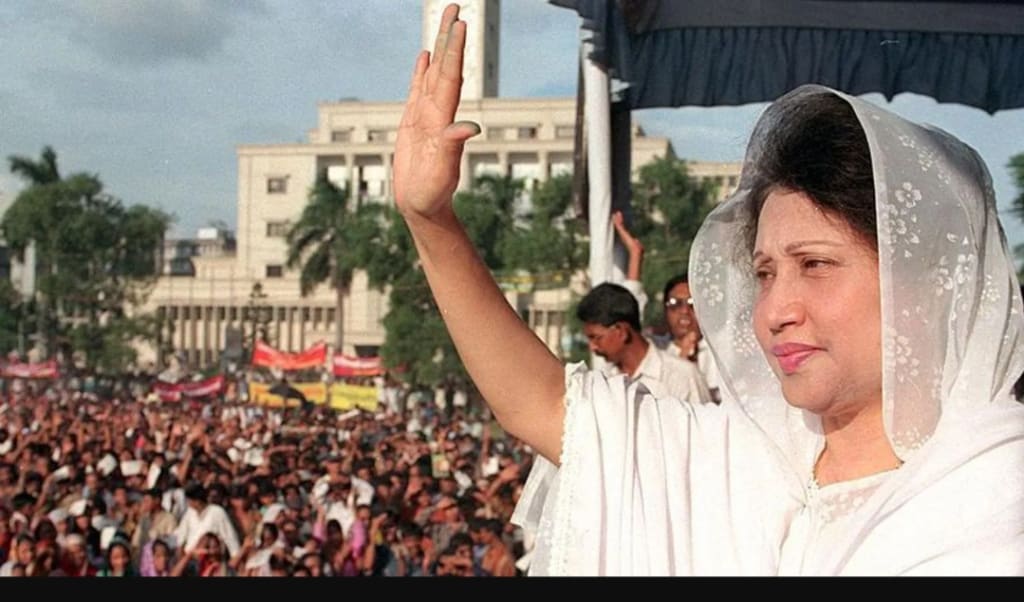
From Tragedy to Power in a Turbulent Political Landscape
Khaleda Zia’s journey from political outsider to one of Bangladesh’s most powerful leaders is deeply intertwined with tragedy, resilience, and fierce rivalry. Widowed after the assassination of President Ziaur Rahman, Khaleda Zia emerged from personal loss to shape Bangladesh’s political future, becoming the country’s first female prime minister and a dominant figure in South Asian politics for decades.
Her story reflects not only individual determination but also the complex nature of power, democracy, and legacy in a young nation still defining its political identity.
Early Life and a Life Away from Politics
Born in 1945 in Dinajpur, then part of British India, Khaleda Zia lived a relatively private life before politics entered her world. She married Ziaur Rahman, a military officer who later became a national hero during Bangladesh’s 1971 Liberation War.
At the time, Khaleda Zia had no political ambitions of her own. She was largely known as the wife of a rising military figure, focusing on family life while her husband’s influence steadily grew.
That changed dramatically in 1981.
The Assassination That Changed Everything
President Ziaur Rahman was assassinated during a failed military coup in May 1981, plunging the nation into shock. His death left a political vacuum and thrust Khaleda Zia into the public spotlight.
Supporters of Ziaur Rahman viewed Khaleda as the natural heir to his political legacy. Despite lacking formal political experience, she was encouraged to step forward — both as a symbol of continuity and as a unifying figure for the Bangladesh Nationalist Party (BNP), which her husband had founded.
What began as reluctant participation soon turned into full political engagement.
Rise Within the Bangladesh Nationalist Party
Khaleda Zia officially entered politics in the early 1980s and quickly rose through the ranks of the BNP. By 1984, she became the party’s chairperson, a role that placed her at the center of Bangladesh’s opposition politics during years of military-backed rule.
She emerged as a leading voice against authoritarianism, organizing mass protests and aligning with other opposition forces to demand the restoration of democracy. Her leadership played a significant role in the popular movement that eventually led to the fall of military ruler Hussain Muhammad Ershad in 1990.
This period cemented her reputation as a formidable political force.
Bangladesh’s First Female Prime Minister
In 1991, following democratic elections, Khaleda Zia became Bangladesh’s first female prime minister. Her victory marked a historic moment, not only for the country but also for women’s political representation in the Muslim-majority world.
Her first term focused on restoring parliamentary democracy, stabilizing institutions, and strengthening Bangladesh’s international relations. She returned to power again in 1996 and later served a third term from 2001 to 2006.
Throughout her time in office, Khaleda Zia championed nationalist policies, economic liberalization, and infrastructure development, while also facing criticism over governance, corruption allegations, and political polarization.
A Fierce Rivalry That Defined an Era
Khaleda Zia’s political life became inseparable from her intense rivalry with Sheikh Hasina, the daughter of Bangladesh’s founding leader Sheikh Mujibur Rahman. Their bitter competition — often referred to as the “Battle of the Begums” — dominated Bangladeshi politics for decades.
The rivalry went beyond policy differences, shaping political culture through boycotts, street protests, and deep divisions within society. While both women made history as long-serving female leaders, their adversarial relationship often paralyzed governance and fueled instability.
Legal Troubles and Declining Influence
In recent years, Khaleda Zia’s political career has been overshadowed by legal challenges. She was convicted in corruption cases and sentenced to prison, a move her supporters describe as politically motivated, while critics argue it reflects accountability under the rule of law.
Her deteriorating health and periods of house arrest have further reduced her direct involvement in politics. Nevertheless, she remains a symbolic leader of the BNP, with her legacy continuing to influence party supporters and opposition movements.
Legacy of Power, Controversy, and Endurance
Khaleda Zia’s life reflects the complexities of leadership in a nation shaped by revolution, coups, and democratic struggle. From the widow of a slain leader to the helm of government, her rise was neither planned nor easy.
Supporters view her as a champion of democracy who stood up to military rule and preserved her husband’s nationalist vision. Critics see her tenure as emblematic of political dysfunction and entrenched rivalry.
Regardless of perspective, Khaleda Zia’s impact on Bangladesh’s history is undeniable.
Conclusion
Khaleda Zia’s story is one of resilience born from tragedy. Thrust into politics by the assassination of her husband, she carved out her own place in history as a powerful and polarizing leader.
As Bangladesh continues to navigate its democratic future, Khaleda Zia remains a defining figure — a reminder of how personal loss can reshape national destiny, and how leadership often emerges from the most unexpected moments.
About the Creator
Asad Ali
I'm Asad Ali, a passionate blogger with 3 years of experience creating engaging and informative content across various niches. I specialize in crafting SEO-friendly articles that drive traffic and deliver value to readers.
Fleeing Settler Violence, Palestinians Leave One of Few Remaining Jordan Valley Hamlets
The Jordan Valley has always been more than just land. For generations of Palestinian Bedouin families, it has been home, livelihood, and identity. But today, that connection is being violently severed. One of the few remaining Palestinian hamlets in the Jordan Valley is slowly emptying, as families flee ongoing settler violence that has made daily life unbearable.
By Aqib Hussain8 days ago in The Swamp



Comments
There are no comments for this story
Be the first to respond and start the conversation.