
Fleeing Settler Violence, Palestinians Leave One of Few Remaining Jordan Valley Hamlets
A Blog on Displacement, Fear, and the Quiet Vanishing of a Community

The Jordan Valley has always been more than just land. For generations of Palestinian Bedouin families, it has been home, livelihood, and identity. But today, that connection is being violently severed. One of the few remaining Palestinian hamlets in the Jordan Valley is slowly emptying, as families flee ongoing settler violence that has made daily life unbearable.
This is not a sudden evacuation. It is a slow, painful departure, driven by fear, harassment, and the absence of protection.
A Village That Refused to Leave — Until Now
For decades, the Palestinian hamlet of Ras Ein el-Auja, located north of Jericho, stood firm despite mounting pressures. Surrounded by expanding Israeli settlements, the community continued to raise livestock, live in modest structures, and rely on the land for survival.
But resilience has limits.
In recent months, settlers established a new outpost just meters away from Palestinian homes. What followed was not coexistence, but intimidation. Residents describe daily harassment—settlers entering homes, grazing livestock on Palestinian land, blocking access roads, and creating an atmosphere of constant fear.
Families who once felt rooted now feel trapped.
Life Under Constant Threat
Residents say settler activity is no longer occasional—it is relentless.
Men, women, and children live with the fear that settlers could appear at any moment. Some villagers report settlers roaming through the community armed, others riding horses or driving tractors directly through residential areas. Livestock, the backbone of Bedouin life, has been stolen or scattered. Water sources have been threatened.
And when residents seek help?
There is often no response.
Calls to authorities frequently go unanswered, leaving families with no protection and no sense of safety. Over time, fear replaces hope, and staying becomes more dangerous than leaving.
The Decision No One Wants to Make
Leaving your home is never easy. For the families of Ras Ein el-Auja, it means abandoning land their ancestors lived on for generations.
Yet over the past weeks, dozens of families have already left, loading what little they can onto trucks and trailers. Some dismantle their homes entirely, unsure if they will ever return. Others leave behind livestock they can no longer protect.
The departures are heartbreaking—not just for those leaving, but for those staying behind, watching their community disappear piece by piece.
A Broader Pattern Across the Jordan Valley
What is happening in Ras Ein el-Auja is not an isolated case.
Human rights organizations have documented a wider pattern of Palestinian displacement across the Jordan Valley, especially since the escalation of regional violence in late 2023. Small Bedouin and shepherding communities are being pushed out one by one through a combination of settler harassment, land restrictions, and lack of legal protection.
Entire villages have already vanished.
This quiet displacement rarely makes headlines, but its impact is profound. Each emptied hamlet represents not just lost homes, but erased histories and broken communities.
Why the Jordan Valley Matters
The Jordan Valley is strategically and economically significant. It is one of the most fertile regions of the West Bank and has long been central to Palestinian agriculture and herding traditions.
As Palestinian communities disappear, settlements expand, reshaping the region’s demographic reality. Critics argue this undermines any future prospects for a viable Palestinian state and deepens long-standing tensions.
Under international law, Israeli settlements in occupied territories are widely considered illegal. Yet expansion continues, often accompanied by settler violence that goes unpunished.
The Human Cost of Displacement
Behind every statistic is a human story.
Families displaced from Ras Ein el-Auja are now scattered—some moving to nearby towns like Jericho, others seeking temporary shelter with relatives. Many have lost their primary source of income. Children are pulled out of familiar environments. Elders are forced to leave land they may never see again.
The emotional toll is immense. Displacement is not just physical—it is psychological. The sense of belonging, safety, and continuity is shattered.
As one resident put it: “We don’t know where we will go. We are scattered. Everything is uncertain.”
What Comes Next?
The future of Ras Ein el-Auja remains uncertain. With each family that leaves, the village grows quieter—and more vulnerable. Those who remain fear they may be next.
Without meaningful intervention or protection, the Jordan Valley risks losing its remaining Palestinian presence altogether. What remains will be empty land, abandoned homes, and memories of communities that once thrived.
Final Thoughts
This is not just a story about one hamlet. It is a reflection of a larger reality unfolding quietly across the West Bank.
The departure of Palestinians from Ras Ein el-Auja highlights how violence, intimidation, and neglect can dismantle communities without a single formal eviction order. When people leave because staying is too dangerous, displacement becomes invisible—but no less real.
The question now is whether the world will continue to watch silently, or finally listen to the voices of those being pushed off their land—one village at a time.
About the Creator
Keep reading
More stories from Aqib Hussain and writers in The Swamp and other communities.
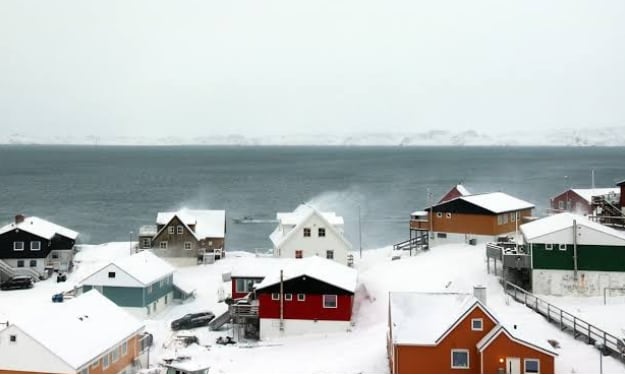
“I Don’t Want to Live in an American Empire”: Greenlanders Bristle at U.S. Threats
When people think of Greenland, they imagine glaciers, polar bears, and endless white landscapes. What they don’t imagine is a small population suddenly thrust into the center of global power politics. Yet that is exactly what has happened — and Greenlanders are not happy about it.
By Aqib Hussainabout 8 hours ago in The Swamp
'20/20'
"Do It Again" the track that would ultimately open the Beach Boys final album on Capitol Records which was released on February 10th 1969 had originally been released as a single in August of 1968. The track was the first of many post-Pet Sounds era throwbacks to the early Beach Boys sound which would become continually more cliched and eventually lead the Beach Boys to the level of self-parody they would eventually succumb to in the 1980s while their closest contemporaries The Beatles nearing the end of their run in 1969 would go on to be viewed as the most influential band of all time. However, the song itself is not bad on its surface, and it opens with a futuristic sounding (for 1969) drumbeat captured by then-Beach Boys engineer Stephen Desper using tape delays on the drums performed by Dennis Wilson and John Guerin. The song has been re-recorded numerous times over the years on various Beach Boys-related projects most notably the 2011 re-recording at Capitol studios featuring the five surviving Beach Boys at the time backed instrumentally by various members of both the Brian Wilson Band and Mike Loves touring "Beach Boys" to promote the then upcoming Beach Boys 50th Anniversary reunion tour in 2012. The hammering and power drill sound at the end of the song was an excerpt from a track called "Workshop" that was to be a part of the uncompleted "SMiLE" album.
By Sean Callaghan6 days ago in Beat


Comments
There are no comments for this story
Be the first to respond and start the conversation.