
Japan’s Takaichi Dissolves Parliament After Only Three Months in Office, Setting Up Snap Election
A sudden political reset raises questions about leadership, stability, and Japan’s future direction

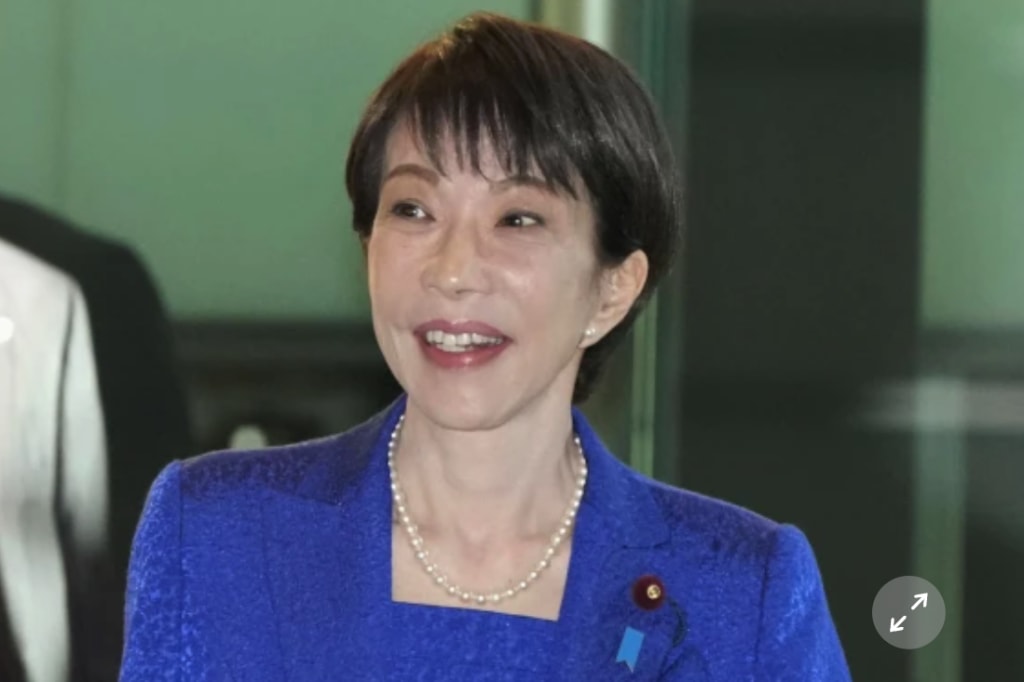
Japan’s political landscape has been thrown into uncertainty after Prime Minister Sanae Takaichi dissolved parliament just three months after taking office, calling a snap general election that few observers expected so soon. The dramatic move has sparked intense debate across Japan and abroad, with supporters calling it a necessary step to secure a mandate and critics warning of instability at a sensitive time for the country.
The decision marks one of the shortest tenures in modern Japanese political history before a parliamentary dissolution, highlighting deep challenges facing the new administration.
A Brief and Turbulent Premiership
Sanae Takaichi assumed office amid high expectations, positioning herself as a strong conservative leader focused on economic revival, national security, and administrative reform. Her rise was historic, symbolizing a shift within Japan’s ruling political circles and drawing international attention.
However, her time in office quickly proved turbulent. Internal party disagreements, declining approval ratings, and mounting opposition criticism made it difficult for her government to push key legislation through parliament. With resistance growing both inside and outside her party, Takaichi faced an increasingly narrow window to assert authority.
The dissolution of parliament after just three months suggests that the prime minister saw political momentum slipping away and chose to reset the playing field rather than govern under constant pressure.
Why Dissolve Parliament So Quickly?
In Japan’s parliamentary system, dissolving the lower house and calling an election is a powerful tool. It allows the prime minister to seek a fresh mandate from voters, bypassing legislative gridlock and party infighting.
Takaichi’s decision appears driven by several factors:
Weak parliamentary support, limiting her ability to pass reforms
Internal party divisions, threatening leadership stability
Public opinion volatility, with polls showing mixed sentiment
Strategic timing, before further political damage could occur
By calling a snap election, Takaichi is effectively asking voters to decide whether she deserves a stronger mandate—or whether Japan needs new leadership altogether.
Reaction From Political Opponents
Opposition parties wasted no time criticizing the move, accusing Takaichi of prioritizing political survival over governance. Several opposition leaders argued that dissolving parliament so soon demonstrates a lack of preparedness and leadership confidence.
They also questioned the cost of a snap election at a time when Japan faces pressing challenges, including economic uncertainty, demographic decline, and regional security concerns.
Opposition parties are now scrambling to unify messaging and capitalize on voter fatigue, framing the election as a referendum on political instability rather than policy vision.
Impact on Japan’s Economy and Markets
Political uncertainty often unsettles financial markets, and Japan is no exception. Investors closely monitor leadership stability, especially as the country grapples with inflation pressures, currency volatility, and global economic headwinds.
While markets have not reacted dramatically yet, analysts warn that prolonged uncertainty could:
Delay economic reforms
Weaken investor confidence
Slow budgetary decision-making
Complicate long-term planning
Business leaders have urged all parties to provide clarity and avoid campaign promises that could undermine fiscal discipline or economic recovery.
Public Sentiment and Voter Fatigue
Japanese voters have experienced frequent leadership changes over the past decade, and the sudden snap election risks deepening voter fatigue. Some citizens express frustration over being called to the polls again so soon, while others welcome the chance to voice approval or dissatisfaction.
Public opinion appears divided:
Supporters argue that a snap election restores democratic legitimacy
Critics see it as unnecessary disruption
Undecided voters remain skeptical of political promises
Turnout will be a key indicator of public engagement and trust in the political system.
Regional and International Implications
Japan plays a critical role in regional security and global diplomacy. Allies and neighboring countries are watching the situation closely, particularly given Japan’s involvement in Indo-Pacific security frameworks and economic partnerships.
A leadership change—or a weakened mandate—could affect:
Defense policy direction
Diplomatic consistency
Trade negotiations
Long-term strategic planning
While Japan’s institutions are strong, frequent political shifts can complicate international cooperation.
What the Snap Election Will Decide
The upcoming election is more than a routine political contest. It will determine:
Whether Takaichi retains leadership with a stronger mandate
Whether opposition parties can capitalize on instability
The future direction of economic and security policies
The ruling party’s internal balance of power
If Takaichi secures a clear victory, she could emerge strengthened and better positioned to govern. A weak result—or defeat—could end her premiership almost as quickly as it began.
About the Creator
Muhammad Hassan
Muhammad Hassan | Content writer with 2 years of experience crafting engaging articles on world news, current affairs, and trending topics. I simplify complex stories to keep readers informed and connected.
Keep reading
More stories from Muhammad Hassan and writers in The Swamp and other communities.
Who Owns TikTok in the U.S. Now
TikTok is one of the most popular social media apps in the United States, especially among teens and young adults. With its short, addictive videos, it has changed how people consume content online. But when it comes to who actually owns TikTok in the U.S., the answer isn’t as simple as pointing to a single company. Recent political scrutiny, corporate restructuring, and legal maneuvering have made TikTok’s ownership a central issue in tech policy, national security debates, and business news.
By Muhammad Hassan6 days ago in The Swamp
Dollar Falls After Trump Comments
Introduction: A Sudden Shift in Currency Markets The U.S. dollar slid sharply this week after President Donald Trump’s public comments about the currency’s decline, sending ripples through global financial markets. Traders interpreted his remarks as a sign that the administration may be comfortable with a weaker dollar, prompting a fresh wave of dollar selling and boosting other major currencies such as the euro, yen and British pound. The currency move has underscored growing concerns over U.S. economic policy and investor confidence.
By Salaar Jamalia day ago in The Swamp
Poland Built the E.U.’s Biggest Army, but the Threat Has Changed
From tanks and troops to cyberwar and hybrid pressure, Poland adapts its defense strategy Over the past decade, Poland has built the largest army in the European Union, investing heavily in troops, tanks, aircraft, and artillery. This rapid military expansion was driven by fear of conventional war, especially after Russia’s actions in Ukraine. For Warsaw, a strong army was seen as the best shield against invasion. But as Europe’s security landscape continues to evolve, Polish defense planners are facing a new reality: the threat is no longer only about tanks crossing borders. Today’s dangers are more complex, less visible, and harder to stop with traditional military power alone. Why Poland Built Europe’s Biggest Army Poland’s military growth did not happen by accident. Its history, geography, and politics all played a role. Poland sits on NATO’s eastern edge, close to Russia and Belarus, and has long viewed itself as a frontline state. The invasion of Ukraine in 2022 confirmed long-standing fears in Warsaw that hard power still matters. In response, Poland: Expanded its armed forces toward 300,000 troops Purchased modern tanks, fighter jets, and missile systems Increased defense spending to well above NATO’s 2% target The goal was clear: deterrence through strength. Poland wanted to make any potential attack too costly to consider. A Strong Army, but a Changing Battlefield While Poland’s conventional military power has grown, the nature of threats facing Europe has shifted. Security experts now warn that future conflicts may not begin with open warfare. Instead, they could start with: Cyberattacks on power grids and communication networks Disinformation campaigns targeting public trust Economic pressure and political interference Border manipulation, including the use of migration as leverage These so-called hybrid threats are harder to detect and respond to, and they often fall outside the reach of tanks and artillery. Cyber and Information Warfare One of the biggest challenges Poland now faces is in the digital domain. Cyberattacks aimed at government systems, banks, and infrastructure have increased across Europe. Poland, as a vocal supporter of Ukraine, is considered a high-value target. Disinformation is another concern. False narratives spread online can: Undermine trust in democratic institutions Create political division Weaken public support for defense spending and alliances Polish officials increasingly recognize that defending the country also means defending information space, not just territory. Border Pressure and Non-Military Tactics Poland has already experienced how non-traditional threats can be used strategically. In recent years, pressure on Poland’s eastern border involved irregular migration flows, widely seen as a form of political coercion. Such tactics blur the line between civilian crisis and national security threat, forcing governments to respond carefully without escalating tensions. This kind of pressure cannot be solved by military force alone. It requires: Border management Diplomatic coordination Legal and humanitarian frameworks Intelligence sharing with allies The Role of Alliances Even with Europe’s largest army, Poland understands it cannot face modern threats alone. NATO remains the cornerstone of Polish security. Hosting allied troops, participating in joint exercises, and sharing intelligence all strengthen deterrence. At the same time, Poland has pushed for a stronger European defense role, especially in areas like cyber defense and crisis response. The focus is shifting from national strength only to collective resilience, where countries support each other across military, economic, and digital domains. Balancing Heavy Weapons and Smart Defense Poland’s defense debate is now about balance. Traditional military power is still necessary. Tanks, air defenses, and trained soldiers remain essential if deterrence fails. However, experts argue that future security depends equally on softer but smarter tools. These include: Cybersecurity investment Civil defense and emergency preparedness Strategic communication Energy independence Supply-chain protection A modern defense strategy must protect society as a whole, not just the battlefield. Public Expectations and Political Pressure Building Europe’s biggest army came with strong public support, especially after events in Ukraine. But sustaining such a force is expensive, and voters increasingly ask whether money should also go toward healthcare, infrastructure, and education. As threats become less visible, it becomes harder to explain why defense spending remains high. Leaders must now justify investment in areas people cannot easily see, like cybersecurity or intelligence. This requires clear communication and long-term planning, not fear-based messaging. What Comes Next for Poland Poland is unlikely to scale back its military anytime soon. Instead, the country is expected to adapt its defense posture. Future priorities may include: Integrating cyber and information defense into military planning Expanding cooperation with EU and NATO partners Strengthening civilian resilience alongside military readiness Preparing society for crises beyond armed conflict The focus is shifting from size alone to flexibility and resilience. Conclusion Poland’s decision to build the European Union’s largest army was shaped by real and immediate threats. That investment has made the country stronger and more confident within NATO and Europe. Yet the security environment has changed. Today’s threats are less direct, more complex, and often invisible. Tanks and troops remain important, but they are no longer enough on their own. For Poland, the challenge now is not just maintaining a powerful army, but redefining what security means in a world of hybrid warfare, digital threats, and political pressure. How well it adapts may shape not only its own future, but Europe’s as well.
By Fiaz Ahmed a day ago in The Swamp
One Unchecked Box
"Republished" because it was the only way to add the embed for the newly recorded audio version of this story due to the Top Story badge. Plus it serves as a nice, informal announcement of the podcast's revival for another season (go subscribe!):
By Stephen A. Roddewiga day ago in Fiction



Comments
There are no comments for this story
Be the first to respond and start the conversation.