
Jamie Dimon: The Banker Who Became a Symbol of Financial Leadership
. Early Life and Career Beginnings How Jamie Dimon’s family background and early experiences shaped one of the most influential banking careers of our time.

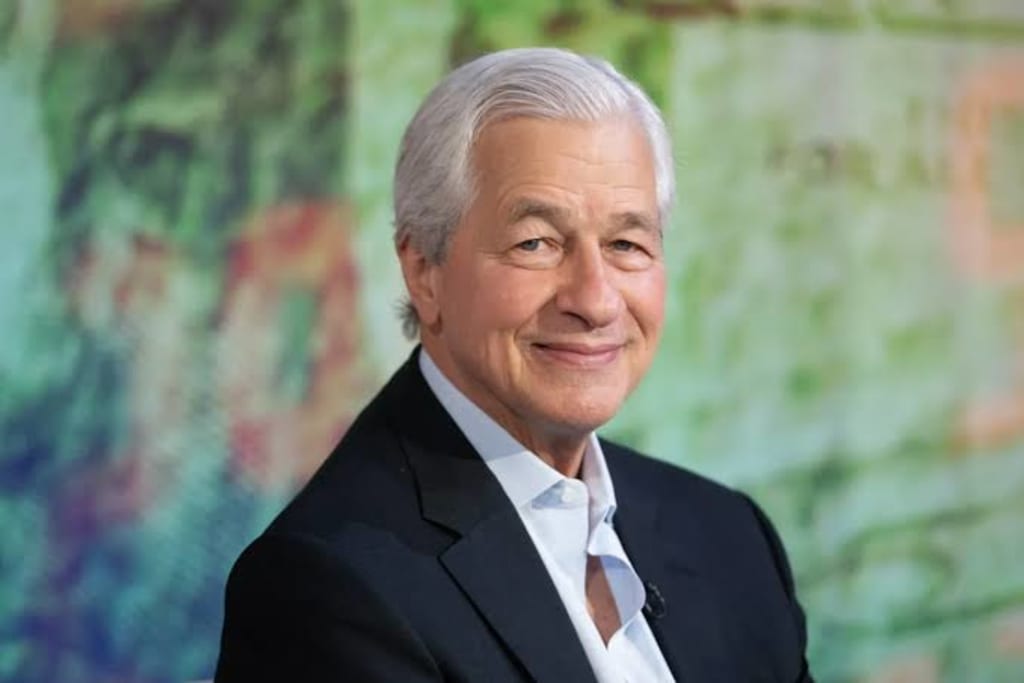
Introduction
When people talk about powerful figures in global finance, one name consistently stands out — Jamie Dimon. As the longtime CEO of JPMorgan Chase, Dimon has steered one of the world’s largest banks through financial crises, economic booms, and rapid technological changes. To many, he represents the resilience and adaptability that define modern banking. To others, he’s a controversial figure whose influence extends far beyond Wall Street.
In a time when trust in global finance is often questioned, Jamie Dimon’s story offers insight into how leadership, risk, and vision can shape the world’s economy.
---
Early Life and Career Beginnings
Jamie Dimon was born in New York City in 1956 into a family that already had strong ties to the banking industry. His father and grandfather both worked as stockbrokers, giving him early exposure to the world of finance.
After graduating from Tufts University, Dimon attended Harvard Business School, where he earned an MBA. It was there that he caught the attention of legendary banker Sandy Weill, who would later become his mentor.
Dimon joined Weill at American Express and later helped build Citigroup, one of the world’s biggest financial institutions. His early years in finance taught him valuable lessons about leadership, strategy, and managing risk — qualities that would define his career for decades to come.
---
Rising to the Top at JPMorgan Chase
In 2000, Jamie Dimon joined Bank One, a major financial institution in Chicago. When JPMorgan Chase acquired Bank One in 2004, Dimon became president and chief operating officer. A year later, he was named CEO, taking charge of one of the most powerful banks on the planet.
Dimon’s leadership style quickly made an impact. Known for his direct communication, sharp intelligence, and strong work ethic, he focused on strengthening JPMorgan’s balance sheet and expanding its global reach.
Under his watch, the bank not only survived the 2008 financial crisis — it emerged stronger than most competitors. While other institutions crumbled under bad loans and risky bets, JPMorgan Chase, under Dimon’s direction, managed to stay profitable and stable.
---
A Leader During Crisis
The 2008 global financial crisis tested the leadership of every major banker in the world. For Jamie Dimon, it became the defining moment of his career.
JPMorgan Chase played a key role in stabilizing the financial system, even acquiring struggling institutions like Bear Stearns and Washington Mutual to prevent a total collapse.
While Dimon was later criticized for benefiting from these acquisitions, his actions helped prevent further economic damage. In the years that followed, he became a leading voice for reform, speaking out on banking regulations, government policy, and the future of capitalism.
---
Beyond Banking: The Voice of Corporate America
Jamie Dimon isn’t just a banker — he’s one of the most influential voices in business. As chairman of the Business Roundtable, an association of top U.S. CEOs, he has often spoken about economic inequality, education, and job creation.
His annual letters to shareholders are widely read, not just by investors but also by policymakers and business leaders. In them, Dimon offers sharp analysis of global trends — from inflation and climate change to the impact of technology on the workforce.
Although some critics accuse him of defending Wall Street’s interests, others see Dimon as a realist who understands the delicate balance between profit and public responsibility.
---
A Glimpse Into His Philosophy
Dimon often emphasizes discipline, resilience, and transparency as the keys to lasting success. He’s known for being approachable yet demanding, expecting high performance from his teams while maintaining loyalty to his employees.
His philosophy is straightforward: a company’s long-term success depends on trust — from customers, regulators, and the public.
Despite his billionaire status, Dimon frequently advocates for reforms that would make capitalism more inclusive and sustainable, arguing that “a healthy society is the foundation of a healthy economy.”
---
Legacy and Influence
As of today, Jamie Dimon remains at the top of JPMorgan Chase, leading the company into an era of digital transformation and global competition. His influence stretches beyond banking — into politics, economics, and philanthropy.
There has even been speculation about Dimon entering public service, though he’s repeatedly denied interest in a political career. Still, his voice carries significant weight in Washington and across financial markets.
Whether admired or criticized, Jamie Dimon has shaped modern finance in a way few others have. His ability to guide JPMorgan through multiple crises, including the COVID-19 pandemic, solidifies his reputation as one of the most capable leaders in business today.
---
Conclusion
Jamie Dimon’s journey is more than a story about banking — it’s about leadership, vision, and the ability to adapt in a world that never stops changing. From his early days under Sandy Weill to his decades at the helm of JPMorgan Chase, he has shown that success comes not just from ambition but from resilience and responsibility.
As the financial world continues to evolve, Jamie Dimon remains a central figure — a reminder that strong leadership can define not only a company but an entire era of global finance.
---
About the Creator
Fiaz Ahmed
I am Fiaz Ahmed. I am a passionate writer. I love covering trending topics and breaking news. With a sharp eye for what’s happening around the world, and crafts timely and engaging stories that keep readers informed and updated.
Keep reading
More stories from Fiaz Ahmed and writers in The Swamp and other communities.
Unfair Dismissal: Understanding Your Rights at Work
What Does “Unfair Dismissal” Mean? Losing your job is never easy, but being fired for the wrong reasons can be especially painful. Unfair dismissal happens when an employer ends someone’s employment without a fair reason, or without following proper legal procedures.
By Fiaz Ahmed 3 months ago in The Swamp
So You Decided To Become a Nurse Practitioner:
So you decided to become an "Advanced Practice" nurse. Congratulations!... is what I would say if this was a good idea. Grad school? In this economy? What were you thinking? Likely it was something along the lines of either 1) “I've seen these other chucklefucks do it— Why can't I?” or even 2) “I've got a nice career, I should shake it up. I miss feeling like I have no clue what I'm doing.”
By Sandor Szabo3 days ago in Fiction




Comments
There are no comments for this story
Be the first to respond and start the conversation.