
Italy Calls for Suspension of Carbon Price in Major Attack on EU Climate Policy
Rome’s challenge to Brussels exposes growing tensions between economic strain and environmental ambition across Europe
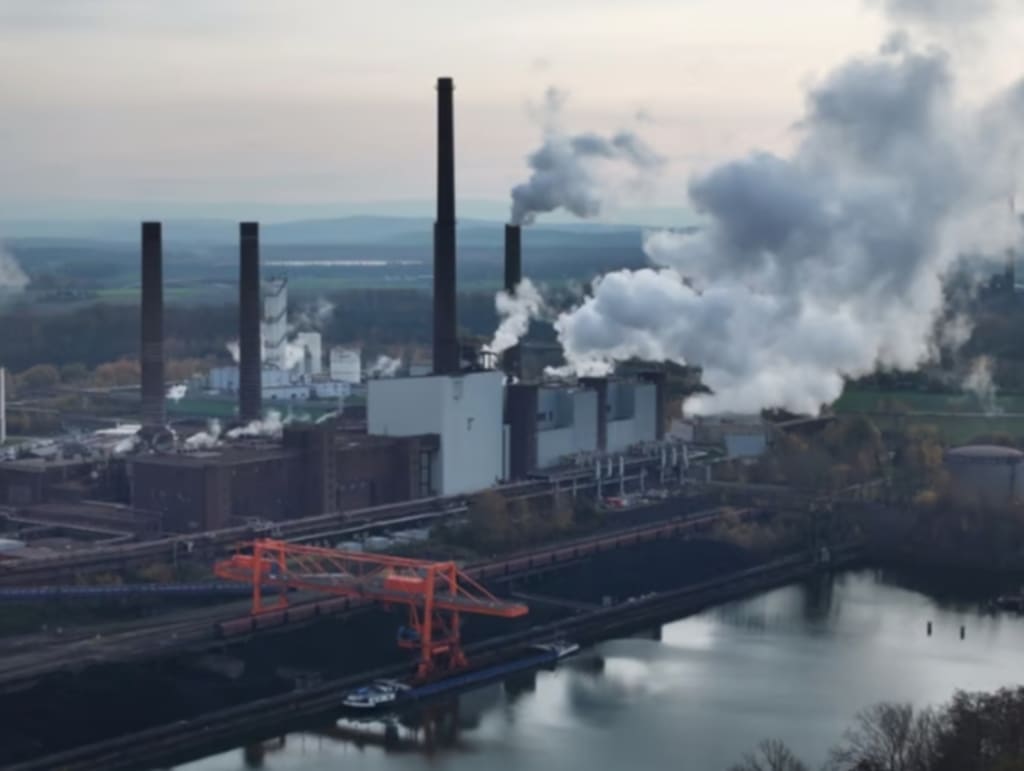
Italy has ignited a fierce debate across Europe by calling for the suspension of the European Union’s carbon pricing mechanism, marking one of the most direct challenges yet to the bloc’s climate framework. The move has exposed a widening fault line between member states grappling with economic pressures and Brussels’ long-term environmental commitments.
At the center of the dispute is the EU’s flagship carbon market, the Emissions Trading System (ETS), which places a price on carbon emissions from power plants, heavy industry, and aviation. Designed to reduce greenhouse gas emissions by making pollution more expensive, the ETS has been a cornerstone of European climate policy for nearly two decades.
But Rome now argues that extraordinary economic conditions—ranging from energy volatility to industrial competitiveness concerns—justify a pause.
A Direct Challenge to Brussels
The Italian government formally raised its concerns with the European Commission, urging a temporary suspension or adjustment of the carbon price to protect domestic industries and consumers. Officials argue that high carbon costs are amplifying inflationary pressures and undermining European manufacturers competing with countries that lack comparable environmental regulations.
The request is widely seen as a significant political escalation. Carbon pricing has long been defended by Brussels as both environmentally essential and economically efficient. Suspending it, even temporarily, would represent a symbolic retreat from the EU’s climate leadership.
The debate also touches on the broader objectives of the European Union’s Green Deal—a sweeping strategy aimed at making Europe climate-neutral by 2050. Italy’s call challenges not only a technical policy instrument but the political credibility of the bloc’s entire decarbonization agenda.
Economic Pressures at Home
Italy’s intervention reflects mounting domestic concerns. Energy-intensive sectors such as steel, cement, and chemicals have warned that rising carbon prices add to already steep operating costs. Business leaders fear plant closures, job losses, and the relocation of production to countries with looser environmental rules—a phenomenon known as carbon leakage.
Italian policymakers also cite household pressures. Though the ETS primarily targets industrial emitters, costs can trickle down to consumers through higher energy and product prices. With inflation having strained household budgets in recent years, Rome argues that flexibility is necessary to maintain public support for climate policies.
Critics, however, contend that suspending the carbon price would weaken incentives for clean investment at precisely the wrong moment. Renewable energy deployment, electrification, and industrial decarbonization depend on predictable price signals. A sudden policy shift could rattle markets and delay green projects.
Divisions Among Member States
Italy is not alone in expressing unease. Several EU member states have quietly voiced concerns about competitiveness and energy affordability. Yet others, particularly northern and western countries with strong climate constituencies, insist that the carbon market must remain intact.
The debate highlights a structural tension within the EU: balancing environmental ambition with economic cohesion. Wealthier member states may be better positioned to absorb transitional costs, while countries with higher public debt or more carbon-intensive economies face sharper trade-offs.
Environmental groups have reacted swiftly, warning that suspending carbon pricing would undermine Europe’s credibility ahead of global climate negotiations. They argue that backtracking now could embolden climate skeptics and weaken the EU’s influence on international climate diplomacy.
On the other hand, some industry groups support Italy’s stance, describing it as pragmatic rather than ideological. They emphasize that global climate action remains uneven and that unilateral European costs could disadvantage domestic producers without significantly reducing worldwide emissions.
Political Calculations
Italy’s move also carries domestic political dimensions. Economic anxiety has fueled populist narratives across Europe, and climate policy has occasionally become a lightning rod for broader dissatisfaction. By challenging Brussels, Rome may be signaling responsiveness to voters concerned about rising living costs and industrial decline.
However, this strategy carries risks. The EU’s climate architecture is deeply interwoven with its recovery funds, regulatory frameworks, and long-term investment strategies. Any disruption to the ETS could complicate financial planning and trigger market uncertainty.
The European Commission has thus far defended the carbon market’s integrity, emphasizing that it includes built-in mechanisms to address price volatility. Officials argue that reform discussions should occur through established legislative processes rather than abrupt suspensions.
The Stakes for Europe’s Climate Leadership
The EU has positioned itself as a global climate leader, often advancing policies more aggressively than other major economies. Its carbon pricing system is among the most developed in the world and has inspired similar mechanisms elsewhere.
If Italy’s call gains traction, it could signal a broader recalibration of European climate ambition. Conversely, if Brussels resists and maintains the ETS unchanged, tensions between economic and environmental priorities may intensify.
The question extends beyond technical policy design. It touches on the social contract underpinning Europe’s green transition. Can ambitious climate action coexist with economic resilience and political stability? Or will short-term pressures force compromises that dilute long-term goals?
A Crossroads Moment
Italy’s demand to suspend the carbon price represents more than a policy dispute; it reflects a crossroads for European governance. The transition to a low-carbon economy is inherently disruptive, redistributing costs and benefits across sectors and regions. Managing that disruption requires political agility and sustained public trust.
Whether Rome’s proposal leads to formal negotiations or remains a symbolic challenge, it has already reframed the debate. Climate policy in Europe is no longer solely about environmental urgency—it is equally about economic fairness and strategic competitiveness.
For the European Union, the coming months may determine whether its climate agenda can withstand mounting internal pressures. For Italy, the move underscores a balancing act between national economic priorities and collective European commitments.
In the broader context of global climate politics, Europe’s choices carry weight. A retreat could slow momentum worldwide; steadfast commitment could reaffirm leadership but strain domestic cohesion. As energy markets evolve and geopolitical uncertainties persist, the interplay between carbon pricing and economic stability will remain at the forefront.
Italy’s call for suspension may not immediately dismantle the EU’s carbon market, but it has undeniably shaken the political foundations beneath it. The outcome will shape not only Europe’s environmental trajectory but also the credibility of its promise to align prosperity with sustainability.
About the Creator
A Gathering of Evil Bosses
“I’m the queen of chin jutting while I smooth my hair, attacking, insulting, and deflecting to protect my appointer.” “Oh, please, Blondi, my hair is curled, highlighted, and longer than yours. I feature television commercials telling immigrants that we will give them a free plane ride home, and if they voluntarily turn themselves in, they will be allowed to legally apply for re-entry. It runs everywhere, and I look good in it! You can’t compete because of your blond hair. Mine is nicer, and my lips are prettier than yours.”
By Andrea Corwin 10 days ago in The Swamp
Bolivian Military Plane Carrying Banknotes Crashes Near Capital, Killing 20
In a tragic incident that has shaken the nation, a military aircraft transporting banknotes crashed near the capital of La Paz, claiming the lives of 20 people on board. The devastating accident has raised serious concerns about aviation safety, financial logistics, and military transport operations in Bolivia. Authorities have launched a full investigation as grieving families, government officials, and citizens struggle to process the sudden loss.
By Jameel Jamaliabout 6 hours ago in The Swamp
Pearl
1980 something. we all hung out at Pearl and you and i were nothing special, or so i thought. i mean we all danced, drenched in our own sweat, our own saline solution of fear, too many beers, shots, laughter, tears, fucks in the bathroom and i don't know when we began to be afraid. do you?
By ROCK aka Andrea Polla (Simmons)3 days ago in Fiction



Comments
There are no comments for this story
Be the first to respond and start the conversation.