
Bolivian Military Plane Carrying Banknotes Crashes Near Capital, Killing 20
Tragedy in the Andes: Military Plane Carrying Currency Crashes Near La Paz, Leaving 20 Dead
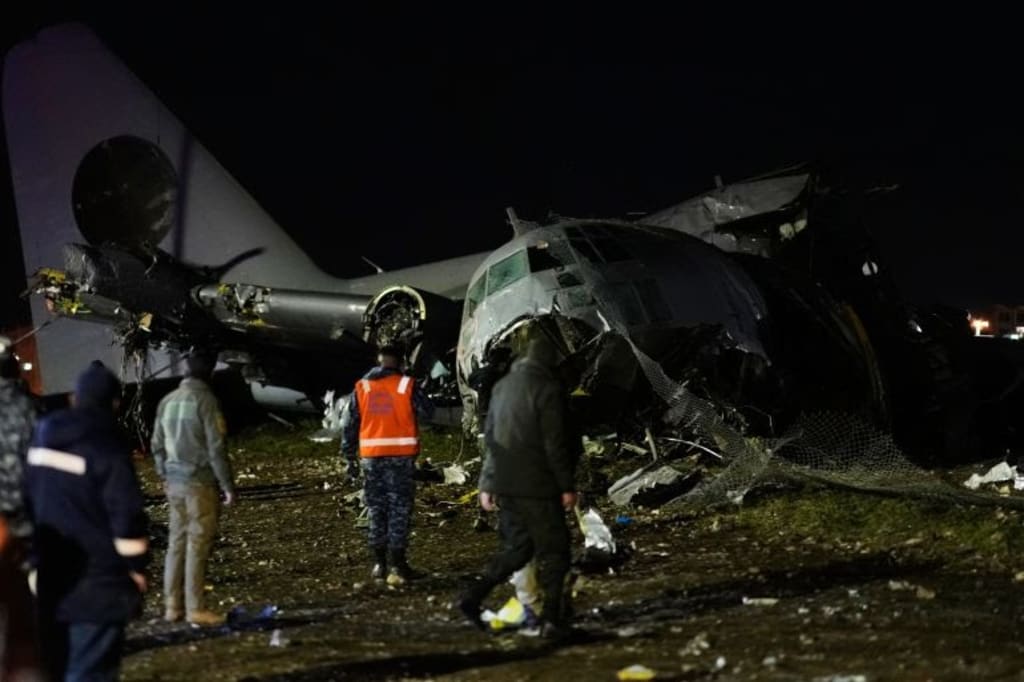
In a tragic incident that has shaken the nation, a military aircraft transporting banknotes crashed near the capital of La Paz, claiming the lives of 20 people on board. The devastating accident has raised serious concerns about aviation safety, financial logistics, and military transport operations in Bolivia. Authorities have launched a full investigation as grieving families, government officials, and citizens struggle to process the sudden loss.
A Routine Mission Turns Fatal
According to initial reports, the aircraft belonged to the Bolivian Air Force and was conducting what officials described as a routine financial transport mission. The plane was carrying a large shipment of freshly printed banknotes destined for regional distribution. Such operations are not uncommon in Bolivia, where physical currency is frequently transported to remote regions due to limited banking infrastructure.
The aircraft departed under normal weather conditions and maintained communication with air traffic control for much of the journey. However, shortly before reaching its destination, contact was abruptly lost. Witnesses in mountainous areas outside La Paz reported hearing an unusual engine noise followed by a loud explosion.
Emergency crews were immediately dispatched, but rescue operations were complicated by the difficult terrain of the Andes Mountains. When first responders finally reached the crash site, they found wreckage scattered across a steep slope, with no survivors.
Human Loss and National Mourning
The crash claimed the lives of 20 individuals, including military personnel, flight crew members, and financial security staff assigned to guard the valuable cargo. Families of the victims have expressed shock and heartbreak, as many had no indication that their loved ones faced unusual risk.
Bolivia’s president, Luis Arce, issued a national statement expressing deep sorrow and extending condolences to the families. He described the victims as “public servants who died in service to their country.”
National flags were lowered to half-staff in honor of those lost, and memorial services are being organized across several cities.
The Sensitive Cargo: Why Banknotes Were on Board
The aircraft was reportedly transporting newly printed currency for the Central Bank of Bolivia. Bolivia, like many developing countries, still relies heavily on physical cash transactions, especially in rural and mountainous regions where electronic payment systems are less accessible.
Transporting banknotes via military aircraft is considered safer than civilian transport due to enhanced security and reduced risk of theft. However, the crash has raised questions about whether such sensitive cargo should be transported differently to minimize risk.
Financial experts emphasize that while the loss of currency is significant, the greater tragedy lies in the loss of human life. The Central Bank has reassured citizens that the accident will not destabilize the country’s financial system, as contingency reserves and replacement printing measures are already in place.
Possible Causes Under Investigation
Investigators are now working to determine what caused the crash. Aviation specialists are examining several possibilities, including mechanical failure, pilot error, or environmental factors such as sudden weather shifts.
The Andes region is known for its unpredictable weather patterns, including rapid changes in wind conditions and visibility. Even experienced pilots face significant challenges navigating the high-altitude terrain.
Authorities are analyzing the aircraft’s flight data recorder and cockpit voice recorder, commonly referred to as “black boxes.” These devices are expected to provide crucial information about the aircraft’s final moments.
Military officials have pledged full transparency, promising to release findings once the investigation concludes.
Aviation Safety Concerns in Remote Regions
The crash has sparked renewed debate about aviation safety in mountainous regions. Bolivia’s geography presents unique logistical challenges, with many communities accessible only by air.
Military aircraft often play a vital role in transporting essential supplies, including medical equipment, food, and financial resources. However, aging aircraft fleets and difficult terrain can increase operational risks.
Aviation analysts suggest that modernization of aircraft and improved maintenance protocols could reduce future risks. Investment in advanced navigation systems and pilot training tailored to mountainous environments may also enhance safety.
Economic and Operational Implications
Beyond the immediate tragedy, the crash also carries logistical and financial implications. The destroyed banknotes will need to be replaced, requiring additional printing and transportation resources.
Financial authorities have emphasized that safeguards exist to prevent stolen or damaged banknotes from entering circulation. Each shipment is carefully tracked, and replacement procedures are well established.
Nevertheless, the accident highlights the complexity of managing currency distribution in geographically challenging regions.
A Nation Reflects and Seeks Answers
As Bolivia mourns, citizens are calling for answers and accountability. Families of the victims hope that the investigation will identify clear causes and prevent similar tragedies in the future.
The crash serves as a stark reminder of the risks faced by military and logistical personnel who perform critical but often overlooked duties. Their work ensures the functioning of essential national systems, from defense to finance.
In the coming weeks, investigators will continue their analysis, and government officials will consider potential reforms. Whether through improved aircraft maintenance, updated transport protocols, or enhanced safety training, Bolivia now faces an important opportunity to strengthen its aviation safety standards.
For now, the focus remains on honoring the lives lost and supporting those left behind. The tragedy has united the country in grief, but also in determination to learn from the disaster and ensure that such a loss is never repeated.
The crash of the military plane carrying banknotes is not just a logistical failure—it is a human tragedy that has left a permanent mark on Bolivia’s national consciousness.
About the Creator
Keep reading
More stories from Jameel Jamali and writers in The Swamp and other communities.
Trump Administration Live Updates: Bill Clinton Is Questioned for Hours About Epstein
The political landscape in the United States has once again been shaken by developments tied to the long-running investigation into disgraced financier Jeffrey Epstein. Recent reports that former President Bill Clinton was questioned for hours by federal authorities have reignited public attention, political debate, and difficult questions about accountability, transparency, and justice. These revelations, unfolding against the backdrop of the Trump Administration, highlight how unresolved controversies can continue to shape the national conversation years after the original crimes occurred.
By Jameel Jamaliabout 11 hours ago in The Swamp
A Gathering of Evil Bosses
“I’m the queen of chin jutting while I smooth my hair, attacking, insulting, and deflecting to protect my appointer.” “Oh, please, Blondi, my hair is curled, highlighted, and longer than yours. I feature television commercials telling immigrants that we will give them a free plane ride home, and if they voluntarily turn themselves in, they will be allowed to legally apply for re-entry. It runs everywhere, and I look good in it! You can’t compete because of your blond hair. Mine is nicer, and my lips are prettier than yours.”
By Andrea Corwin 10 days ago in The Swamp
Magic
Note from the Author: I want to let you know that this is an unusual story, and it has been written purely from whatever is in my unconscious mind, because before I start writing, I get into a flow state that reaches my unconsciousness. I also write in my subconscious mind, which is like a mid-flow state between the conscious and unconscious mind.
By Denise Larkin6 days ago in Fiction



Comments
There are no comments for this story
Be the first to respond and start the conversation.