
Green Party Takes Gorton and Denton from Labour in First Ever Westminster By-Election Win
A political earthquake in Greater Manchester signals shifting voter loyalties and a new era for UK environmental politics
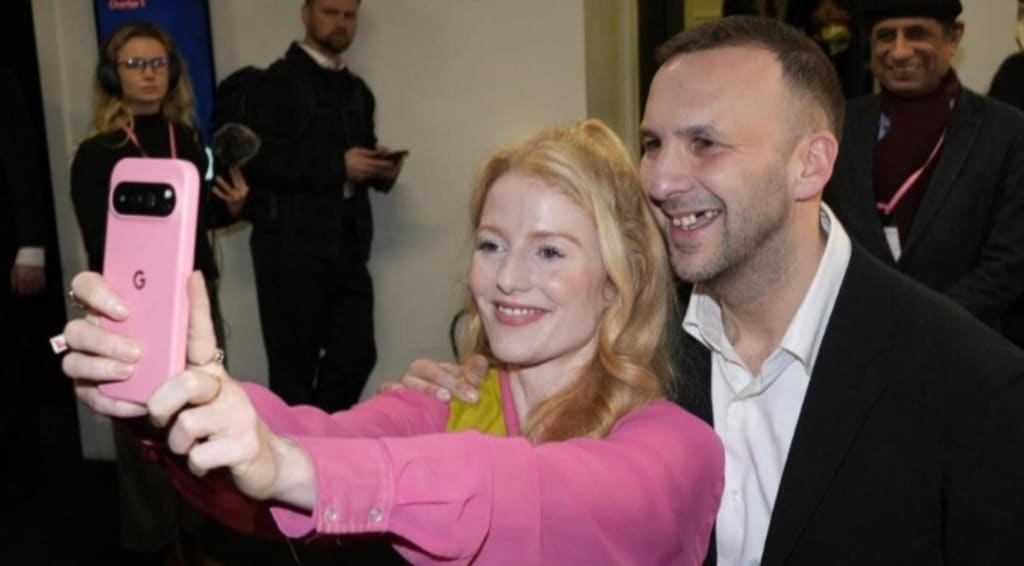
In a result few predicted and many will long remember, the Green Party of England and Wales has secured its first-ever Westminster by-election victory, seizing the Gorton and Denton seat from Labour Party. The outcome marks a watershed moment not only for the Greens but for British politics more broadly, raising questions about voter loyalty, grassroots mobilization, and the future shape of opposition politics.
The by-election, triggered by the resignation of Labour’s sitting MP, was initially expected to be a straightforward hold for the party. Gorton and Denton, located in Greater Manchester, has long been considered solid Labour territory. Instead, voters delivered a dramatic upset—propelling the Greens into uncharted parliamentary territory.
A Historic First for the Greens
While the Greens have previously won seats in local councils and devolved administrations, and secured representation in Westminster during general elections, this is their first triumph in a UK parliamentary by-election. By-elections often serve as protest votes, but they also test a party’s ground operation, messaging discipline, and ability to mobilize supporters quickly.
The victory in Gorton and Denton suggests that the Green Party has moved beyond niche environmental campaigning into a broader appeal that resonates with urban, working-class, and younger voters alike. Party leaders framed the result as proof that climate action, social justice, and economic fairness are no longer fringe concerns.
“This is about hope,” a senior Green figure said on election night. “It’s about communities demanding bold action, not incremental change.”
Labour’s Shock and Strategic Questions
For Labour, the defeat is deeply symbolic. The party has traditionally dominated much of Greater Manchester, positioning itself as the natural representative of working people in industrial and post-industrial constituencies. Losing Gorton and Denton in a by-election—particularly at a time when Labour seeks to present itself as a government-in-waiting—raises uncomfortable questions.
Was this a one-off protest vote, or a sign of growing disillusionment? Political analysts point to several factors: frustration with national leadership, perceived ambiguity on environmental commitments, and local grievances about housing, transport, and public services.
The Greens capitalized on these issues with a targeted campaign. Canvassers emphasized affordable housing, improved bus networks, rent controls, and immediate investment in renewable energy infrastructure. Rather than focusing solely on global climate rhetoric, they localized their message—connecting environmental policy to everyday cost-of-living pressures.
The Campaign That Changed the Map
Observers noted the intensity of the Green ground campaign. Volunteers canvassed extensively, with visible street presence and community meetings. Social media outreach targeted younger voters and renters, groups often underrepresented in by-elections.
Turnout, typically low in such contests, proved decisive. The Greens appeared to energize segments of the electorate that may otherwise have stayed home. Meanwhile, Labour’s vote share slipped enough to open the door to a challenger.
The by-election format itself may have aided the Greens. With national attention concentrated on a single constituency, the party was able to deploy activists and resources in a focused manner that would be harder to replicate nationwide.
Still, dismissing the result as purely tactical would underestimate its symbolic weight. Winning in a historically Labour seat signals the Greens’ growing capacity to compete in areas once thought politically closed to them.
Broader Implications for British Politics
The result reverberates beyond Greater Manchester. Smaller parties have long struggled to break through the UK’s first-past-the-post electoral system. A by-election win demonstrates that concentrated local momentum can overcome structural barriers—at least in specific circumstances.
For the Greens, the challenge now is to convert a breakthrough into sustained credibility. Holding the seat at the next general election will require maintaining voter trust and demonstrating effective parliamentary performance. Success could embolden the party to target additional urban constituencies with similar demographic profiles.
For Labour, the loss may prompt internal debate over messaging and strategy. As climate concerns grow more urgent, voters appear increasingly unwilling to accept vague commitments. The Greens’ clear, unapologetic stance on decarbonization, public ownership of energy, and expanded social protections may have sharpened contrasts.
Other parties will also study the result closely. The Conservatives, though not competitive in this particular contest, may see fragmentation of the left as an opportunity in marginal seats elsewhere. Meanwhile, Liberal Democrats and regional parties will assess whether similar by-election strategies could yield gains.
A Shift in Voter Identity
Perhaps the most striking element of the Gorton and Denton outcome is what it suggests about evolving political identities. Younger voters, in particular, increasingly define their priorities through climate justice and economic sustainability. For them, environmental policy is not separate from housing affordability, job security, or public health—it is intertwined.
The Greens have positioned themselves as the party willing to articulate that integrated vision. Whether that approach can scale nationally remains uncertain. Yet in this by-election, it proved persuasive enough to overturn decades of electoral habit.
Community organizers involved in the campaign describe the victory not as an endpoint but as a beginning. They argue that grassroots politics—door-knocking, neighborhood meetings, and coalition-building—remains the most effective antidote to voter apathy.
Looking Ahead
The coming months will test the durability of this political upset. By-elections often produce dramatic headlines that fade under the pressures of a general election campaign. Nonetheless, the symbolic power of a first-ever Westminster by-election win cannot be overstated.
For the Green Party, it validates years of incremental growth and strategic patience. For Labour, it underscores the volatility of an electorate increasingly willing to explore alternatives. And for British politics as a whole, it signals that long-standing assumptions about “safe seats” may be less secure than once believed.
Gorton and Denton has delivered more than a new MP; it has delivered a message. Voters are watching, weighing promises against action, and willing to redraw political boundaries when they feel unheard. Whether this marks the start of a broader realignment or a singular moment of protest will depend on how parties respond.
One thing is clear: the Greens have made history—and the reverberations are only beginning.
About the Creator
Why Black History Matters in America?
The United States of America is celebrating their 250th anniversary in 2026. I'm proud to be an American and as someone who was born here, I wouldn't imagine myself living anywhere else. This is a country where opportunities are possible. Where anyone can be successful in anything they desire to do. Equality, community, and togetherness are the backbones of what America is and should be about. However, we have an administration who wants to erase and disregard those who have made positive, meaningful impacts in our country, specifically Black figures, such as Martin Luther King, Jr., Rosa Parks, and Maya Angelou. President Trump and his administration have been constantly complaining and fighting against what they call the "Woke agenda". They use this excuse as a distraction from other issues they refuse to address, such as the high cost of living, climate change, and inflation. That equality is dividing America, when in reality, it's bringing us together. Being woke is not tied to a specific political party. No matter where you stand on the political spectrum, you can still care about other people and their plights. Compassion and empathy for others isn't tied to a political party, either. We were taught as children to treat others the way we want to be treated and not judge others because they're different from us. Caring about others isn't a personal attack on your beliefs. It doesn't make you any less of a person. People who are easily offended over African American figures, past or present, or anything related to it, are grasping at straws. Current and future generations need to know who people like Harriet Tubman and Shirley Chisholm were, especially in the classroom. Black History is part of American History. It should be recognized, not hidden or forgotten. Besides, you can't shield children from everything, just because your feelings are easily hurt.
By Mark Wesley Pritchard 27 days ago in The Swamp




Comments
There are no comments for this story
Be the first to respond and start the conversation.