
Wealthy British nationals fleeing Gulf conflict bypass UK to avoid tax bills
Gulf conflict prompts wealthy British nationals to relocate to tax‑friendly countries rather than return home, avoiding potential UK income and capital gains taxes.

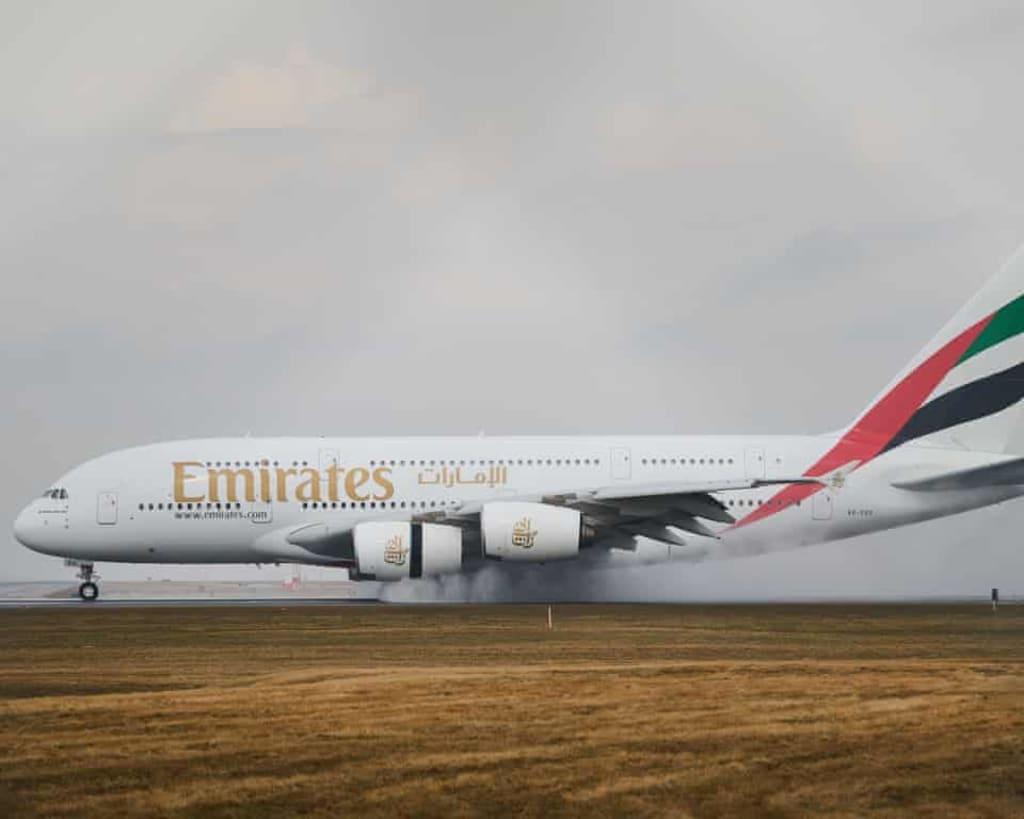
Wealthy British nationals living in the United Arab Emirates (UAE) and neighbouring Gulf states are choosing to relocate to countries such as Ireland and France rather than return to the United Kingdom amid rising conflict in the region — a decision driven largely by concerns over the UK tax system as the current tax year draws to a close.
With only a few weeks left before the 2025–26 UK tax year ends on 5 April, many high‑net‑worth individuals who have established non‑resident status are hesitant to risk returning home for fear of triggering significant tax liabilities. The UK’s tax authority, HM Revenue & Customs (HMRC), counts the number of days an individual spends in the UK as a key determinant of tax residency; exceeding allowable days could make a non‑resident liable for UK income tax and capital gains tax on worldwide income and gains.
Conflict prompts decisions rooted in tax, not safety
The rising conflict in the Gulf region has forced many Britons to contemplate where to regroup. Rather than risk being treated as UK tax residents by spending too much time in Britain — and potentially face retroactive taxation — they are instead flying to countries perceived as more tax favourable until the new UK tax year begins. Ireland and France have become popular temporary destinations, offering a buffer until Britons can return without altering their tax status.
A wealthy business owner, speaking to The Guardian, said he was spending time in Dublin to avoid returning prematurely to London, which could have triggered capital gains tax on assets or businesses that had been sold while he was abroad. “I’m happy to pay income tax and tax on investments next tax year, but I don’t want the sale of a business that I sold years ago to fall within UK capital gains tax,” he said.
Exceptional circumstances relief unlikely
Some expatriates hoped that current travel advisories related to the conflict might qualify them for HMRC’s “exceptional circumstances” rule — a provision that, in the past (notably during the COVID‑19 pandemic), allowed flexibility over residency tests for people unable to leave certain regions. But tax professionals warn that HMRC is unlikely to be sympathetic, noting that governments generally don’t consider advisory alerts sufficient to trigger tax‑year leniency.
Nimesh Shah, chief executive of tax advisory firm Blick Rothenberg, told The Guardian that the current situation around the Gulf does not meet the stringent criteria HMRC applies for exceptional circumstances. “In HMRC’s mind they’ve chosen to go [to the UAE] to not pay tax in the UK,” he said, adding that those leaning on that provision may be disappointed.
Tax rules and residency traps
Under UK tax law, the Statutory Residence Test governs whether an individual is considered a UK resident for tax purposes. Spending too many days in the UK — typically more than 90 or 120 in a year, depending on circumstances — can trigger residency status. Once deemed resident, individuals may face income tax on worldwide earnings and capital gains tax (CGT) on gains realised abroad, including sales of businesses or investment assets.
Those who have been non‑resident for fewer than five full tax years are particularly vulnerable. If they return and restart UK residency status, the UK’s Temporary Non‑Residence (TNR) rules could subject them to CGT on gains made while they were outside the country — even if those gains occurred years earlier.
Broader context: wealthy Britons and tax migration
This latest bout of relocation sits within a wider debate over the UK’s changing tax landscape. In recent years, reforms to the so‑called “non‑domiciled” tax regime and moves to tax worldwide income more comprehensively have prompted some wealthy individuals to reconsider their tax affairs and, in some cases, their residency. While broader “millionaire exodus” claims are contested and likely exaggerated, these current moves reflect how tightly the timing and interpretation of tax laws influence where the wealthy choose to live during periods of geopolitical stress.
Public reaction and policy implications
Reaction among the public and on social media has been mixed. Some commentators argue that if wealthy Britons benefit from UK services — including evacuation support — they should contribute to the tax base. Others take a more laissez‑faire view, noting that existing residency rules allow people latitude in where they live and pay tax, and that individuals often make these choices for legal, financial reasons rather than a disdain for their home country.
For policymakers, these developments highlight ongoing tensions between tax competitiveness and fairness — a debate that is likely to continue as the UK navigates the post‑Brexit economic and political landscape.
Subtitle: Wealthy British expatriates displaced by Gulf conflict are avoiding returning to the UK to protect tax‑favourable status, choosing alternative European destinations to evade potentially costly tax residency rules.
About the Creator
Fiaz Ahmed
I am Fiaz Ahmed. I am a passionate writer. I love covering trending topics and breaking news. With a sharp eye for what’s happening around the world, and crafts timely and engaging stories that keep readers informed and updated.
Keep reading
More stories from Fiaz Ahmed and writers in The Swamp and other communities.
North Korea fires ballistic missiles as US-South Korea hold military drills
North Korea on March 14, 2026 fired approximately 10 ballistic missiles into the sea off its east coast, coinciding with large‑scale joint military exercises by the United States and South Korea — a move that dramatically underscores escalating tensions on the Korean Peninsula. According to South Korea’s Joint Chiefs of Staff, the missiles were launched from near Pyongyang around 1:20 p.m. local time and splashed down in waters of the East Sea (also known as the Sea of Japan) without landing inside Japan’s exclusive economic zone. Japanese authorities reported detecting potential missile activity, but no debris or damage was confirmed in Japanese waters. The launches occurred as U.S. and South Korean forces conduct the annual “Freedom Shield” exercises, which began earlier in March and are scheduled to continue through much of the month. The allies describe the drills as routine and defensive, intended to enhance combined readiness and interoperability against threats from the North. Pyongyang’s Response and Rhetoric North Korean state media and officials have routinely condemned these joint exercises, portraying them as hostile provocation and rehearsals for invasion. In statements ahead of the drills, Kim Yo Jong — sister of North Korean leader Kim Jong Un — warned that the scale and scope of U.S.–South Korea military activities threaten regional stability and could yield “terrible consequences.” Pyongyang often uses major allied training events as a pretext to conduct weapons tests, including ballistic and cruise missile launches. Analysts say this pattern serves multiple purposes: demonstrating military capability domestically and internationally, signaling defiance against perceived threats, and attempting to extract political leverage. Military and Regional Dynamics The Freedom Shield exercises involve U.S. forces based in South Korea — estimated at about 28,500 troops — and significant South Korean military units. Activities include large‑scale manoeuvres that simulate cross‑river operations with tanks, armoured vehicles and air support. These positions aim to deter aggression and maintain combat readiness in what remains one of the world’s most militarised regions. From Seoul and Washington’s perspective, the drills reaffirm the strength of the U.S.–South Korea alliance and the commitment to defend the South in the event of an attack. Officials emphasise that the exercises are defensive in nature and not conducted with offensive intent toward Pyongyang. Nevertheless, North Korea’s military leaders view them through a different lens, depicting the drills as preparations for regime change or invasion. In previous years, similar joint operations have prompted Pyongyang to fire short‑range missiles or conduct naval and ballistic tests as a demonstration of its own capabilities. Diplomatic Calculus and Missile Development The latest launches come amid complex diplomatic undercurrents. In the days before the drills began, South Korean Prime Minister Kim Min‑seok met with U.S. President Donald Trump in Washington, where leaders discussed the potential for renewed engagement with North Korea. Trump reportedly expressed willingness to resume dialogue with Kim Jong Un, raising the possibility of future negotiations despite the missile provocations. North Korea’s persistent missile development — including short‑range, intermediate‑range and longer‑range systems — has long been a central concern for regional and global security. These weapons, which Pyongyang continues to test frequently, are seen as core elements of its deterrent strategy and a means of compelling diplomatic concessions. Reactions from Neighbours and the International Community Nearby countries including Japan, China and members of the Association of Southeast Asian Nations (ASEAN) have closely watched the escalating activity on the Korean Peninsula. Tokyo has repeatedly urged restraint from all parties, emphasising the importance of avoiding miscalculations that could trigger conflict. Beijing, which maintains official ties with Pyongyang, frequently calls for de‑escalation and resumption of dialogue to manage regional security. In Seoul, South Korean officials confirmed that no casualties resulted from the missile launches and that the launches did not significantly disrupt the ongoing military drills. Leaders stress that the alliance remains resolute and that the drills will proceed as planned. Looking Ahead The latest missile launches signal a continuation of entrenched patterns in which North Korea uses military demonstrations to counter allied exercises. While the immediate risk of direct confrontation remains limited, the situation complicates diplomatic efforts to reduce tensions and resume broader negotiations on denuclearisation and security assurances. As the Freedom Shield exercises progress, global eyes will remain trained on developments along the Korean Peninsula, where military manoeuvres and missile tests continue to shape the delicate balance of power in Northeast Asia.
By Fiaz Ahmed 2 days ago in The Swamp
The Forsyth House Fire
Since 1851, Forsyth House has stood on the corner of Union Street and Gordon Street in the heart of Glasgow. Its iconic, or was... because on Sunday 8th of March, 2026, a fire broke out in a small, seemingly un-named shop in the building and tore all that history down. As I write, the rubble is still unsettled and the street is still blocked off. Central Station is quiet on the upper level, and around 30 small businesses have quite literally gone up in smoke.
By S. A. Crawford3 days ago in The Swamp
Hottest in the Office
Dear Rafi, You’re very distracting to work around. For the first second I saw you the other day, I thought you were some type of executive. It took a moment to realize no, you were just the new guy, dressed up for the job he wants. Be still, my heart.
By Gabriel Shames6 days ago in Pride



Comments
There are no comments for this story
Be the first to respond and start the conversation.