
Iran Slams Proposed Armenia Azerbaijan Transit Rout
In a bold and uncompromising statement, Iran has openly rejected the planned transit corridor included in the recently signed peace agreement between Armenia and Azerbaijan.

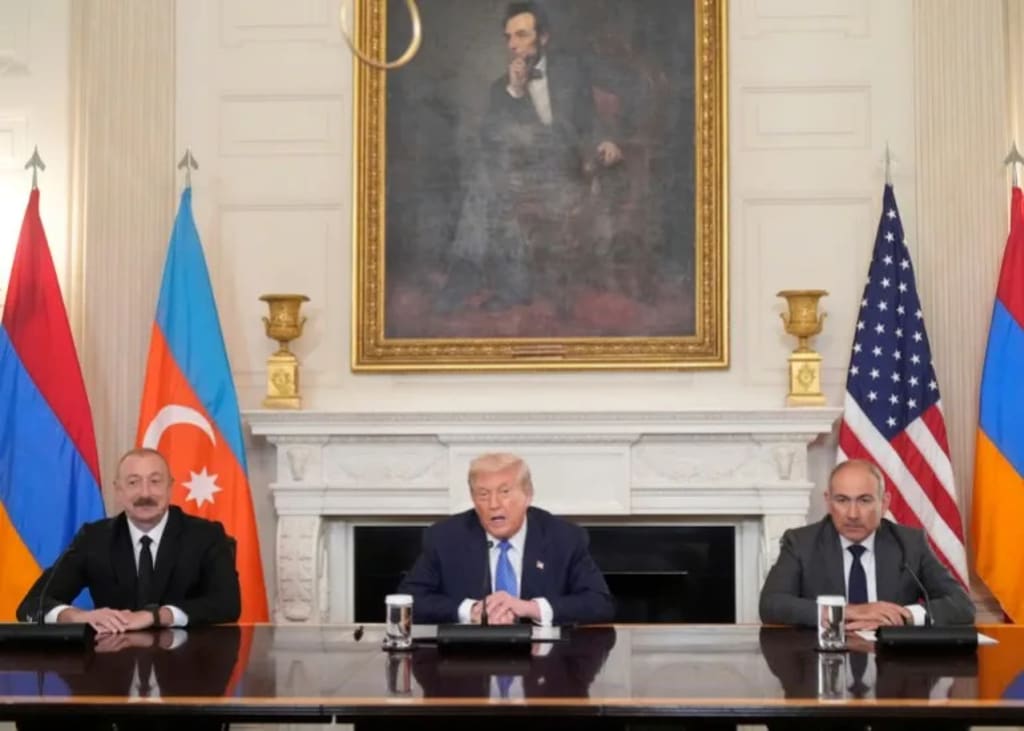
In a bold and uncompromising statement, Iran has openly rejected the planned transit corridor included in the recently signed peace agreement between Armenia and Azerbaijan. The corridor hailed by its proponents as a new era of connectivity for the South Caucasus is being sharply criticized by Tehran as a move that could disrupt regional stability and undermine its own strategic interests.
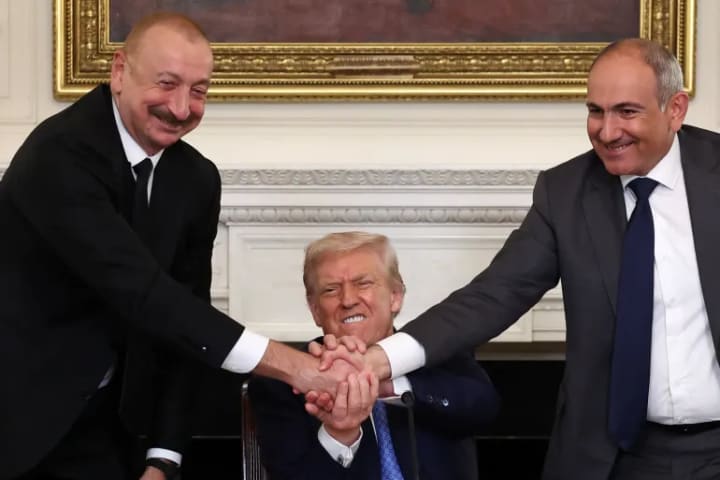
The agreement between Armenia and Azerbaijan, mediated in part by the United States, outlines the creation of a direct land route linking Azerbaijan’s mainland to its exclave, Nakhchivan, via Armenian territory. Supporters argue that such a project would open the door for increased trade, faster transportation, and stronger geopolitical ties between the two South Caucasus neighbors. But for Iran, the picture looks very different.
Iran’s Strategic Concerns
For centuries, Iran has considered itself a key player in the Caucasus region. Sharing borders with both Armenia and Azerbaijan, Tehran has leveraged its geographic position to maintain influence, facilitate trade, and act as a counterbalance to Western and Turkish interests in the area.
Iranian officials fear that this planned transit corridor which some media outlets have dubbed the “Trump Corridor” because of Washington’s involvement could sideline Iran’s role as a primary trade route between Armenia and Azerbaijan. By diverting cargo and economic activity away from Iranian roads and railways, Tehran could suffer significant economic losses.
Moreover, Iran sees the project as a geopolitical encroachment. A stronger direct link between Azerbaijan and Nakhchivan, especially with potential Turkish backing, could reduce Iran’s influence over its northern borders and create what some Iranian analysts are calling a “strategic bypass” that benefits its rivals.
Public Statements and Warnings
Iran’s Foreign Ministry has issued a clear warning: any attempt to redraw transit maps in the region without Tehran’s consent is “unacceptable” and will be met with a strong response. Iranian diplomats argue that such a corridor risks violating established international agreements and could even inflame tensions in the already volatile South Caucasus.
Iran’s message is aimed not just at Armenia and Azerbaijan, but also at Washington and Ankara. Tehran suspects that the United States is using the peace deal as a means to expand its footprint in a region traditionally within Iran’s sphere of influence. By aligning more closely with Azerbaijan a close ally of Turkey the U.S. could be reshaping the balance of power in a way that leaves Iran and Russia on the sidelines.

Armenia’s Delicate Balancing Act
For Armenia, the corridor proposal is a double-edged sword. On one hand, it offers the potential for improved relations with Azerbaijan after years of bitter conflict, as well as access to new trade opportunities. On the other hand, accepting the project risks alienating Iran, a crucial partner in both trade and diplomacy.
Armenia has historically relied on Iran as a reliable economic lifeline, particularly during times when its border with Turkey has remained closed. Alienating Tehran could lead to economic and political blowback something Armenian leaders will have to weigh carefully as they move forward with the peace pact.
Azerbaijan’s Ambitions
From Azerbaijan’s perspective, the proposed corridor is nothing short of a strategic victory. It would provide a seamless connection to Nakhchivan without the need to pass through Iranian territory. This would not only strengthen Baku’s logistical independence but also deepen its alliance with Turkey, which has long sought greater influence in the region.
Azerbaijani leaders argue that the corridor is a purely economic initiative designed to benefit all parties by fostering regional cooperation and prosperity. But the speed with which they are pushing for implementation suggests that geopolitical motives may be just as important as economic ones.
Regional Ripple Effects
The South Caucasus has always been a geopolitical chessboard where the moves of one player can ripple across the entire region. By opposing the corridor, Iran is positioning itself as a defender of the current territorial and transit arrangements and as a counterweight to both Turkish and American influence.
Russia, traditionally the dominant power broker in the region, is also watching developments closely. Although Moscow has not made as forceful a public statement as Tehran, it shares concerns about losing leverage in the Caucasus to new Western backed initiatives.
Possible Outcomes
If the project moves forward without Iranian cooperation, Tehran could respond with economic countermeasures, increased military presence along its northern borders, or even the promotion of alternative transit routes that bypass both Armenia and Azerbaijan. This could result in a fractured transportation network in the South Caucasus, reducing the overall benefits of the peace pact.
Alternatively, diplomatic negotiations could yield a compromise — perhaps by granting Iran a role in the management or monitoring of the corridor, ensuring that it does not lose its status as a key regional player. Such a solution would require significant trust-building, something that has been in short supply in recent years.
Conclusion: A Corridor or a Fault Line?
While the proposed Armenia Azerbaijan transit corridor is being sold as a pathway to peace and economic growth, it has already exposed deep geopolitical fault lines. Iran’s staunch opposition underscores the complexity of the South Caucasus, where infrastructure projects are rarely just about roads and railways they are about power, influence, and the balance of regional control.
For now, the world will be watching closely to see whether this ambitious plan becomes a bridge between neighbors or yet another flashpoint in a region all too familiar with conflict.
About the Creator
M Ayub Khan
Welcome to my corner of the world! I’m Ayub Khan, a storyteller with a passion for digging deeper into the human experience. Here on Vocal Media, I aim to break the surface and explore the complexities of life that often go unnoticed
Keep reading
More stories from M Ayub Khan and writers in The Swamp and other communities.
Trump Tariffs Fuel Inflation Spike, Pose Threat to Economic Well being
In a move that has sparked fierce debate among economists, politicians, and ordinary Americans alike, former President Donald Trump recently issued a sweeping new round of tariffs on imported products made abroad. While his administration has framed the tariffs as protection for American businesses and as a source of domestic jobs, the reality on the ground is more complex and much more expensive.
By M Ayub Khan7 months ago in The Swamp
A Gathering of Evil Bosses
“I’m the queen of chin jutting while I smooth my hair, attacking, insulting, and deflecting to protect my appointer.” “Oh, please, Blondi, my hair is curled, highlighted, and longer than yours. I feature television commercials telling immigrants that we will give them a free plane ride home, and if they voluntarily turn themselves in, they will be allowed to legally apply for re-entry. It runs everywhere, and I look good in it! You can’t compete because of your blond hair. Mine is nicer, and my lips are prettier than yours.”
By Andrea Corwin 16 days ago in The Swamp
A Knight of the Seven Kingdoms Series Review (Season 1)
As one of the biggest properties in fantasy, A Song of Ice and Fire remains immensely popular with audiences. After reaching far into the past with House of the Dragon, a second spin-off was on the cards. A Knight of the Seven Kingdoms serves up a bite-sized slice of action and drama, but it still claims a spot among the best small-screen titles.
By Robert Cain7 days ago in Geeks




Comments
There are no comments for this story
Be the first to respond and start the conversation.