
Iran’s President Pezeshkian Warns of Regional Instability Amid US Threats
Tehran cautions that escalating pressure from Washington could ignite wider conflict across an already volatile Middle East

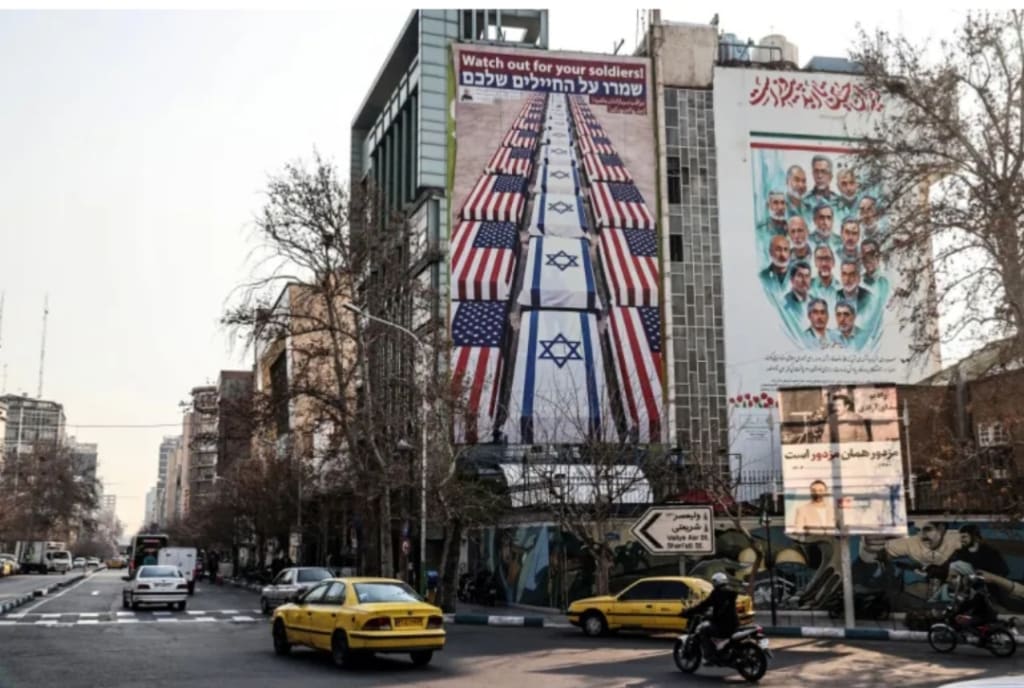
Tehran says pressure and military posturing risk igniting wider conflict as tensions mount across the Middle East
Iranian President Masoud Pezeshkian has issued a stark warning that escalating threats and pressure from the United States could push the Middle East toward a new phase of regional instability, reigniting fears of broader conflict at a time when the region is already grappling with multiple crises. His remarks come against the backdrop of heightened US-Iran tensions, ongoing wars in Gaza and Ukraine, fragile political balances in Iraq and Lebanon, and growing uncertainty over global energy markets.
Speaking at a high-level meeting in Tehran, President Pezeshkian cautioned that what he described as Washington’s “hostile rhetoric and coercive policies” toward Iran would not bring security or stability, but rather increase the likelihood of miscalculation and confrontation. According to Iranian state media, Pezeshkian emphasized that history has repeatedly shown that military threats and economic pressure only deepen mistrust and fuel cycles of retaliation.
A Warning Amid Rising Tensions
Pezeshkian’s comments arrive at a sensitive moment. Relations between Tehran and Washington remain strained following years of sanctions, stalled nuclear negotiations, and sporadic military incidents involving US forces and Iran-aligned groups across the region. Recent reports of US warnings to Iran over its regional activities, combined with American military deployments in the Gulf, have reinforced concerns in Tehran that Washington is preparing to escalate pressure.
“Iran does not seek conflict,” Pezeshkian said, according to official transcripts. “But threats and intimidation create an environment where stability becomes impossible, not just for Iran, but for the entire region.” He added that any misstep could have consequences far beyond bilateral relations, affecting neighboring countries and global economic stability.
Regional Flashpoints Add to the Risk
The Middle East is currently marked by several volatile flashpoints. The war in Gaza has raised tensions between Israel and Iran-backed groups, while cross-border clashes in southern Lebanon and attacks on shipping routes in the Red Sea have underscored the risk of escalation. In Iraq and Syria, US troops remain targets of occasional attacks by armed factions aligned with Tehran, prompting retaliatory strikes that keep tensions simmering.
Analysts say Pezeshkian’s warning reflects Iran’s concern that these interconnected crises could spiral out of control if major powers continue to rely on force and threats rather than diplomacy. “The region is like dry tinder right now,” said one Tehran-based political analyst. “Any spark — whether intentional or accidental — could lead to a wider fire.”
Iran’s Call for Diplomacy and Dialogue
President Pezeshkian, a reformist-leaning figure who assumed office promising a more pragmatic foreign policy, has repeatedly stressed the need for dialogue and regional cooperation. In his latest remarks, he called on the United States to abandon what he described as a “pressure-first” approach and instead engage through diplomacy grounded in mutual respect.
Iranian officials argue that sanctions and military threats have failed to change Tehran’s core policies, while inflicting hardship on ordinary citizens and destabilizing neighboring economies. Pezeshkian pointed to the impact of sanctions on energy markets, warning that further escalation could disrupt oil supplies and exacerbate inflation globally.
“Security cannot be achieved through fear,” he said. “It must be built through understanding, cooperation, and respect for international law.”
US Perspective and Strategic Concerns
From Washington’s perspective, US officials have long argued that pressure is necessary to deter Iran’s nuclear ambitions and curb its influence across the Middle East. American policymakers accuse Tehran of backing armed groups that threaten US allies and destabilize fragile states, claims Iran strongly denies or frames as legitimate regional partnerships.
While the Biden administration has left the door open to renewed nuclear diplomacy, progress has been slow, and domestic political pressures in both countries have limited room for compromise. Recent US statements warning Iran against further escalation have been interpreted in Tehran as signs of a more confrontational stance.
Regional and Global Implications
Pezeshkian’s warning highlights how US-Iran tensions extend far beyond bilateral disputes. Any direct confrontation could draw in regional actors, disrupt global trade routes, and send shockwaves through energy markets. Gulf states, many of which have recently pursued cautious rapprochement with Iran, are particularly wary of renewed conflict that could undermine economic diversification plans.
At the same time, major powers such as China and Russia have called for restraint, emphasizing dialogue over confrontation. Beijing, which has strengthened economic and diplomatic ties with Tehran, has positioned itself as a potential mediator, while Moscow has urged all sides to avoid actions that could destabilize the region further.
A Delicate Path Forward
For President Pezeshkian, the challenge lies in balancing firm resistance to external pressure with efforts to reduce tensions and avoid isolation. His warning of regional instability serves both as a message to Washington and as reassurance to domestic audiences that Iran will not be intimidated, while still advocating diplomacy.
Whether the warning is heeded remains uncertain. With trust between Tehran and Washington at a low ebb, and regional conflicts continuing to unfold, the risk of miscalculation persists. As Pezeshkian cautioned, the cost of escalation would not be borne by one country alone, but by an entire region already stretched to its limits.
In a Middle East defined by overlapping crises and fragile ceasefires, his message underscores a central reality: without sustained diplomatic engagement, threats and pressure may only deepen the instability that all sides claim to oppose.
About the Creator
Keep reading
More stories from Salaar Jamali and writers in The Swamp and other communities.
Neil Young Offers Greenlanders Free Access to His Archives
In an unexpected and striking move, veteran rock musician Neil Young has announced that he is granting residents of Greenland free access to his entire music and video archives for at least one year. The offer, made public on his Neil Young Archives website, brings together art, activism and solidarity in a gesture that goes beyond traditional album releases — and sends a message rooted in both culture and current events.
By Salaar Jamaliabout 18 hours ago in The Swamp
Shooting Involving Border Patrol Leaves One in Critical Condition Near US-Mexico Border
A shooting involving U.S. Border Patrol agents near the US–Mexico border has left one individual in critical condition, according to preliminary reports from authorities. The incident, which occurred in a region already marked by heightened security and ongoing migration challenges, has drawn attention from federal officials, local communities, and human rights observers alike.
By Aarif Lashariabout 19 hours ago in The Swamp



Comments
There are no comments for this story
Be the first to respond and start the conversation.