
Iran-Israel Tensions Escalate: Tehran Oil Depot Hit, Missile Strikes Cause Casualties
Explosions and Retaliation Heighten Fears of a Broader Conflict in the Middle East

A Dangerous Turn in Middle East Tensions
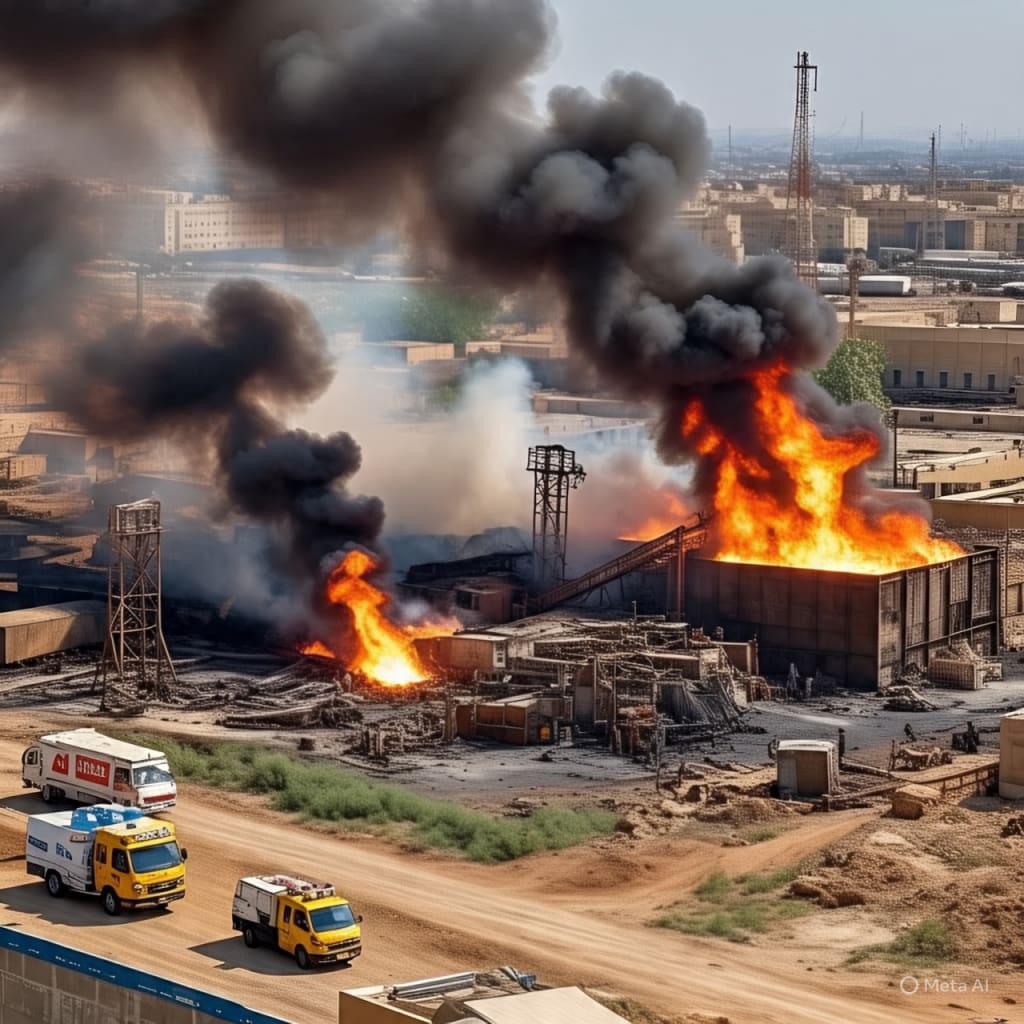
The already fragile relationship between Iran and Israel took a violent turn this week. According to BBC News reports, Israeli airstrikes hit an oil depot in Tehran's Shahran district, triggering a massive explosion that lit up the night sky. In retaliation, Iran launched multiple missile attacks at northern and central Israel, reportedly causing several casualties.
This exchange marks one of the most direct confrontations between the two nations in recent times. As of now, global leaders and observers are expressing serious concern about the possibility of a larger war erupting in the Middle East.
---
Tehran Oil Depot Explosion: A Bold Israeli Move
Early reports indicate that the Tehran oil depot attack was a targeted Israeli military operation. The strike set off a fiery explosion, visible from miles away. The depot, located in a densely populated part of Tehran, is a major energy resource for Iran’s capital. Emergency services rushed to the scene to control the flames, but the damage had already been done.
Israel has neither fully confirmed nor denied responsibility, but Israeli Defense Forces (IDF) issued a statement saying they had launched several preemptive actions to neutralize “strategic threats” posed by Iran’s missile capabilities.
---
Iran’s Missile Response: Hitting Back Hard
In response, Iran fired a wave of missiles into Israeli territory. Strikes reportedly hit locations in Haifa, Tel Aviv, and areas near Jerusalem, injuring civilians and damaging infrastructure. Iranian state media declared the move as "defensive retaliation" for Israeli aggression.
This is the first time in years that Iranian missiles have directly struck major Israeli cities. The Iranian Revolutionary Guard Corps (IRGC) claimed full responsibility and warned of further actions if Israeli strikes continue.
---
Civilian Panic and Rising Casualties
As sirens echoed across cities in both countries, thousands of civilians sought shelter in underground bunkers and basements. In Israel, emergency services confirmed injuries to several civilians and significant property damage. Hospitals in both nations have activated emergency protocols.
Citizens in Tehran expressed deep fear, as fuel depots are highly dangerous locations. Residents living nearby reported broken windows, intense fire, and choking smoke.
The death toll has not yet been confirmed, but reports suggest multiple injuries on both sides. The psychological toll is also significant, especially among children and elderly people.
---
A Conflict With Global Consequences
This new phase of Iran-Israel hostility could spill beyond the borders of the two nations. The United States, a long-time ally of Israel, has condemned the Iranian missile attacks but has also urged restraint from both sides. The United Nations called for an immediate ceasefire and warned that the region is “on the brink of a full-scale war.”
The European Union and Russia have also weighed in, asking for diplomatic channels to be restored. However, with both countries blaming each other and vowing retaliation, peace talks seem unlikely in the near future.
---
Social Media Reaction and Global Attention
News of the strikes has gone viral on platforms like Twitter, Instagram, and TikTok. The BBC News clip showing the burning Tehran depot has been viewed over 900,000 times within hours. Hashtags like #TehranExplosion, #IsraelStrikesBack, and #IranMissileAttack are trending globally.
Social media is flooded with videos, eyewitness accounts, and expert analysis. Many users are calling for de-escalation, while others fear that a wider war involving other Middle Eastern countries could be imminent.
---
What Comes Next?
Analysts warn that this could be the beginning of a dangerous cycle of tit-for-tat violence. Both Iran and Israel have the military capability to sustain prolonged conflict, but a war would bring massive humanitarian and economic costs.
Energy markets have already reacted. Global oil prices spiked within hours of the Tehran depot blast. Investors are watching closely, especially since Iran is a key oil producer and Israeli ports are central to Middle Eastern trade.
---
Conclusion
The situation between Iran and Israel is rapidly escalating and poses a serious risk to regional and global stability. The airstrikes and missile attacks over the past 24 hours have changed the nature of their long-standing rivalry—from proxy operations to direct military confrontation.
World leaders must act quickly to prevent further loss of life and push both sides toward diplomacy. The world is watching, and the consequences of inaction could be devastating.
About the Creator
Saad
I’m Saad. I’m a passionate writer who loves exploring trending news topics, sharing insights, and keeping readers updated on what’s happening around the world.
Forces Prepared for Multi-Domain Operations: How Modern Militaries Are Rewriting the Rules of Warfare
Modern warfare is no longer confined to land, sea, or air alone. Today’s conflicts unfold simultaneously across multiple arenas — including cyberspace, space, and the information domain. This reality has given rise to Multi-Domain Operations (MDO), a military concept that emphasizes the coordinated use of capabilities across all domains to gain and maintain strategic advantage. As global security threats grow more complex, armed forces around the world are reshaping doctrine, technology, and training to prepare for this new way of war. Understanding Multi-Domain Operations Multi-Domain Operations are built on the idea that success in future conflicts will depend on the ability to integrate actions across land, air, sea, space, cyber, and electromagnetic domains. Unlike traditional joint operations, where each service often operated sequentially or in parallel, MDO demands real-time coordination and information sharing. Decisions must be faster, more flexible, and driven by data superiority. In an MDO environment, disabling an adversary’s satellite network may be just as critical as winning a ground battle. Cyberattacks can disrupt logistics, misinformation campaigns can erode public trust, and space-based assets can determine battlefield awareness. Forces prepared for MDO must therefore think holistically, acting across domains to overwhelm opponents before they can respond effectively. Why MDO Readiness Matters Now The urgency behind MDO preparation stems from shifting global power dynamics and rapid technological change. Peer and near-peer competitors are investing heavily in anti-access and area-denial (A2/AD) strategies, designed to restrict freedom of movement and communication. These strategies challenge conventional military advantages and require new approaches. Conflicts in recent years have demonstrated how drones, cyber tools, precision missiles, and information warfare can decisively shape outcomes. Militaries that fail to integrate these elements risk being outmaneuvered. MDO readiness is no longer a future aspiration — it is a present-day necessity. Technology as the Backbone of MDO Advanced technology is central to multi-domain preparedness. Artificial intelligence, big data analytics, and cloud-based command systems enable commanders to process vast amounts of information and act quickly. Secure networks connect sensors, shooters, and decision-makers across domains, creating what many describe as a “digital battlefield.” Uncrewed systems, such as drones and autonomous vehicles, extend operational reach while reducing risk to personnel. Space-based assets provide navigation, communication, and intelligence, while cyber units defend networks and exploit adversary vulnerabilities. Together, these technologies allow forces to operate seamlessly across domains, turning information dominance into operational success. Training and Doctrine: Changing the Military Mindset Technology alone is not enough. Preparing forces for MDO requires a fundamental shift in training, education, and doctrine. Militaries are increasingly conducting large-scale exercises that simulate multi-domain environments, testing coordination between conventional units, cyber teams, space operators, and information specialists. Commanders are being trained to think beyond their traditional service roles, understanding how actions in one domain affect outcomes in another. This cultural change is essential, as MDO places a premium on adaptability, decentralized decision-making, and cross-domain awareness. Alliances and Interoperability Multi-domain operations rarely occur in isolation. Modern conflicts are often coalition-based, making interoperability among allies a critical factor. Shared standards, compatible systems, and joint training exercises help ensure that partner forces can operate effectively together across domains. Alliances that successfully integrate MDO concepts gain a powerful strategic advantage. By pooling intelligence, technology, and capabilities, they can respond more effectively to emerging threats and deter aggression through collective strength. Challenges Ahead Despite progress, preparing for MDO presents significant challenges. Cybersecurity risks, high costs of advanced technology, and the complexity of integrating diverse systems can strain military budgets and institutions. There are also ethical and legal questions surrounding autonomous weapons, cyber warfare, and space militarization. Moreover, adversaries are evolving just as quickly. Maintaining an edge in multi-domain operations requires continuous innovation, investment, and strategic foresight. The Future of Warfare Forces prepared for Multi-Domain Operations represent the future of military power. By integrating capabilities across all domains, modern militaries aim to act faster, strike smarter, and deter conflict more effectively. MDO is not just a tactical adjustment — it is a transformation in how wars are planned, fought, and won. As global security environments grow more unpredictable, the ability to operate seamlessly across domains will define which forces can protect national interests and maintain stability. In this new era, readiness for multi-domain operations is no longer optional — it is the cornerstone of modern defense.
By Fiaz Ahmed Brohia day ago in The Swamp
Center Stage with Paul Stewart
*** I'm keen to republish the interviews I did for my series with Vocal creators. It's been a few years and I thought it might be nice to revisit these wonderful conversations. I'll be releasing them one at a time for a few weeks/months.
By Heather Hubler4 days ago in Interview



Comments
There are no comments for this story
Be the first to respond and start the conversation.