
Forces Prepared for Multi-Domain Operations: How Modern Militaries Are Rewriting the Rules of Warfare
How modern militaries are integrating land, air, sea, cyber, and space to dominate future battlefields

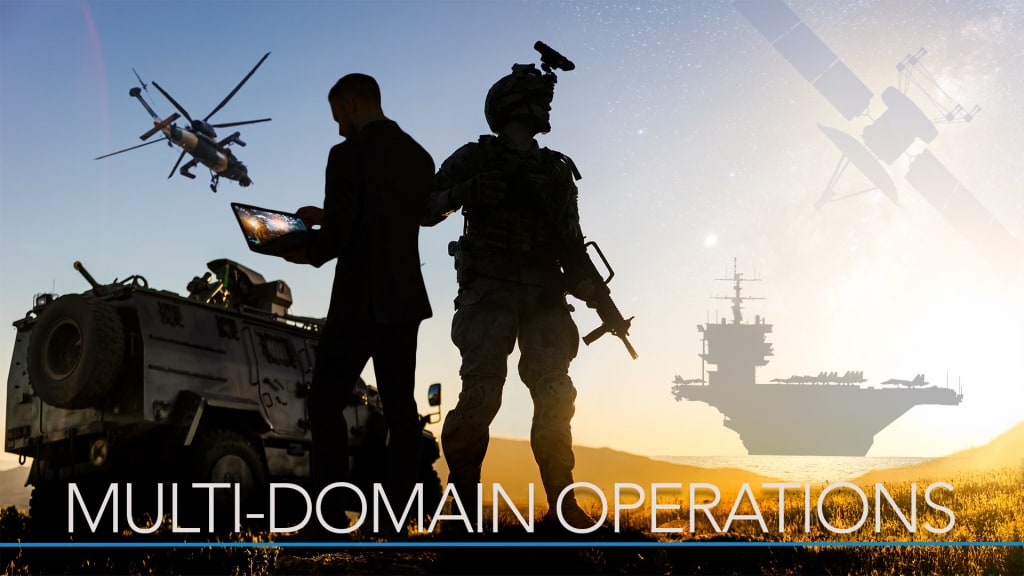
Modern warfare is no longer confined to land, sea, or air alone. Today’s conflicts unfold simultaneously across multiple arenas — including cyberspace, space, and the information domain. This reality has given rise to Multi-Domain Operations (MDO), a military concept that emphasizes the coordinated use of capabilities across all domains to gain and maintain strategic advantage. As global security threats grow more complex, armed forces around the world are reshaping doctrine, technology, and training to prepare for this new way of war.
Understanding Multi-Domain Operations
Multi-Domain Operations are built on the idea that success in future conflicts will depend on the ability to integrate actions across land, air, sea, space, cyber, and electromagnetic domains. Unlike traditional joint operations, where each service often operated sequentially or in parallel, MDO demands real-time coordination and information sharing. Decisions must be faster, more flexible, and driven by data superiority.
In an MDO environment, disabling an adversary’s satellite network may be just as critical as winning a ground battle. Cyberattacks can disrupt logistics, misinformation campaigns can erode public trust, and space-based assets can determine battlefield awareness. Forces prepared for MDO must therefore think holistically, acting across domains to overwhelm opponents before they can respond effectively.
Why MDO Readiness Matters Now
The urgency behind MDO preparation stems from shifting global power dynamics and rapid technological change. Peer and near-peer competitors are investing heavily in anti-access and area-denial (A2/AD) strategies, designed to restrict freedom of movement and communication. These strategies challenge conventional military advantages and require new approaches.
Conflicts in recent years have demonstrated how drones, cyber tools, precision missiles, and information warfare can decisively shape outcomes. Militaries that fail to integrate these elements risk being outmaneuvered. MDO readiness is no longer a future aspiration — it is a present-day necessity.
Technology as the Backbone of MDO
Advanced technology is central to multi-domain preparedness. Artificial intelligence, big data analytics, and cloud-based command systems enable commanders to process vast amounts of information and act quickly. Secure networks connect sensors, shooters, and decision-makers across domains, creating what many describe as a “digital battlefield.”
Uncrewed systems, such as drones and autonomous vehicles, extend operational reach while reducing risk to personnel. Space-based assets provide navigation, communication, and intelligence, while cyber units defend networks and exploit adversary vulnerabilities. Together, these technologies allow forces to operate seamlessly across domains, turning information dominance into operational success.
Training and Doctrine: Changing the Military Mindset
Technology alone is not enough. Preparing forces for MDO requires a fundamental shift in training, education, and doctrine. Militaries are increasingly conducting large-scale exercises that simulate multi-domain environments, testing coordination between conventional units, cyber teams, space operators, and information specialists.
Commanders are being trained to think beyond their traditional service roles, understanding how actions in one domain affect outcomes in another. This cultural change is essential, as MDO places a premium on adaptability, decentralized decision-making, and cross-domain awareness.
Alliances and Interoperability
Multi-domain operations rarely occur in isolation. Modern conflicts are often coalition-based, making interoperability among allies a critical factor. Shared standards, compatible systems, and joint training exercises help ensure that partner forces can operate effectively together across domains.
Alliances that successfully integrate MDO concepts gain a powerful strategic advantage. By pooling intelligence, technology, and capabilities, they can respond more effectively to emerging threats and deter aggression through collective strength.
Challenges Ahead
Despite progress, preparing for MDO presents significant challenges. Cybersecurity risks, high costs of advanced technology, and the complexity of integrating diverse systems can strain military budgets and institutions. There are also ethical and legal questions surrounding autonomous weapons, cyber warfare, and space militarization.
Moreover, adversaries are evolving just as quickly. Maintaining an edge in multi-domain operations requires continuous innovation, investment, and strategic foresight.
The Future of Warfare
Forces prepared for Multi-Domain Operations represent the future of military power. By integrating capabilities across all domains, modern militaries aim to act faster, strike smarter, and deter conflict more effectively. MDO is not just a tactical adjustment — it is a transformation in how wars are planned, fought, and won.
As global security environments grow more unpredictable, the ability to operate seamlessly across domains will define which forces can protect national interests and maintain stability. In this new era, readiness for multi-domain operations is no longer optional — it is the cornerstone of modern defense.
About the Creator
Fiaz Ahmed Brohi
I am a passionate writer with a love for exploring and creating content on trending topics. Always curious, always sharing stories that engage and inspire.
Keep reading
More stories from Fiaz Ahmed Brohi and writers in The Swamp and other communities.
Royal and French Navies Train Shipborne Drones in the Mediterranean: A Glimpse into the Future of Naval Warfare
The Mediterranean Sea has once again become a proving ground for modern naval innovation as the Royal Navy and the French Navy conduct joint exercises involving shipborne drones. These drills signal a decisive shift in how maritime powers are preparing for future conflicts—where uncrewed systems, artificial intelligence, and networked warfare will play a central role. As geopolitical tensions rise and naval operations become more complex, both nations are investing heavily in remotely piloted and autonomous systems to enhance surveillance, strike capability, and fleet protection. The recent Mediterranean exercise highlights how traditional naval forces are evolving to meet 21st-century threats. Why Shipborne Drones Matter Shipborne drones—whether launched from destroyers, frigates, or aircraft carriers—offer navies a powerful advantage. Unlike crewed aircraft, drones can operate for longer periods, take greater risks, and be deployed rapidly without endangering human life. In the joint drills, British and French warships tested uncrewed aerial vehicles (UAVs) and uncrewed surface systems designed for tasks such as: Maritime surveillance Intelligence, surveillance, and reconnaissance (ISR) Target acquisition Force protection Electronic warfare support By training together, both navies aim to ensure that their drone systems are interoperable, capable of sharing data seamlessly during real-world operations. A Strategic Partnership at Sea The Royal Navy and the French Navy already share one of Europe’s closest defense partnerships. From carrier strike cooperation to nuclear deterrence coordination, the two forces have a long history of working side by side. This latest drone-focused exercise strengthens that partnership by addressing a critical question: how can allied navies integrate uncrewed systems into joint operations without disrupting command structures or safety protocols? During the drills, operators practiced launching and recovering drones from moving ships—one of the most technically challenging aspects of naval drone operations. The exercises also tested how drone data feeds into ship combat management systems, allowing commanders to make faster, better-informed decisions. The Mediterranean: A Testing Ground The Mediterranean is an ideal environment for such trials. It is one of the world’s busiest maritime regions, featuring: Heavy commercial shipping traffic NATO and non-NATO naval presence Proximity to conflict zones in the Middle East and North Africa Operating drones in this complex environment allows navies to test not just technology, but rules of engagement, deconfliction procedures, and cyber resilience. Officials involved in the drills emphasized that the exercises were not aimed at any single adversary. Instead, they are part of a broader effort to ensure maritime security, freedom of navigation, and deterrence in an increasingly contested domain. From Manned Fleets to Hybrid Forces Both the UK and France are transitioning toward hybrid naval fleets, where crewed ships operate alongside autonomous and semi-autonomous systems. This approach allows navies to extend their reach without dramatically increasing fleet size or personnel. For the Royal Navy, shipborne drones are already being tested aboard Type 23 and Type 45 vessels. France, meanwhile, has invested heavily in naval drone programs as part of its future fleet modernization. Training together accelerates learning on both sides, helping commanders understand: What drones can realistically achieve Where human oversight remains essential How to balance autonomy with accountability Implications for NATO and Beyond The success of these exercises has implications far beyond the Mediterranean. As NATO places greater emphasis on multi-domain operations, lessons learned from UK-French cooperation could shape alliance-wide standards for naval drones. Future conflicts are likely to feature swarm tactics, electronic warfare, and contested communications. Practicing now ensures allied navies are not caught unprepared. Moreover, visible cooperation sends a clear message: European naval powers are serious about maintaining technological relevance and collective security in an era of rapid military change. Looking Ahead As shipborne drone technology continues to mature, exercises like this will become more frequent—and more complex. Future drills may involve larger drone swarms, underwater autonomous vehicles, and AI-assisted decision-making tools. For now, the Royal Navy and French Navy have taken an important step forward. By training together in the Mediterranean, they are not just testing machines—they are reshaping the future of naval warfare, one unmanned system at a time
By Fiaz Ahmed Brohiabout 13 hours ago in The Swamp
Miss Persephone's Manual to a Seemingly Ordinary Life
Miss Persephone was found at the dining table, her blue eyes swollen, her tears arriving and retreating like the tides of the ocean. Earlier that day, her family had visited her in the retirement home where she had lived for eight years. It was her eightieth birthday.
By Imola Tóth3 days ago in Fiction


Comments
There are no comments for this story
Be the first to respond and start the conversation.