
Iran Edges Closer to a Revolution That Would Reshape the World
Economic collapse, public anger, and political fractures are pushing Iran toward a historic turning point with global consequences

Introduction
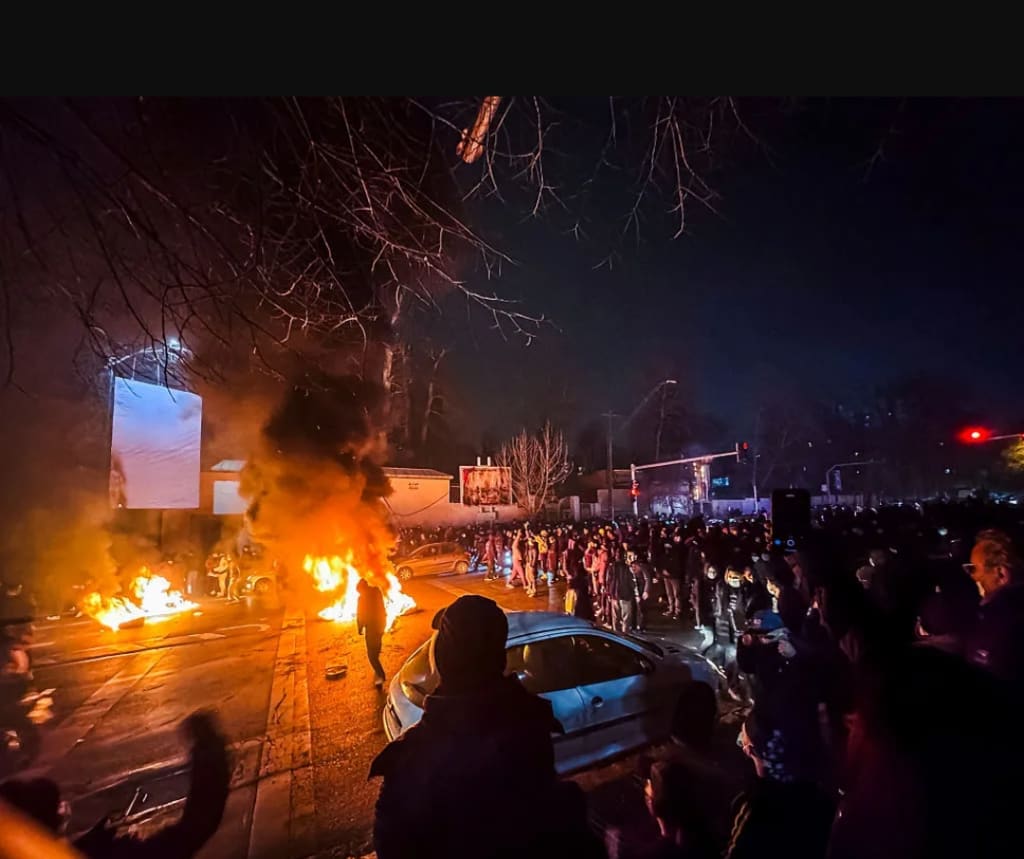
Iran stands at one of the most critical crossroads in its modern history. What began as scattered protests over rising prices and economic hardship has evolved into a broad-based movement questioning the legitimacy of the state itself. Across cities and towns, ordinary Iranians are expressing anger not just at inflation and unemployment, but at decades of political repression, corruption, and unfulfilled promises.
As unrest intensifies, analysts are increasingly asking whether Iran is edging toward a revolution—one that could fundamentally reshape the Middle East and reverberate across global politics, energy markets, and security alliances.
Economic Collapse as the Spark
At the heart of Iran’s current turmoil lies a severe economic crisis. Years of international sanctions, mismanagement, and isolation have devastated the economy. The national currency has lost much of its value, inflation has eroded purchasing power, and basic necessities have become unaffordable for millions.
For many Iranians, daily life has turned into a struggle for survival. Middle-class families are slipping into poverty, youth unemployment remains stubbornly high, and business owners face shrinking demand and rising costs. These conditions have turned economic frustration into political anger, fueling demonstrations that cut across class and regional lines.
From Protest to Political Defiance
Unlike previous waves of unrest, recent protests have moved beyond demands for economic relief. Chants and slogans increasingly reflect deeper dissatisfaction with the political system itself. Protesters have openly challenged clerical authority, calling for accountability, reform, or even the end of the Islamic Republic.
The movement has drawn participation from women, students, workers, retirees, and professionals, signaling a rare moment of national unity against the status quo. Social media—when accessible—has played a key role in spreading information and mobilizing support, despite government efforts to restrict communication.
State Response and Escalating Tensions
The Iranian government has responded with force. Security services have deployed riot police, mass arrests, and strict surveillance to suppress demonstrations. Internet shutdowns and media restrictions have aimed to limit both domestic coordination and international visibility.
These measures, however, appear to have hardened public resolve rather than restored calm. Each crackdown deepens resentment and reinforces the perception that the state is unwilling or unable to address legitimate grievances. The cycle of protest and repression has created a volatile environment where miscalculation could lead to widespread instability.
Cracks Within the Power Structure
While Iran’s leadership projects unity, internal divisions are becoming increasingly visible. Reform-minded politicians have called for dialogue and restraint, warning that continued repression risks pushing the country toward chaos. Hardliners, by contrast, frame the unrest as foreign-backed subversion and advocate uncompromising force.
This tension within the ruling elite raises questions about the regime’s long-term cohesion. History shows that revolutions often emerge not only from public anger, but from fractures within the governing class. Whether Iran’s leadership can maintain unity in the face of mounting pressure remains uncertain.
Regional and Global Implications
A revolutionary shift in Iran would have far-reaching consequences. Iran plays a central role in Middle Eastern geopolitics, influencing conflicts, alliances, and power balances across the region. Any major change in Tehran could alter relationships with neighboring countries, reshape proxy networks, and affect regional security dynamics.
Beyond the Middle East, global energy markets would feel the impact. Iran sits atop vast oil and gas reserves, and prolonged instability could disrupt supply expectations, drive price volatility, and unsettle international markets. Diplomatic relations with major powers—including the United States, Europe, China, and Russia—would also be recalibrated depending on the outcome.
Why Revolution Is Still Uncertain
Despite the scale of unrest, a full-scale revolution is far from guaranteed. The Iranian state retains powerful security institutions, and opposition movements lack centralized leadership. Many citizens also fear the consequences of prolonged instability, having witnessed the devastation of civil conflict in other countries.
Some experts argue that Iran may instead experience incremental change, internal power reshuffling, or a more authoritarian consolidation rather than outright regime collapse. History suggests that revolutions are unpredictable, often unfolding over years rather than months.
Conclusion
Iran is approaching a decisive moment. Economic despair, political frustration, and societal anger have converged into a challenge unlike any the Islamic Republic has faced in decades. Whether this moment leads to reform, repression, or revolution remains uncertain—but the status quo is clearly under strain.
What happens next will not only shape Iran’s future but also influence regional stability and global politics. As Iranians continue to push for dignity, opportunity, and accountability, the world watches closely, aware that the outcome of this struggle could reshape international dynamics for years to come.
About the Creator
Asad Ali
I'm Asad Ali, a passionate blogger with 3 years of experience creating engaging and informative content across various niches. I specialize in crafting SEO-friendly articles that drive traffic and deliver value to readers.


Comments
There are no comments for this story
Be the first to respond and start the conversation.