
Inside China’s Military Purge: Power, Paranoia, and the Future of the PLA
China continues to Purge Its Top Military Leaders

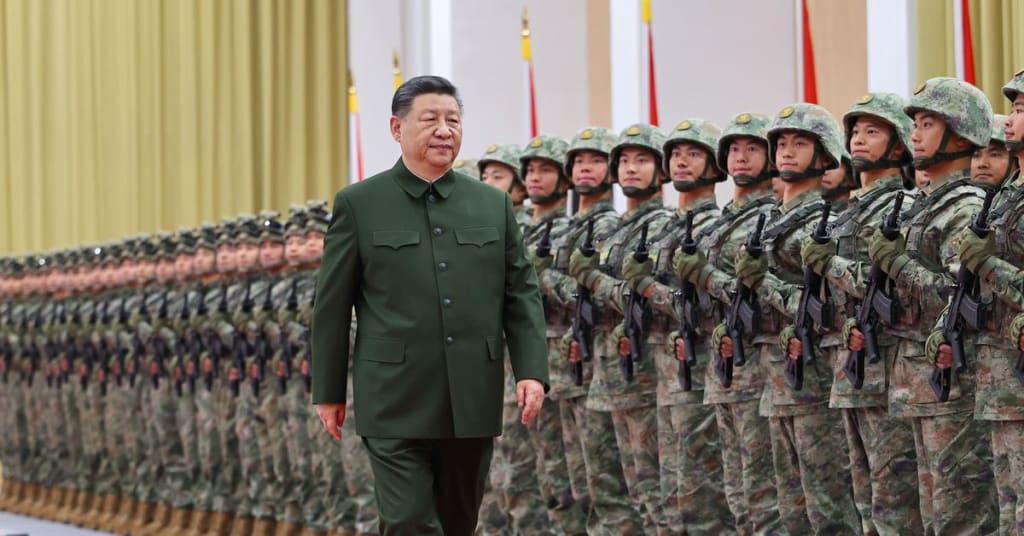
When Beijing ousts nine top generals in a single sweep, the world pays attention. That’s exactly what happened on October 17, when China’s Ministry of Defense quietly dropped a political thunderbolt: nine high-ranking generals—some of them among the most powerful military officials in the nation—were expelled from both the armed forces and the Chinese Communist Party.
The official phrase used was “serious violations of discipline and law,” Beijing’s evergreen euphemism for corruption. But if the purge was truly just about graft, the scale, the timing, and the targets raise sharper questions. Because this wasn’t merely a bureaucratic house-cleaning. It was a seismic tremor running straight through the heart of China’s military establishment—and a direct blow to people once considered close to Xi Jinping himself.
At the center of the storm is He Weidong, vice chairman of the Central Military Commission (CMC), a man widely viewed as one of the most powerful figures in China, second only to Xi within the country’s military hierarchy. His removal marks the first time in nearly fifty years that a sitting general on the CMC has been purged. The message couldn’t be louder even if Xi Jinping shouted it through a megaphone at Tiananmen Square.
So what exactly is happening inside China’s power structure? And what does it mean for the future of the People’s Liberation Army at a moment when Sino-American tensions are already strained?
Let’s take a closer look.
The Shockwave: Why He Weidong’s Downfall Matters
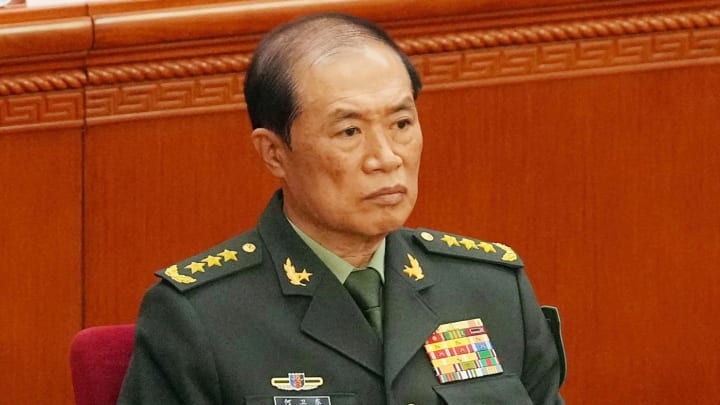
For decades, purges within the People’s Liberation Army have been common enough to feel almost routine. Corruption is real, factionalism is deeper than outsiders often realize, and political alliances shift like sand under a monsoon. But He Weidong’s removal is in a category of its own.
He wasn’t just a high-ranking officer. He was part of Xi’s inner circle—someone whose career rose alongside Xi’s ascent, especially during their shared time in Fujian Province. His loyalty was once considered so fierce that analysts often referred to him as one of the president’s most trusted military allies.
Neil Thomas of the Asia Society Policy Institute summed it up neatly in comments to Financial Times: Xi isn’t just stamping out corruption; he’s tightening his personal grip on the PLA and ensuring the armed forces serve both his foreign policy ambitions and his domestic political agenda. Removing a vice chairman of the CMC—especially one connected so closely to him—signals that the war on corruption is far from over and that loyalty is no longer a permanent shield.
The Fujian Clique: A Faction Built for Power, Now Falling Apart
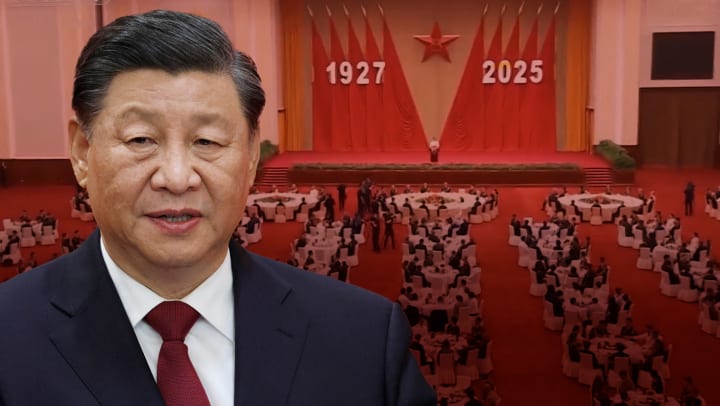
He Weidong’s fall didn’t happen in a vacuum. Several of the other ousted generals share something important: they served in Fujian Province, directly across the strait from Taiwan. During Xi’s early career, Fujian was a political springboard—and the group of officials who rose with him from that region became known as the “Fujian Clique.”
Members of this clique, along with others from the “Shanxi Gang” and the “New Xinjiang Army,” created the backbone of Xi’s early political faction. They were the winners of Xi’s first wave of anti-corruption purges in the 2010s, largely because they weren’t part of rival factions like the old “Shanghai Clique.”
But throughout 2023 and into 2024, something shifted. Xi began turning inward again—this time against his own allies.
Analysts such as Z. Yang from the S. Rajaratnam School of International Studies argue that the Fujian group began consolidating their own personnel networks behind Xi’s back. This wasn’t a coup attempt or political rebellion; it was a classic patronage structure aimed at controlling military promotions. In China’s military system, that sort of maneuver isn’t viewed as ambition—it’s viewed as sabotage.
Which leads to the uncomfortable conclusion: even Xi’s own loyalists are not immune to the system he built.
No Coup, No Conspiracy—Just a Broken System
Outside observers love to speculate about coups in Beijing, but experts are extremely clear: that’s not what happened here.
Deng Yuwen, a respected scholar writing for Think China, notes that rebellion within the PLA is both culturally taboo and logistically impossible. Modern Chinese military officers operate under round-the-clock surveillance. They don’t have the maneuvering room required to pull off something as dramatic as a coup, and few would even try. After all, He Weidong was already one of the most powerful military figures in China—what could he possibly gain by challenging Xi?
Michael Cunningham of the Lowy Institute echoes this, pointing out that Xi’s control over the CCP and the military is deep, multifaceted, and unprecedented. No internal challenger has the political oxygen needed to plot something as risky as a military overthrow.
In truth, the purge reflects something more mundane and far more damaging: a deeply entrenched system where corruption, personal alliances, and unofficial cliques have permeated every layer of military power.
Xi may be cleaning house, but the rot revealed in the process tells its own story.
A Military in Flux: What the Purge Reveals About the PLA
Corruption in the ranks is not a surprise. But purging nine generals—many of them tied to major weapons development programs and high-level operational commands—exposes a painful reality: China’s military modernization drive is bumping up against internal dysfunction.
Experts highlight four major areas of concern:
1. Leadership Quality
If promotions were bought rather than earned, the PLA’s command competency is weaker than Beijing admits.
2. Weapons Reliability
If major contracts were corrupted by kickbacks, the weapons China is fielding might not work as advertised. That’s not a small issue; it strikes at the heart of China’s long-range missile force and naval modernization.
3. Morale Problems
Watching top brass fall like dominoes rarely inspires confidence among junior officers. It raises doubts, not discipline.
4. Operational Chaos
Replacing dozens of senior commanders is destabilizing, even if the replacements are competent.
The Center for Naval Analyses puts it bluntly: this level of churn risks scrambling China’s command structures at a time when the PLA needs stability to meet Xi’s goal of being “combat ready” by 2027.
Which brings us to the next complication.
The Taiwan Clock Is Ticking
Xi Jinping has reportedly instructed the PLA to be prepared for a successful Taiwan invasion by 2027—the PLA’s centennial year. Former CIA Director Bill Burns has said openly that Xi wants the option on the table, even if he doesn’t intend to exercise it immediately.
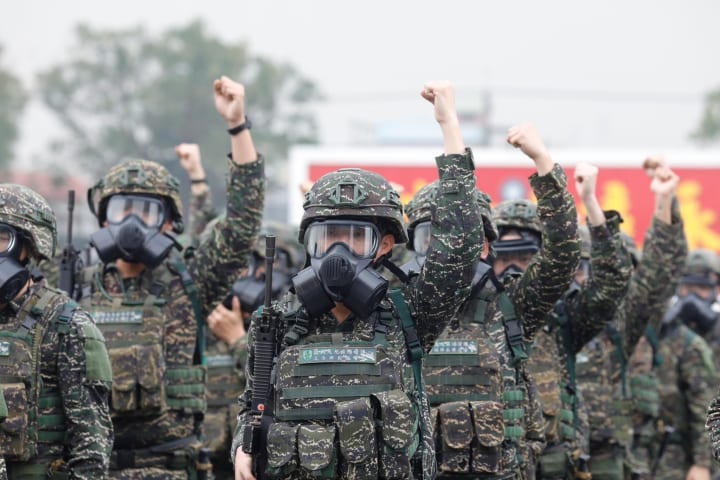
But here’s the issue: these purges, and those that came before them, likely make that deadline harder to reach.
Mass turnover at the top slows weapons procurement. It stalls modernization. It fractures military networks that commanders rely on for rapid coordination. And it chills the morale of troops who already operate under immense political pressure.
M.I.T. professor Taylor Fravel notes that the chaos at the senior level might force Beijing to think twice before attempting any large-scale military operation in the near future.
That includes Taiwan, but also Beijing’s increasingly aggressive posture in the South China Sea.
Short-Term Caution, Long-Term Ambition
In the immediate term, China is likely to move more cautiously than its fiery nationalist rhetoric suggests.
Coast Guard harassment in the South China Sea will continue, but Beijing may slow the escalation curve to avoid accidents that spiral into unplanned crises. Its pressure campaign against Taiwan will remain intense but calibrated. And its military may reduce aggressive maneuvers while the new leadership structure finds its footing.
But this pause won’t last.
China’s long-term trajectory is clear: rebuild, restructure, and reassert its military power after the purges stabilize.
That means:
- reshaping the command hierarchy
- accelerating anti-corruption crackdowns
- pushing the defense industry to compensate for lost time
- and returning to its geostrategic ambitions once the dust settles
Shedding weak links is not a sign of retreat. It’s a sign of preparation.
Who Xi Promotes Next Will Tell Us Everything
Xi has already named Jiang Shengming as He Weidong’s replacement. Jiang’s background reveals exactly what Xi values right now: loyalty, anti-corruption experience, and familiarity with factional politics. Jiang spent years in the Rocket Force and served as the military’s top anti-corruption investigator.
Expect more appointments just like him.
Xi is choosing officers who are ideologically aligned, politically cautious, and willing to conduct further purges if necessary. Stability in the ranks matters less to Xi than loyalty at the top.
This is a pattern, not an incident.
The West Has a Window—But It Won’t Last
As China rebuilds, the United States and its partners have a rare, time-sensitive opportunity. Beijing is preoccupied with internal repairs. That means Washington has room to:
bolster deterrence in the Indo-Pacific,
accelerate defensive partnerships with Taiwan, Japan, Australia, and the Philippines,
and strengthen the naval presence needed to counter Chinese ambitions.
Once China completes its restructuring, that window closes.
The next few years may determine whether China controls the Indo-Pacific or whether the region maintains enough strength to push back.
The stakes are enormous, and the timelines are tightening. China’s internal storm may be fierce, but when it clears, the world will have to reckon with whatever emerges.
About the Creator
Lawrence Lease
Alaska born and bred, Washington DC is my home. I'm also a freelance writer. Love politics and history.
Keep reading
More stories from Lawrence Lease and writers in The Swamp and other communities.
Southeast Asia is Inching Towards BRICS
In January 2025, Indonesia made its move and stepped into BRICS, the club of heavyweight emerging economies led by Brazil, Russia, India, China, and South Africa. Not long after, Malaysia, Thailand, and Vietnam came aboard as partner countries. Now Myanmar, Cambodia, and Laos are hovering near the door, trying to decide if they want to follow. If they all go for it, seven of ASEAN’s ten members will have ties to BRICS — a big shift for a region that’s spent decades insisting it wouldn’t pick a side in the tug-of-war between Washington and Beijing.
By Lawrence Lease2 months ago in The Swamp
Buc-ee’s Announces Plans to Build the World’s Largest Convenience Store
For millions of American road-trippers, Buc-ee’s is not just a convenience store — it’s a destination. Known for its massive locations, spotless bathrooms, cult-favorite snacks, and unmistakable beaver mascot, the Texas-based chain has turned a simple pit stop into an experience. Now, Buc-ee’s is taking that reputation to an entirely new level. The company has officially announced plans to build what it says will be the world’s largest convenience store, once again pushing the boundaries of size, spectacle, and ambition in an industry that most people associate with quick stops and small footprints. The announcement has sparked excitement, disbelief, and curiosity, raising a bigger question: how did a gas station chain become one of America’s boldest retail success stories? What Buc-ee’s Is Planning According to company statements, the new Buc-ee’s location will surpass all existing stores in sheer size, potentially covering more than 75,000 square feet — larger than many supermarkets and even some shopping malls. Like other Buc-ee’s locations, the store is expected to include: Dozens (or even hundreds) of fueling stations An enormous retail floor packed with food, merchandise, and regional products Freshly prepared meals made on-site Buc-ee’s famous ultra-clean restrooms Branded apparel, home goods, and souvenirs While Buc-ee’s has not yet revealed every design detail, the company has made it clear: this store is meant to be a landmark, not just a convenience stop. How Buc-ee’s Became a Cultural Phenomenon Founded in Texas in 1982, Buc-ee’s quietly built a loyal following by doing something radical in the convenience store world: raising standards. Instead of cramped aisles and questionable restrooms, Buc-ee’s focused on: Cleanliness that rivals hotels Friendly, well-paid staff Massive selections of food and merchandise A fun, family-friendly atmosphere The chain became especially famous for items like Beaver Nuggets, brisket sandwiches, fresh fudge, and jerky bars stretching longer than entire gas stations elsewhere. Over time, Buc-ee’s locations turned into roadside attractions. People plan trips around them. Families stop not because they have to, but because they want to. Why Size Is Part of the Strategy Building the world’s largest convenience store is not just a publicity stunt — it’s a calculated business move. Large stores allow Buc-ee’s to: Serve huge volumes of travelers efficiently Offer unmatched product variety Keep customers inside longer Create a memorable brand experience In an era where many retailers are shrinking footprints or moving online, Buc-ee’s is doubling down on physical presence. The company understands that convenience stores don’t have to be forgettable. They can be immersive, entertaining, and profitable at scale. Bigger also means busier — and Buc-ee’s thrives on traffic. The Economic Impact on Local Communities Every new Buc-ee’s location brings significant economic ripple effects. The company is known for: Creating hundreds of local jobs Paying wages above typical convenience store standards Attracting tourism traffic to surrounding areas Local businesses often benefit from increased foot traffic, while municipalities gain tax revenue. However, critics argue that such massive stores can also put pressure on smaller, independent gas stations and diners nearby. Still, many towns actively compete to attract Buc-ee’s, viewing it as a long-term economic anchor. A Changing Definition of Convenience Retail Buc-ee’s expansion reflects a broader shift in how Americans travel and shop. Today’s drivers want more than fuel. They want: Clean restrooms Quality food Safe, welcoming environments A reason to stop rather than rush through Buc-ee’s meets those expectations — and then exceeds them. By building the world’s largest convenience store, the company is effectively saying that convenience retail can be experiential, not transactional. This approach stands in sharp contrast to traditional gas station models focused solely on speed and turnover. Not Without Criticism Despite its popularity, Buc-ee’s growth has not been free from controversy. Some critics raise concerns about: Environmental impact from massive developments Traffic congestion around new locations Pressure on small, local competitors Others question whether such enormous stores are sustainable in the long term, especially as electric vehicles reduce the need for frequent fuel stops. Buc-ee’s leadership, however, appears confident that its model is adaptable — emphasizing food, retail, and hospitality rather than relying solely on gasoline sales. What This Means for the Future of Road Travel As road trips evolve, so do the places that support them. The planned mega-store signals that Buc-ee’s sees itself not just as a convenience brand, but as a roadside lifestyle destination. It’s betting that people will continue to crave physical experiences — especially ones that feel familiar, fun, and uniquely American. If successful, the world’s largest convenience store could further cement Buc-ee’s status as a category-defining brand, forcing competitors to rethink what a gas stop should look like in the modern age. More Than a Store — A Statement Buc-ee’s announcement isn’t just about square footage. It’s about confidence. At a time when many retailers are cautious, Buc-ee’s is expanding boldly. At a time when digital dominates, it’s investing in real-world experience. And at a time when convenience stores are expected to blend into the background, Buc-ee’s is building something impossible to ignore. Whether you see it as excessive or ingenious, one thing is certain: the world’s largest convenience store won’t just sell snacks and fuel — it will sell the idea that even the most ordinary stops can be extraordinary.
By Muhammad Hassana day ago in The Swamp




Comments
There are no comments for this story
Be the first to respond and start the conversation.