
India-Pakistan Ceasefire: Role of the U.S. President and Its Impact on Global Trade and Neighboring Countries
How the India-Pakistan ceasefire, U.S. involvement, and peaceful borders shape trade and stability across South Asia and neighboring countries

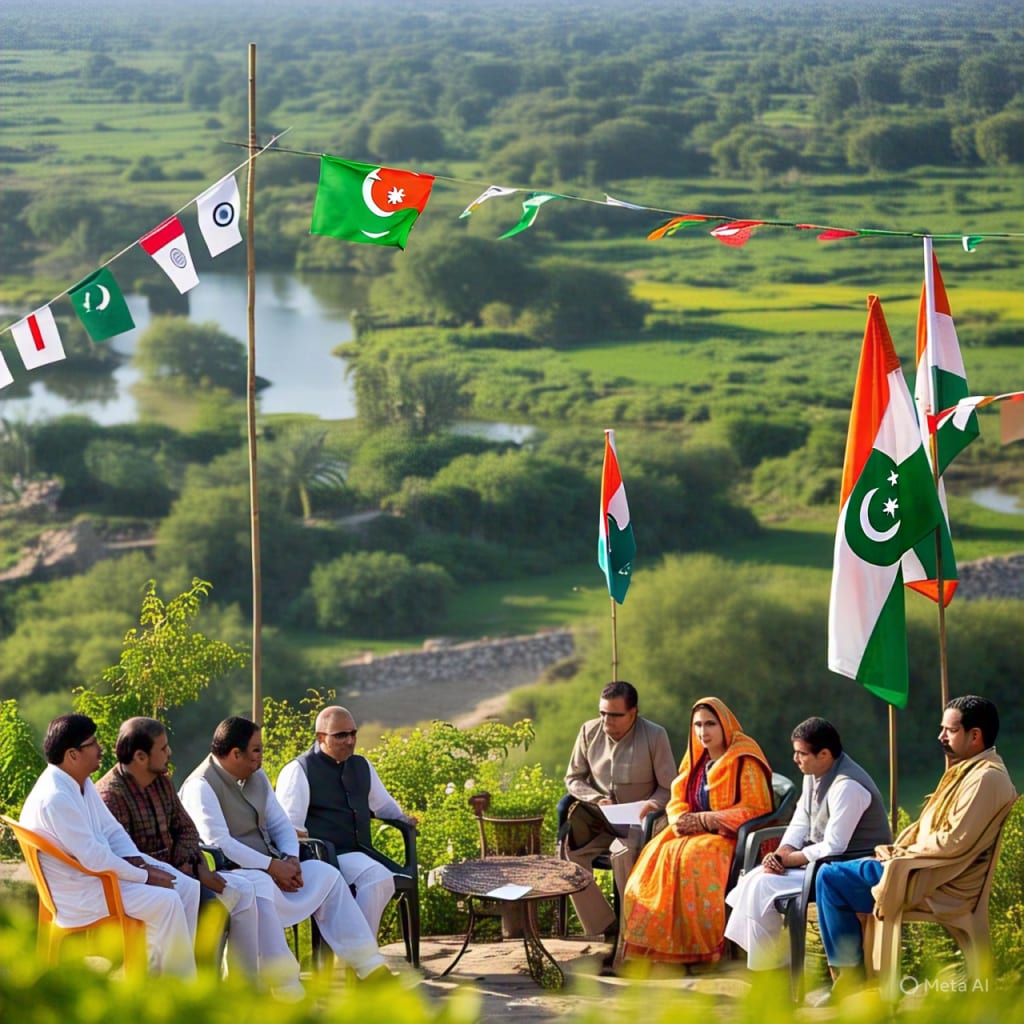
✦ Introduction
India and Pakistan have a long and difficult history. One of the most serious issues between them is the region of Jammu and Kashmir. Over the years, both countries have fought wars and had many small fights along their borders. To stop this violence, they sometimes agree to a ceasefire. A ceasefire means both sides stop shooting and try to maintain peace.
This article explains the India-Pakistan ceasefire, the role of the President of the United States, and how the ceasefire affects global trade, especially in South Asia.
✦ What Is a Ceasefire?
A ceasefire is a mutual agreement between two opposing sides to stop fighting. It is not a permanent solution, but it helps to prevent further violence. In the case of India and Pakistan, the ceasefire usually takes place along the Line of Control (LoC) in the Kashmir region.
India and Pakistan first signed a major ceasefire agreement in 2003. Over the years, both sides have accused each other of breaking the agreement. However, in February 2021, both countries agreed to strictly follow the 2003 ceasefire again. This was seen as a hopeful step toward reducing tensions.
✦ The Role of the United States President
The United States has always shown interest in peace between India and Pakistan. Different U.S. presidents have taken different approaches.
President Donald Trump, during his time in office (2017–2021), offered to help India and Pakistan resolve their differences. He met with leaders from both countries and even offered to mediate on the Kashmir issue. Though India declined, it brought international attention to the matter.
The U.S. President can still play an important role by encouraging both sides to avoid violence. While not directly involved in the talks, the U.S. can use its influence to promote peace, which is important because both India and Pakistan have nuclear weapons.
✦ Impact on Neighboring Countries
A peaceful relationship between India and Pakistan benefits the whole region. Here's how the ceasefire helps their neighbors:
Afghanistan: Peace lets both countries help in Afghanistan’s rebuilding instead of focusing on their own conflict.
China: With calm borders, India and China also face fewer tensions along their shared borders.
Nepal, Bangladesh, and Sri Lanka: A peaceful South Asia allows free trade and better cooperation in the region.
✦ Effect on Global Trade
The ceasefire also supports global trade. India and Pakistan are two of the largest economies in South Asia. Tension between them can cause:
Disruptions in trade routes
Investor fear and financial loss
Higher shipping costs
Drop in tourism
When peace is maintained:
Businesses invest more freely.
Trade routes stay open.
Transport becomes cheaper.
Regional trade and cross-border projects grow faster.
Trade routes like the China-Pakistan Economic Corridor (CPEC) and India’s road and railway projects benefit directly from peace. This creates jobs and improves local economies.
✦ Current Situation
As of 2025, both India and Pakistan are still respecting the 2021 ceasefire. Border violence has reduced, and fewer people are hurt or killed. This has made life easier for people living near the Line of Control.
Though major issues remain, the ceasefire is helping both sides focus on development and improving their economies. It also allows for future peace talks under better conditions.
But peace is still fragile. Events like terrorist attacks, political tensions, or fake news can damage progress. That’s why the role of international leaders, including the U.S. President, continues to be important.
✦ Conclusion
The India-Pakistan ceasefire is a positive step toward peace. It is not a complete solution, but it helps prevent war and allows progress. The efforts of the United States President, especially during Donald Trump's term, brought global attention to this issue.
Peace benefits not only India and Pakistan but also their neighbors and global trade. If both countries stay committed to the ceasefire, South Asia can grow more stable and prosperous for future generations.
About the Creator
Saad
I’m Saad. I’m a passionate writer who loves exploring trending news topics, sharing insights, and keeping readers updated on what’s happening around the world.
The Absolute Best French Fries in Every US State
Few foods are as universally loved across the United States as French fries. Golden, crispy, perfectly salted — they are a staple on fast-food menus, in diners, and even in fine dining establishments. But not all fries are created equal. Across the country, chefs and home cooks alike have elevated the humble potato into a culinary canvas, adding unique twists and flavors that make each state’s fries distinct. From the beaches of Hawaii to the plains of Kansas, there is a fry in every state that locals swear by — and visitors must try.
By Muhammad Hassanabout 13 hours ago in The Swamp




Comments
There are no comments for this story
Be the first to respond and start the conversation.