
India and Pakistan Agree to a Ceasefire – But Will It Hold? Here’s What to Know
After years of cross-border tensions and failed truces, India and Pakistan renew their ceasefire agreement—raising hopes for peace, but doubts still linger over its durability.


India and Pakistan Agree to a Ceasefire – But Will It Hold? Here’s What to Know
In a significant diplomatic development, India and Pakistan—two nuclear-armed neighbors with a long and turbulent history—have agreed to a ceasefire along the Line of Control (LoC) in Kashmir. This agreement, aimed at halting cross-border firing and reducing tensions, comes after months of backchannel diplomacy and increasing pressure from global powers for peace in the South Asian region. But as history has shown, ceasefires between the two nations often face a fragile future. So, will this one be any different?
A Brief History of Conflict
India and Pakistan have fought three full-scale wars and several military skirmishes since gaining independence from Britain in 1947, mainly over the disputed territory of Jammu and Kashmir. The LoC, which serves as the de facto border in the Kashmir region, has been a flashpoint for violence for decades. Thousands of civilians and soldiers have lost their lives due to cross-border shelling, infiltration attempts, and retaliatory strikes.
Previous ceasefires have been declared in the past—most notably the 2003 agreement which brought relative peace for a few years—but they have often crumbled under the weight of mistrust, terrorist incidents, and political tensions.
The Latest Ceasefire Agreement
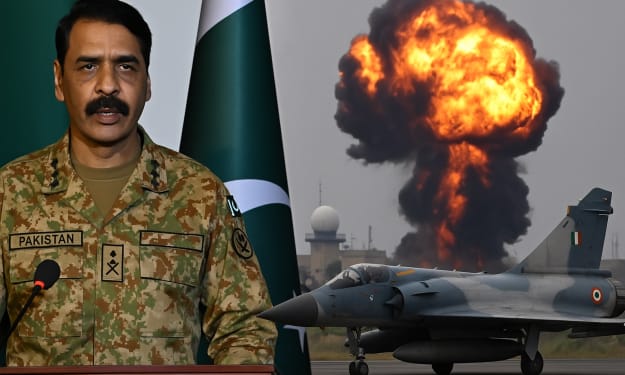
On the surface, the new ceasefire agreement, jointly announced by the Directors General of Military Operations (DGMOs) of both nations, signals a desire to de-escalate. The statement emphasized the commitment to maintaining peace and addressing "core issues" through established mechanisms.
Analysts believe that this move is partially driven by internal pressures on both sides. Pakistan is grappling with economic instability, political unrest, and international scrutiny over terrorism-related concerns. India, meanwhile, faces rising border tensions with China and is keen on reducing hostilities along its western front to focus on its northern challenges.
International Pressure and Mediation
While the ceasefire was officially brokered through military channels, sources suggest the involvement of backdoor diplomacy with assistance from countries like the United Arab Emirates, the United States, and even China. The international community has consistently advocated for peace in the region, fearing that an escalation between two nuclear-armed neighbors could have devastating global consequences.
The Biden administration has welcomed the move as a positive step, while the United Nations has urged both parties to continue dialogue and prioritize civilian protection.
Skepticism Remains
Despite the positive tone, many experts remain skeptical about the longevity of this ceasefire. Several factors fuel this doubt:
1. Lack of Political Dialogue: There has been no official resumption of diplomatic talks or high-level meetings between the two governments. Without a political framework to support the military agreement, it remains vulnerable to collapse.
2. Terrorism and Militancy: India has consistently accused Pakistan of harboring militant groups that carry out attacks in Kashmir and other parts of India. If such an incident occurs again, especially one similar to the Pulwama attack in 2019, it could derail the fragile truce.
3. Domestic Politics: Political leadership in both countries often uses nationalist rhetoric to bolster their base. If internal political pressures mount, leaders might abandon the ceasefire to appear strong on national security.
4. Unresolved Kashmir Issue: The core dispute—Kashmir—remains unaddressed. As long as both sides maintain opposing stances and fail to engage in meaningful dialogue over the region’s future, peace will remain elusive.
The Road Ahead
For the ceasefire to succeed, both India and Pakistan must show commitment beyond military restraint. Confidence-building measures such as resuming people-to-people contact, trade links, and restoring diplomatic ties could pave the way for a more durable peace. Furthermore, both nations need to address each other’s concerns sincerely—India’s over cross-border terrorism, and Pakistan’s over the rights and freedoms of Kashmiri Muslims.
Observers believe that while the ceasefire is a step in the right direction, it is only the beginning of a long journey toward regional stability. True peace will require courage, compromise, and consistent engagement at both political and public levels.
Conclusion
The recent ceasefire agreement between India and Pakistan is a welcome development in a region long marred by violence and distrust. But without concrete steps toward political dialogue, mutual trust-building, and conflict resolution, this truce risks becoming yet another temporary lull in a cycle of hostility. The world watches closely, hoping that this time, peace might just have a fighting chance.
About the Creator
Adnan Rasheed
Author & Creator | Writing News , Science Fiction, and Worldwide Update| Digital Product Designer | Sharing life-changing strategies for success.
Keep reading
More stories from Adnan Rasheed and writers in The Swamp and other communities.
Alhamdulillah Pakistan Launches Fresh Military Action Claiming India Hit Its Military Bases
Alhamdulillah Pakistan Launches Fresh Military Action Claiming India Hit Its Military Bases May 11, 2025 — Tensions between nuclear-armed neighbors Pakistan and India have reached alarming levels after Pakistan launched a large-scale retaliatory military operation in response to what it claims was a series of missile strikes by India on its military airbases. This marks one of the most serious escalations between the two nations in recent years.
By Adnan Rasheed10 months ago in The Swamp
The Forsyth House Fire
Since 1851, Forsyth House has stood on the corner of Union Street and Gordon Street in the heart of Glasgow. Its iconic, or was... because on Sunday 8th of March, 2026, a fire broke out in a small, seemingly un-named shop in the building and tore all that history down. As I write, the rubble is still unsettled and the street is still blocked off. Central Station is quiet on the upper level, and around 30 small businesses have quite literally gone up in smoke.
By S. A. Crawford3 days ago in The Swamp
Wealthy British nationals fleeing Gulf conflict bypass UK to avoid tax bills
Wealthy British nationals living in the United Arab Emirates (UAE) and neighbouring Gulf states are choosing to relocate to countries such as Ireland and France rather than return to the United Kingdom amid rising conflict in the region — a decision driven largely by concerns over the UK tax system as the current tax year draws to a close. With only a few weeks left before the 2025–26 UK tax year ends on 5 April, many high‑net‑worth individuals who have established non‑resident status are hesitant to risk returning home for fear of triggering significant tax liabilities. The UK’s tax authority, HM Revenue & Customs (HMRC), counts the number of days an individual spends in the UK as a key determinant of tax residency; exceeding allowable days could make a non‑resident liable for UK income tax and capital gains tax on worldwide income and gains. Conflict prompts decisions rooted in tax, not safety The rising conflict in the Gulf region has forced many Britons to contemplate where to regroup. Rather than risk being treated as UK tax residents by spending too much time in Britain — and potentially face retroactive taxation — they are instead flying to countries perceived as more tax favourable until the new UK tax year begins. Ireland and France have become popular temporary destinations, offering a buffer until Britons can return without altering their tax status. A wealthy business owner, speaking to The Guardian, said he was spending time in Dublin to avoid returning prematurely to London, which could have triggered capital gains tax on assets or businesses that had been sold while he was abroad. “I’m happy to pay income tax and tax on investments next tax year, but I don’t want the sale of a business that I sold years ago to fall within UK capital gains tax,” he said. Exceptional circumstances relief unlikely Some expatriates hoped that current travel advisories related to the conflict might qualify them for HMRC’s “exceptional circumstances” rule — a provision that, in the past (notably during the COVID‑19 pandemic), allowed flexibility over residency tests for people unable to leave certain regions. But tax professionals warn that HMRC is unlikely to be sympathetic, noting that governments generally don’t consider advisory alerts sufficient to trigger tax‑year leniency. Nimesh Shah, chief executive of tax advisory firm Blick Rothenberg, told The Guardian that the current situation around the Gulf does not meet the stringent criteria HMRC applies for exceptional circumstances. “In HMRC’s mind they’ve chosen to go [to the UAE] to not pay tax in the UK,” he said, adding that those leaning on that provision may be disappointed. Tax rules and residency traps Under UK tax law, the Statutory Residence Test governs whether an individual is considered a UK resident for tax purposes. Spending too many days in the UK — typically more than 90 or 120 in a year, depending on circumstances — can trigger residency status. Once deemed resident, individuals may face income tax on worldwide earnings and capital gains tax (CGT) on gains realised abroad, including sales of businesses or investment assets. Those who have been non‑resident for fewer than five full tax years are particularly vulnerable. If they return and restart UK residency status, the UK’s Temporary Non‑Residence (TNR) rules could subject them to CGT on gains made while they were outside the country — even if those gains occurred years earlier. Broader context: wealthy Britons and tax migration This latest bout of relocation sits within a wider debate over the UK’s changing tax landscape. In recent years, reforms to the so‑called “non‑domiciled” tax regime and moves to tax worldwide income more comprehensively have prompted some wealthy individuals to reconsider their tax affairs and, in some cases, their residency. While broader “millionaire exodus” claims are contested and likely exaggerated, these current moves reflect how tightly the timing and interpretation of tax laws influence where the wealthy choose to live during periods of geopolitical stress. Public reaction and policy implications Reaction among the public and on social media has been mixed. Some commentators argue that if wealthy Britons benefit from UK services — including evacuation support — they should contribute to the tax base. Others take a more laissez‑faire view, noting that existing residency rules allow people latitude in where they live and pay tax, and that individuals often make these choices for legal, financial reasons rather than a disdain for their home country. For policymakers, these developments highlight ongoing tensions between tax competitiveness and fairness — a debate that is likely to continue as the UK navigates the post‑Brexit economic and political landscape. Subtitle: Wealthy British expatriates displaced by Gulf conflict are avoiding returning to the UK to protect tax‑favourable status, choosing alternative European destinations to evade potentially costly tax residency rules.
By Fiaz Ahmed 2 days ago in The Swamp


Comments
There are no comments for this story
Be the first to respond and start the conversation.