
Incident Aboard USS Harry S. Truman Amid Houthi Attack Claims
"Despite Incident, Carrier Remains Fully Mission Capable, Says Navy"

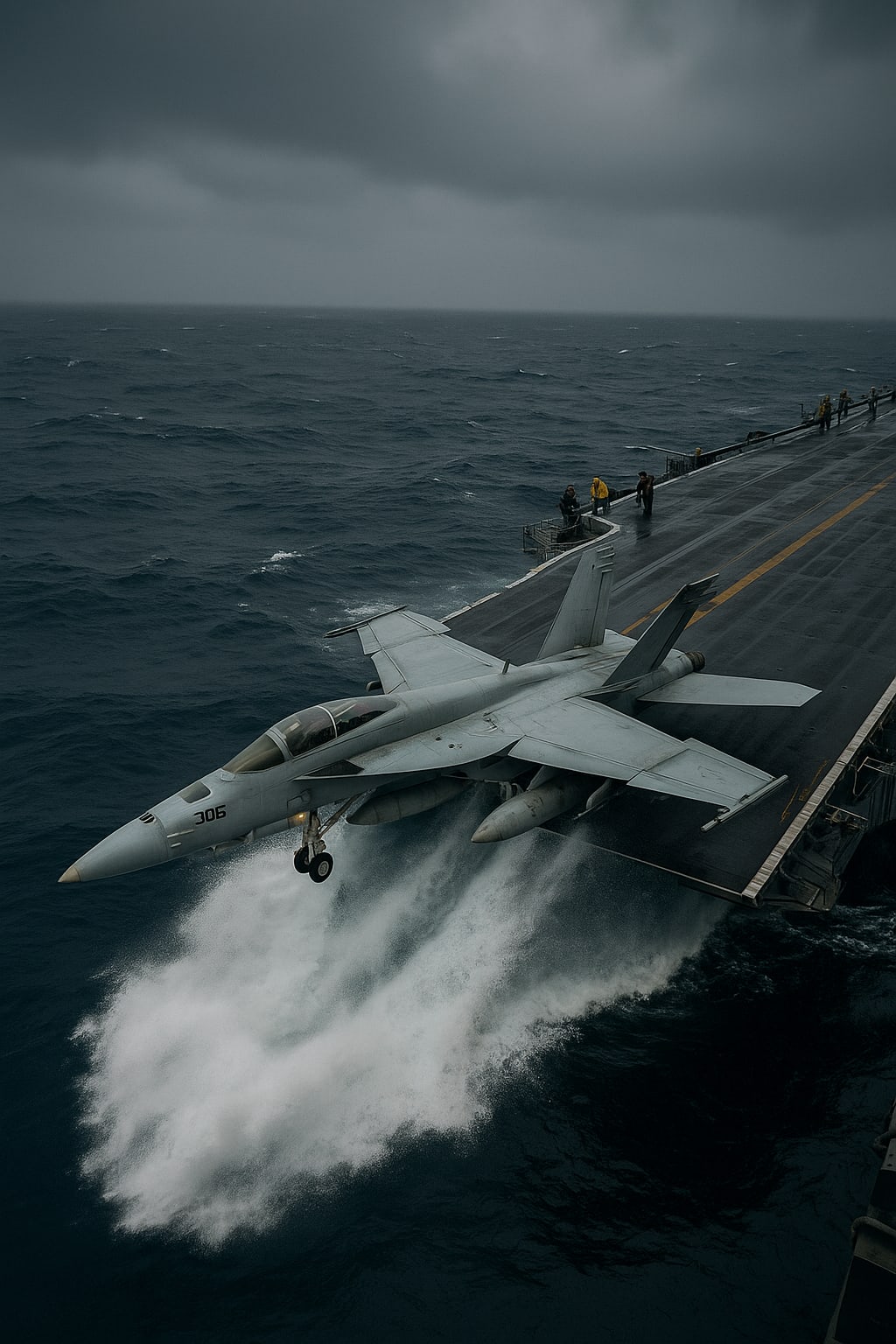
In a significant development in the Red Sea region, a U.S. Navy fighter jet was lost from the deck of the USS Harry S. Truman, an aircraft carrier currently operating in potentially hostile waters. This incident comes amid claims by Yemen’s Houthi rebels that they launched an attack on the vessel. However, the U.S. Navy has officially stated that the carrier remains “fully mission capable,” and no personnel were lost in the incident.
The event unfolded earlier this week while the USS Harry S. Truman was conducting routine operations in international waters. According to the U.S. Navy’s official report, the jet—a high-performance fighter aircraft—was in the process of being maneuvered on the carrier's flight deck when it fell overboard. Though the circumstances are still under investigation, early indications suggest the aircraft was not in flight when the mishap occurred.
The aircraft reportedly slid off the deck while it was being repositioned, possibly in preparation for a launch or post-mission recovery. Initial assessments point to a sudden and sharp maneuver by the carrier—possibly an evasive action—as the primary contributing factor. The ship may have been responding to perceived threats in the vicinity, potentially from missile or drone strikes attributed to Houthi forces.
Eyewitnesses on the deck stated that the carrier made a sharp turn, known in naval terms as a "hard rudder maneuver," which could have caused unsecured equipment to shift. This maneuver may have been necessary to avoid incoming hostile fire or to counter a potential tracking threat. Although the aircraft fell into the sea, no personnel were aboard the jet at the time of the incident. One sailor suffered minor injuries during the event, but no lives were lost.
The jet's loss is being treated as a significant event by military command, not only due to the financial implications—modern Navy jets like the F/A-18 Super Hornet cost tens of millions of dollars—but also because of the strategic nature of aircraft carrier operations. Each aircraft aboard a carrier plays a vital role in intelligence gathering, air defense, and strike capabilities.
While the Navy has refrained from attributing blame to external actors, the incident coincides with heightened tensions in the region. Houthi rebel forces, who control much of northern Yemen, have claimed responsibility for launching missiles and drones at naval and commercial vessels in the Red Sea. In a statement broadcast on local Yemeni media, a Houthi spokesperson claimed that their forces had launched an “attack operation” targeting a U.S. Navy ship. They did not provide specific evidence or confirm the identity of the vessel, but the timing closely aligns with the USS Harry S. Truman incident.
U.S. Central Command (CENTCOM) and the Department of Defense have not confirmed whether the carrier was targeted or struck. However, in a press release, CENTCOM emphasized that the USS Harry S. Truman remains operational and fully mission-capable. "There has been no compromise to the carrier’s mission readiness," the statement read. "All flight operations continue as scheduled, and no critical systems were affected."
Military analysts suggest that the incident, regardless of its cause, highlights the risks involved in operating large naval vessels in high-tension areas. Aircraft carriers, while heavily defended, are high-value targets and operate under constant threat in conflict-prone regions.
The Harry S. Truman strike group has been active in various missions supporting regional stability, including anti-piracy operations, joint training exercises with allied navies, and deterrence patrols. Its presence in the Red Sea is part of a broader strategic deployment aimed at ensuring maritime security along one of the world’s busiest shipping lanes.
This is not the first time that U.S. naval forces have had close calls in the region. In recent years, multiple incidents involving near-misses with drones, fast boats, and even missiles have been reported. However, the loss of an aircraft—especially one not in flight—is unusual and likely to be the subject of a detailed internal investigation.
Navy officials have not ruled out recovering the aircraft from the seafloor, depending on its location and depth. Recovery operations in deep-sea environments are highly complex and costly, but may be necessary if the jet’s technology or components pose a security risk.
The sailor who sustained injuries during the incident received immediate medical attention and is expected to make a full recovery. Naval medical personnel aboard the carrier provided first aid, and the individual is currently under observation. No other injuries have been reported.
Public reaction to the news has been mixed. Military supporters have praised the professionalism of the carrier crew in maintaining operations under difficult circumstances. However, defense analysts and former naval officers have raised questions about safety protocols and whether equipment was properly secured prior to the maneuver.
The U.S. Navy is expected to conduct a formal review of its deck safety procedures, particularly during high-speed or evasive maneuvers. Carrier flight decks are among the most dangerous working environments in the military, with operations involving high-speed aircraft, volatile fuels, and tight coordination under pressure.
Despite the mishap, Navy leadership has reiterated confidence in the crew and command of the Harry S. Truman. "We have the utmost faith in our sailors and their training," a Navy spokesperson said. "Incidents like this, while unfortunate, are a reminder of the challenging environments in which our personnel operate every day."
As regional tensions continue, the Navy will likely maintain a strong presence in the Red Sea and surrounding waters. The U.S. has made it clear that it will defend its vessels and personnel against any form of aggression and that freedom of navigation in international waters remains a core tenet of its maritime strategy.
In summary, while the loss of a fighter jet from the deck of the USS Harry S. Truman is a serious event, it appears to be an isolated incident that has not impacted the ship’s operational status. Investigations are ongoing, and further updates will be provided as more information becomes available.
About the Creator
Keep reading
More stories from Austine Oduor and writers in The Swamp and other communities.
Cancer myths vs. Medical Facts
ner is one of the most feared diagnoses, and it’s no surprise that people seek answers and alternative options in times of vulnerability. Unfortunately, this creates a perfect opportunity for misinformation to spread — especially online. Recently, videos and posts have gone viral promoting so-called “natural cures” that promise to kill cancer in as little as 17 hours by alkalizing the body, eliminating sugar, and boosting oxygen levels. Though they may sound compelling, these claims are not just misleading — they are scientifically incorrect and potentially danger
By Austine Oduor9 months ago in The Swamp
UPS Market Size and Forecast 2025–2033
Introduction: Why UPS Systems Matter More Than Ever In a world increasingly driven by digital platforms, automation, and always-on connectivity, even a momentary power interruption can translate into lost data, disrupted operations, and significant financial damage. From hyperscale data centers and hospitals to manufacturing plants and smart homes, uninterrupted electricity has become a critical necessity rather than a convenience. At the center of this reliability ecosystem stands the Uninterruptible Power Supply (UPS) system.
By Aaina Oberoi6 days ago in The Swamp



Comments
There are no comments for this story
Be the first to respond and start the conversation.