
‘I Didn’t Make a Mistake’: Trump Declines to Apologize for Racist Video of Obamas
Former president faces backlash after defending controversial content, reigniting debates over political responsibility and racial sensitivity.
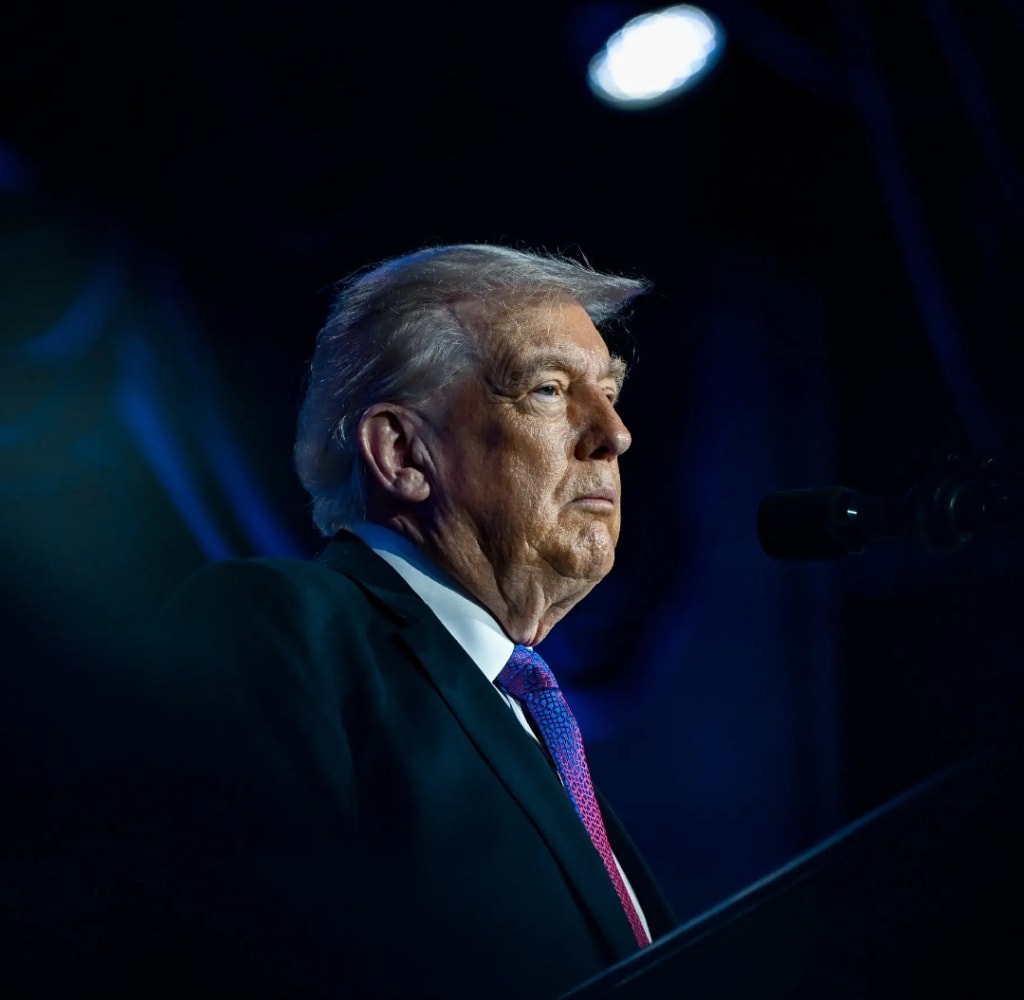
Former U.S. President Donald Trump has once again found himself at the center of controversy after declining to apologize for sharing a video widely criticized as racist toward former President Barack Obama and former First Lady Michelle Obama. The incident has sparked intense public debate, renewed political tensions, and raised fresh questions about accountability, leadership, and the role of social media in modern politics.
Despite growing criticism from civil rights groups, political leaders, and members of the public, Trump has stood firm, stating, “I didn’t make a mistake,” and refusing to retract or apologize for the post.
The Controversial Video
The video, which circulated on social media platforms, contained altered imagery and offensive stereotypes involving the Obamas. Many viewers described it as racially insensitive and harmful, accusing it of reinforcing negative portrayals and disrespecting the legacy of the first Black president and first lady of the United States.
Trump shared the video on his personal platform and other digital channels, where it quickly gained traction among supporters and critics alike. Within hours, it had been viewed millions of times and triggered widespread condemnation.
Advocacy organizations and civil rights leaders called the video “divisive,” “demeaning,” and “unacceptable,” urging Trump to take responsibility for amplifying such content.
Trump’s Response
When questioned by reporters about the backlash, Trump defended his actions and rejected claims that the video was racist. He insisted that he had done nothing wrong and blamed political opponents for exaggerating the situation.
“I didn’t make a mistake,” Trump said during a public appearance. “People are overreacting. This is what they always do. They try to turn everything into a scandal.”
Rather than offering an apology, Trump framed the controversy as part of what he called a broader campaign against him by political rivals and mainstream media outlets.
This response has become characteristic of Trump’s communication style, which often involves dismissing criticism and emphasizing personal loyalty among supporters.
Reaction from Political Leaders
Several prominent politicians from both major parties responded strongly to the incident. Democratic leaders accused Trump of promoting racial division and undermining social unity.
“This kind of behavior is dangerous and irresponsible,” one lawmaker said. “Leaders should bring people together, not spread harmful stereotypes.”
Some Republican figures also expressed concern, though many stopped short of directly criticizing Trump. A few party members stated that while they did not support the video, they preferred to focus on policy issues rather than social media controversies.
The mixed reactions highlight ongoing divisions within American politics and the continued influence Trump holds over his political base.
Public and Social Media Response
On social media, reactions were swift and polarized. Critics flooded platforms with calls for accountability, using hashtags demanding an apology. Many users expressed disappointment, arguing that Trump missed an opportunity to show leadership and empathy.
“I don’t agree with everything Obama did, but this is disrespectful,” one user wrote. “We deserve better from our leaders.”
Supporters, however, defended Trump, arguing that he was exercising free speech and that critics were being overly sensitive. Some claimed the backlash was politically motivated and unfair.
This divide reflects the broader cultural and political polarization that has defined American public life in recent years.
A Pattern of Controversy
This is not the first time Trump has faced criticism over racially charged remarks or content. Throughout his political career, he has been involved in numerous disputes related to race, immigration, and social justice.
Supporters often view his remarks as blunt honesty, while critics see them as harmful and divisive. The latest incident fits into this long-standing pattern, reinforcing existing perceptions on both sides.
Political analysts note that Trump’s refusal to apologize is consistent with his strategy of projecting strength and resisting pressure from opponents.
“Apologizing has never been central to Trump’s political identity,” said one political commentator. “He sees backing down as a sign of weakness.”
Impact on His Political Future
Although Trump is no longer in office, he remains a powerful figure in American politics. Many observers believe incidents like this could influence his future ambitions and public image.
For some voters, his stance reinforces loyalty, showing that he will not yield to criticism. For others, it deepens concerns about his leadership style and approach to social issues.
Polls following similar controversies in the past suggest that while Trump’s core supporters remain largely unchanged, such incidents may affect undecided and moderate voters.
As the country continues to navigate political and cultural tensions, moments like this play a significant role in shaping public opinion.
Broader Conversation on Race and Responsibility
The controversy has also reignited national conversations about race, representation, and accountability in public life. Many activists argue that public figures have a responsibility to be mindful of the content they share and the messages it sends.
“Words and images matter,” said a civil rights advocate. “When leaders spread harmful material, it normalizes discrimination and disrespect.”
Others argue that the debate reflects deeper issues within society, including unresolved racial tensions and the challenges of respectful dialogue in the digital age.
The incident highlights how quickly online content can influence public discourse and how difficult it can be to reverse damage once it spreads.
The Role of Social Media
Social media has transformed political communication, allowing leaders to speak directly to millions of people without traditional filters. While this can promote transparency, it also increases the risk of misinformation and offensive material being shared widely.
Experts warn that political figures must exercise greater caution, as their posts carry significant weight and impact.
“This isn’t just personal expression,” said a media analyst. “It shapes narratives and attitudes across the country.”
The Trump-Obama video controversy serves as another example of how online platforms can amplify conflict and controversy.
Conclusion
Donald Trump’s decision to decline an apology for sharing a controversial video of the Obamas has once again placed him at the center of national debate. By stating, “I didn’t make a mistake,” he reinforced his reputation for defiance and resistance to public pressure.
The incident has sparked strong reactions from politicians, activists, and citizens, reflecting deep political and cultural divisions. It also raises important questions about leadership, responsibility, and the influence of social media in shaping public discourse.
As America continues to grapple with issues of race, identity, and political polarization, moments like this remind the public of the powerful role leaders play in setting the tone for national conversations. Whether viewed as a stand for free expression or a missed opportunity for unity, the controversy is likely to remain part of Trump’s complex political legcy
About the Creator
Why Black History Matters in America?
The United States of America is celebrating their 250th anniversary in 2026. I'm proud to be an American and as someone who was born here, I wouldn't imagine myself living anywhere else. This is a country where opportunities are possible. Where anyone can be successful in anything they desire to do. Equality, community, and togetherness are the backbones of what America is and should be about. However, we have an administration who wants to erase and disregard those who have made positive, meaningful impacts in our country, specifically Black figures, such as Martin Luther King, Jr., Rosa Parks, and Maya Angelou. President Trump and his administration have been constantly complaining and fighting against what they call the "Woke agenda". They use this excuse as a distraction from other issues they refuse to address, such as the high cost of living, climate change, and inflation. That equality is dividing America, when in reality, it's bringing us together. Being woke is not tied to a specific political party. No matter where you stand on the political spectrum, you can still care about other people and their plights. Compassion and empathy for others isn't tied to a political party, either. We were taught as children to treat others the way we want to be treated and not judge others because they're different from us. Caring about others isn't a personal attack on your beliefs. It doesn't make you any less of a person. People who are easily offended over African American figures, past or present, or anything related to it, are grasping at straws. Current and future generations need to know who people like Harriet Tubman and Shirley Chisholm were, especially in the classroom. Black History is part of American History. It should be recognized, not hidden or forgotten. Besides, you can't shield children from everything, just because your feelings are easily hurt.
By Mark Wesley Pritchard 13 days ago in The Swamp
U.S. Futures Nudge Higher as Japanese Election Coaxes Investors Back to Risk
U.S. stock futures edged higher in early trading as investors around the world took comfort from the outcome of Japan’s national election, which delivered a decisive result and reduced political uncertainty in the world’s third-largest economy. The clear mandate emerging from Tokyo helped revive global risk appetite, encouraging investors to tentatively rotate back into equities after weeks of caution driven by geopolitical tensions, sticky inflation, and mixed economic data.
By Sadaqat Ali6 days ago in The Swamp



Comments
There are no comments for this story
Be the first to respond and start the conversation.