
It’s 2 Miles Deep, Close to a Volcano, the Size of 233 Soccer Fields — and Home to 20,000 Mysterious Creatures
Scientists uncover one of Earth’s most extreme ecosystems hidden beneath the ocean, reshaping what we know about life and survival.
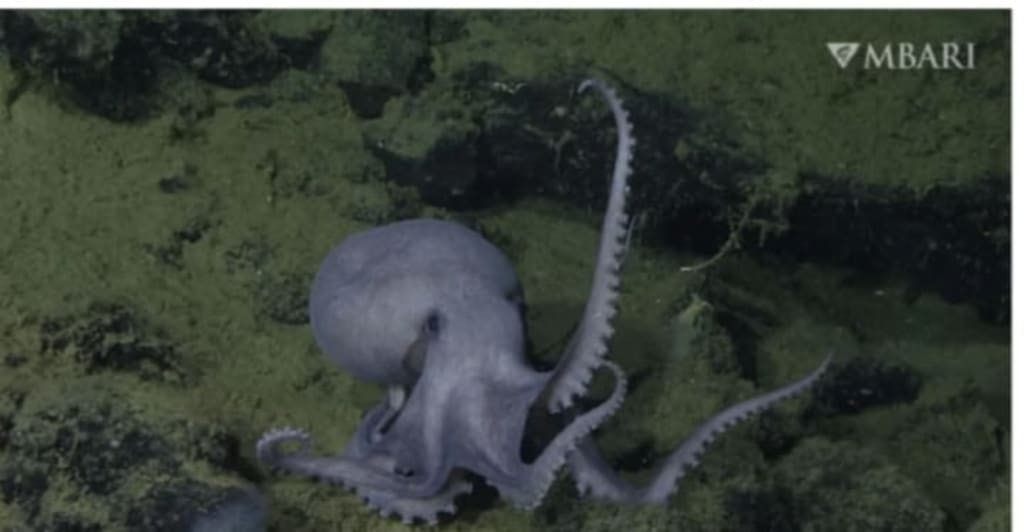
Deep beneath the surface of the ocean, far away from sunlight and human civilization, lies one of the most extraordinary places ever discovered on Earth. Located nearly two miles below sea level, close to an active underwater volcano, and stretching across an area equal to 233 soccer fields, this hidden world is home to more than 20,000 living creatures. Despite extreme heat, crushing pressure, and total darkness, life here is not only surviving — it is thriving.
This remarkable ecosystem has become one of the most important scientific discoveries of the modern era, challenging long-held beliefs about where life can exist and how it adapts to hostile environments.
A World Hidden in Darkness
For centuries, humans believed that life could not survive in the deepest parts of the ocean. Without sunlight, plants cannot grow, and without plants, food chains collapse. However, this assumption was proven wrong in the late 20th century when scientists first discovered hydrothermal vents — openings in the ocean floor that release hot, mineral-rich water.
The ecosystem described here is built around one of the largest hydrothermal vent systems ever found. These vents are located near an underwater volcano, where molten rock heats seawater and pushes it back into the ocean, carrying chemicals and nutrients.
The environment is extreme. Water temperatures near the vents can reach over 750 degrees Fahrenheit (400 degrees Celsius). The pressure is hundreds of times stronger than at the surface. There is no sunlight. Yet, life flourishes.
Size That Defies Imagination
Covering an area equivalent to 233 soccer fields, this deep-sea habitat is massive. It is one of the largest known vent communities on the planet. The vast size allows thousands of species to coexist, creating a complex and balanced ecosystem.
Scientists estimate that more than 20,000 individual creatures live within this single system. These include worms, crabs, shrimp, clams, bacteria, and many species that have never been seen anywhere else on Earth.
Each organism plays a vital role in maintaining the delicate balance of life in this hidden world.
Life Without Sunlight
Unlike life on land, which depends on sunlight and photosynthesis, deep-sea ecosystems rely on a process called chemosynthesis. Instead of using sunlight, certain bacteria use chemicals such as hydrogen sulfide from volcanic vents to produce energy.
These bacteria form the foundation of the food chain. Larger animals feed on them directly or form partnerships with them. For example, giant tube worms have no mouths or stomachs. Instead, they house bacteria inside their bodies that produce food for them.
This unique relationship allows animals to survive in an environment where traditional food sources do not exist.
Creatures of Another World
Many of the animals living in this deep-sea system look more like science fiction than real life. Giant tube worms can grow over six feet long. Blind shrimp glow slightly due to chemical reactions in their bodies. Crabs have thick shells to protect themselves from heat and toxic chemicals.
Some species have transparent bodies, while others have metallic-looking skins that help them survive high temperatures. Because there is no light, most creatures rely on touch, vibration, and chemical signals instead of vision.
Scientists believe that many of these organisms are still undiscovered, and new species are likely waiting to be found.
Why This Discovery Matters
This deep-sea ecosystem is more than just a scientific curiosity. It holds vital clues about the origins of life on Earth and possibly even life beyond our planet.
Many researchers believe that early life on Earth may have begun near underwater volcanoes similar to this one. The conditions here — heat, minerals, and chemical energy — are similar to those that existed billions of years ago.
Studying these environments helps scientists understand how life might exist on other planets and moons, such as Europa or Enceladus, which have oceans beneath icy surfaces.
If life can survive here, it may survive elsewhere in the universe.
Threats from Human Activity
Despite being hidden deep underwater, this fragile ecosystem is not safe from human influence. Deep-sea mining, oil exploration, and climate change pose serious risks.
Many companies are interested in mining minerals found near hydrothermal vents. These minerals are used in smartphones, batteries, and renewable energy technologies. However, mining could destroy entire ecosystems that took thousands of years to develop.
Rising ocean temperatures and increasing acidification caused by climate change also threaten deep-sea life. Even small changes in water chemistry can have devastating effects on sensitive organisms.
Scientists are calling for stronger international regulations to protect these rare environments before it is too late.
Technology Makes Exploration Possible
Exploring a place two miles beneath the ocean would be impossible without advanced technology. Scientists use remotely operated vehicles (ROVs) and submersibles equipped with cameras, robotic arms, and sensors.
These machines can withstand extreme pressure and transmit live video back to research ships on the surface. They allow researchers to collect samples, measure temperatures, and observe animals in their natural habitat.
Thanks to these tools, we are now seeing parts of our planet that were once completely unreachable.
A Reminder of Earth’s Hidden Wonders
The discovery of this massive deep-sea ecosystem reminds us how little we still know about our own planet. More than 80 percent of the ocean remains unexplored. Countless species and environments may still be waiting to be found.
This hidden world shows that life is incredibly resilient. It can survive in darkness, heat, and isolation, adapting in ways that humans are only beginning to understand.
At a time when many ecosystems are disappearing due to pollution and climate change, this deep-sea community stands as both a miracle and a warning. It proves that nature is powerful, but also fragile.
Conclusion
Two miles beneath the waves, near a fiery underwater volcano, lies a vast and mysterious world the size of hundreds of soccer fields. Home to more than 20,000 remarkable creatures, it thrives without sunlight, built on chemistry instead of photosynthesis.
This extraordinary ecosystem challenges our understanding of life, offers clues about our origins, and inspires hope for discoveries beyond Earth. At the same time, it urges us to protect what we barely understand.
As technology continues to advance, humans will uncover more of these hidden wonders. The question remains: will we preserve them, or will we destroy them before we truly know their va
About the Creator
Why Black History Matters in America?
The United States of America is celebrating their 250th anniversary in 2026. I'm proud to be an American and as someone who was born here, I wouldn't imagine myself living anywhere else. This is a country where opportunities are possible. Where anyone can be successful in anything they desire to do. Equality, community, and togetherness are the backbones of what America is and should be about. However, we have an administration who wants to erase and disregard those who have made positive, meaningful impacts in our country, specifically Black figures, such as Martin Luther King, Jr., Rosa Parks, and Maya Angelou. President Trump and his administration have been constantly complaining and fighting against what they call the "Woke agenda". They use this excuse as a distraction from other issues they refuse to address, such as the high cost of living, climate change, and inflation. That equality is dividing America, when in reality, it's bringing us together. Being woke is not tied to a specific political party. No matter where you stand on the political spectrum, you can still care about other people and their plights. Compassion and empathy for others isn't tied to a political party, either. We were taught as children to treat others the way we want to be treated and not judge others because they're different from us. Caring about others isn't a personal attack on your beliefs. It doesn't make you any less of a person. People who are easily offended over African American figures, past or present, or anything related to it, are grasping at straws. Current and future generations need to know who people like Harriet Tubman and Shirley Chisholm were, especially in the classroom. Black History is part of American History. It should be recognized, not hidden or forgotten. Besides, you can't shield children from everything, just because your feelings are easily hurt.
By Mark Wesley Pritchard 13 days ago in The Swamp
Universal Shutters Groundbreaking ‘Harry Potter’ Attraction: A Magical Journey Pauses for Maintenance
The Wizarding World of Harry Potter at Universal Orlando Resort is often considered the crown jewel of theme park immersion. Since its debut, the area has drawn fans worldwide, combining intricate set designs, interactive experiences, and rides that transport visitors directly into the beloved universe of J.K. Rowling’s creation. But as of February 9, 2026, Universal announced the temporary closure of one of its most technically advanced attractions: the Hogwarts Express.
By Ayesha Lashari5 days ago in The Swamp
When True Love Never Questions Your Soul
“And she’s going to learn that this life will hit you, hard, in the face, wait for you to get back up, just so it can kick you in the stomach but getting the wind knocked out of you is the only way to remind your lungs how much they like the taste of air.” — Sarah Kay’s Poem — If I Should Have a Daughter
By Chantal Christie Weiss7 days ago in Humans



Comments
There are no comments for this story
Be the first to respond and start the conversation.