
U.S. Futures Nudge Higher as Japanese Election Coaxes Investors Back to Risk
Global markets turn cautiously optimistic as political clarity in Japan lifts sentiment, easing risk aversion and supporting U.S. equity futures.
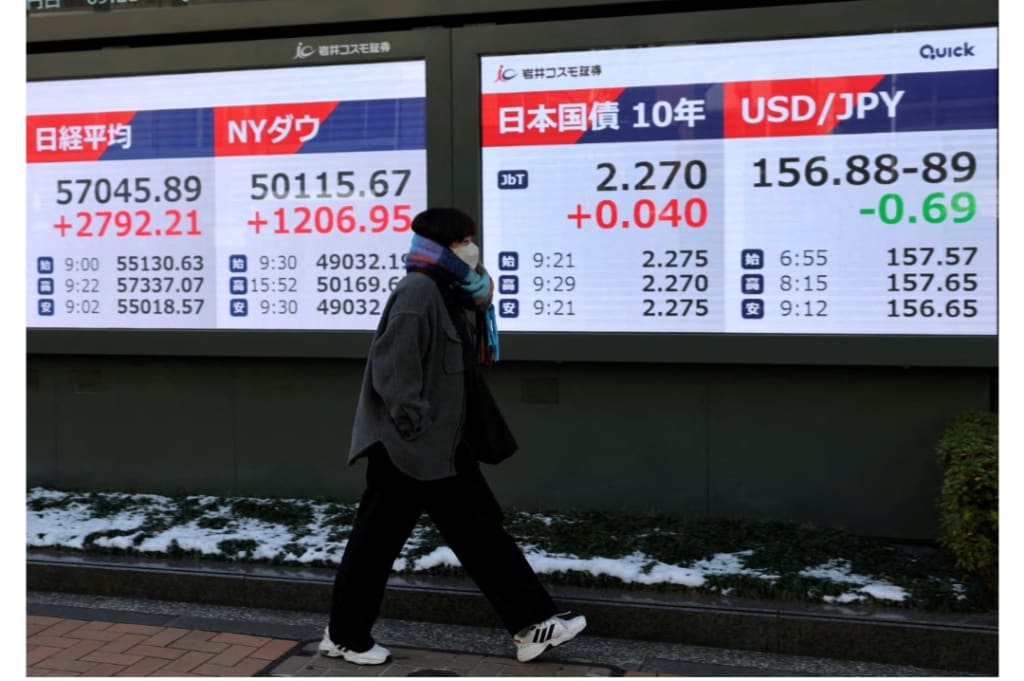
U.S. stock futures edged higher in early trading as investors around the world took comfort from the outcome of Japan’s national election, which delivered a decisive result and reduced political uncertainty in the world’s third-largest economy. The clear mandate emerging from Tokyo helped revive global risk appetite, encouraging investors to tentatively rotate back into equities after weeks of caution driven by geopolitical tensions, sticky inflation, and mixed economic data.
Dow Jones Industrial Average futures, S&P 500 futures, and Nasdaq futures all posted modest gains, signaling a potentially positive start to the Wall Street session. While the moves were not dramatic, market participants described them as meaningful in a fragile environment where confidence has been easily shaken.
Japan’s Election as a Global Signal
The Japanese election result acted as a catalyst for broader market sentiment rather than a standalone driver. A landslide victory for the ruling leadership removed fears of political gridlock, policy reversals, or prolonged coalition negotiations. For global investors, Japan represents not just a major equity market, but also a bellwether for stability in Asia.
Asian equities rallied strongly following the vote, with Japanese stocks hitting record highs and regional markets following suit. That momentum spilled into European trading hours and then into U.S. futures, illustrating how interconnected global risk sentiment has become.
“When a major economy like Japan delivers political clarity, it has an outsized psychological impact,” said a senior market strategist at a New York investment firm. “It doesn’t solve global problems, but it reduces one layer of uncertainty, and that matters right now.”
Risk Appetite Slowly Returns
In recent weeks, investors have largely favored defensive positioning, flocking to cash, bonds, and safe-haven assets amid concerns over global growth, central bank policy, and geopolitical flashpoints. The reaction to Japan’s election suggests a tentative shift away from that defensive stance.
Technology and growth-oriented stocks, which are particularly sensitive to changes in risk appetite, led gains in U.S. futures trading. Cyclical sectors such as industrials and financials also showed early strength, reflecting expectations that improved global sentiment could support economic activity and corporate earnings.
However, analysts emphasized that the move higher in futures reflects cautious optimism rather than outright enthusiasm. Volatility remains elevated, and many investors are waiting for confirmation from upcoming economic data before making larger allocations.
Implications for U.S. Markets
For Wall Street, the positive signal from Japan arrives at a delicate moment. Investors are weighing signs of slowing growth against persistent inflation pressures, while also trying to anticipate the next steps from the Federal Reserve. Any global development that eases risk aversion can provide short-term support for equities, even if domestic challenges remain unresolved.
The Japanese election outcome also reinforces the narrative that political stability can act as a tailwind for markets. In contrast, ongoing political uncertainty in other regions has been a source of volatility, making Japan’s clarity stand out.
“Markets are extremely sensitive to governance right now,” noted a U.S.-based portfolio manager. “Japan delivered certainty, and that’s something investors are willing to reward.”
Currency and Bond Market Reactions
Beyond equities, the shift in sentiment was visible in currency and bond markets. The Japanese yen showed mixed movement as traders balanced improved risk appetite against expectations that Japan’s accommodative monetary stance will continue. A stable or slightly weaker yen tends to support global risk assets by encouraging carry trades and capital flows into equities.
U.S. Treasury yields were little changed, reflecting the fact that optimism remains measured. Bond investors are still focused on inflation data and Federal Reserve guidance, suggesting that while risk sentiment has improved, it has not fundamentally altered expectations for U.S. monetary policy.
This balance underscores the cautious tone of the market: investors are willing to take on some risk, but not at the expense of ignoring macroeconomic realities.
Global Context Still Matters
While Japan’s election provided a welcome boost, it is not enough on its own to sustain a prolonged rally. Global markets continue to face significant headwinds, including slowing growth in parts of Europe, uncertainties around China’s economic recovery, and ongoing geopolitical tensions.
In the United States, upcoming data releases on inflation, employment, and consumer spending will play a critical role in shaping near-term market direction. Stronger-than-expected data could reinforce the modest gains in futures, while disappointments could quickly reverse sentiment.
“Political clarity is supportive, but fundamentals still rule,” said an economist at a major U.S. bank. “Investors are encouraged, not convinced.”
A Test of Follow-Through
As U.S. markets prepare to open, the key question is whether the positive tone from futures trading will translate into sustained buying during regular hours. Much will depend on whether investors view the Japanese election as the start of a broader improvement in global stability or simply a temporary relief rally.
For now, the mood is one of cautious re-engagement. The election result in Japan has nudged investors back toward risk, easing some of the anxiety that has dominated markets. But with so many unresolved issues on the global stage, few are ready to declare a full return to bullish confidence.
Still, in a market starved for good news, even a modest reduction in uncertainty can make a difference. And as U.S. futures tick higher, Japan’s decisive political moment is serving as a reminder that clarity, wherever it appears, remains one of the most valuable commodities in global markets.
About the Creator
Keep reading
More stories from Sadaqat Ali and writers in The Swamp and other communities.
Bitcoin Trapped Below $80,000 as the Strongest US Factory Signal Since 2022 Threatens Further Liquidations
Subtitle In the volatile world of cryptocurrencies, Bitcoin’s price action this year has seemed almost reflexively tied to broader global economic conditions—and now a powerful macroeconomic signal from the United States is intensifying that bond. Bitcoin has struggled to reclaim the $80,000 level, with its price trapped beneath this critical threshold as one of the strongest U.S. factory activity readings in years sends shockwaves through risk markets. This convergence of macro data and crypto market structure is threatening to trigger further forced liquidations and could define the near‑term trajectory of Bitcoin.
By Sadaqat Aliabout 8 hours ago in The Swamp
Why Black History Matters in America?
The United States of America is celebrating their 250th anniversary in 2026. I'm proud to be an American and as someone who was born here, I wouldn't imagine myself living anywhere else. This is a country where opportunities are possible. Where anyone can be successful in anything they desire to do. Equality, community, and togetherness are the backbones of what America is and should be about. However, we have an administration who wants to erase and disregard those who have made positive, meaningful impacts in our country, specifically Black figures, such as Martin Luther King, Jr., Rosa Parks, and Maya Angelou. President Trump and his administration have been constantly complaining and fighting against what they call the "Woke agenda". They use this excuse as a distraction from other issues they refuse to address, such as the high cost of living, climate change, and inflation. That equality is dividing America, when in reality, it's bringing us together. Being woke is not tied to a specific political party. No matter where you stand on the political spectrum, you can still care about other people and their plights. Compassion and empathy for others isn't tied to a political party, either. We were taught as children to treat others the way we want to be treated and not judge others because they're different from us. Caring about others isn't a personal attack on your beliefs. It doesn't make you any less of a person. People who are easily offended over African American figures, past or present, or anything related to it, are grasping at straws. Current and future generations need to know who people like Harriet Tubman and Shirley Chisholm were, especially in the classroom. Black History is part of American History. It should be recognized, not hidden or forgotten. Besides, you can't shield children from everything, just because your feelings are easily hurt.
By Mark Wesley Pritchard 8 days ago in The Swamp
Self Help: Grifters' Gospel
On Self-Help, Snake Oil, and the Illusion of Change Psychology professionals and students can be imagined on two opposite sides of a line called self-help books: likely a larger group opposes pop-science and step-by-step manuals filled with talk of success, journaling, and not giving a f**k; others love them, but they aren’t many.
By Avocado Nunzella BSc (Psych) -- M.A.P 7 days ago in BookClub


Comments
There are no comments for this story
Be the first to respond and start the conversation.