
I Asked AI for a Political Solution—It Gave Me This
A Roadmap for an Independent Movement That Speaks to the Next Generation
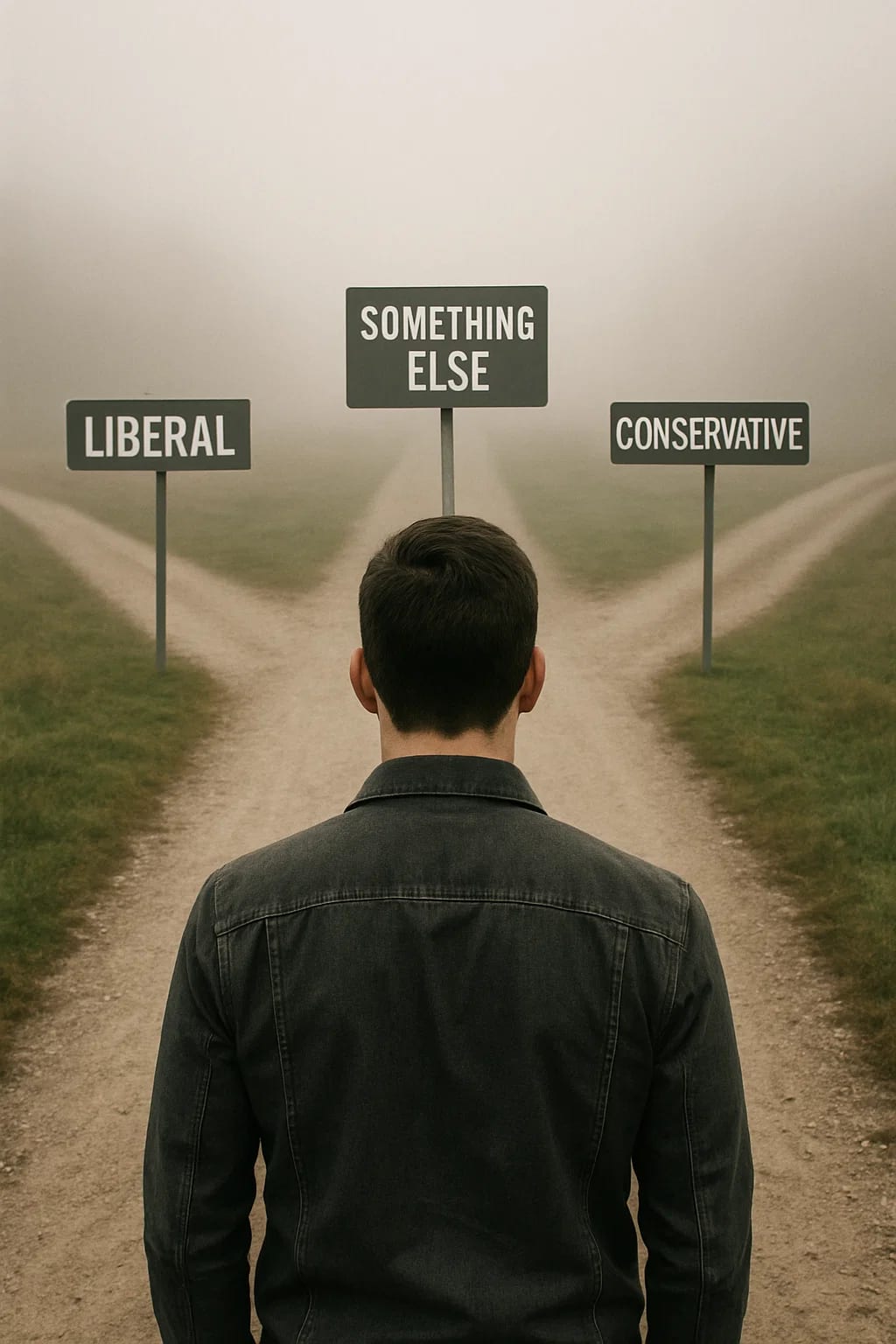
LN: After digging into the growing wave of voter disaffection (And my own) with both major political parties, I began outlining an article on the subject. On a whim, I asked ChatGPT to analyze the data I had collected and propose a possible solution. As someone who sits squarely in the political middle, I’ve long hoped for an alternative—one that avoids the dominance of the two major parties, sidesteps the noise of extremist fringes, and offers more promise than the fractured efforts of independents and libertarians. What it generated surprised me—not just because it made sense, but because it read like the start of something real. Something possible, but that cries out for younger vigorous voices to move it into the public view and breathe life into it. Only a few of the words below are mine. I could not help myself.
What If There Were Another Way?
An Essay on a New Path for American Politics
More and more Americans are walking away from the two major political parties. According to Gallup, over 40% of Americans now call themselves "independent"—more than either Democrats or Republicans. Many feel that both parties have become too extreme, too focused on fighting each other instead of fixing problems. In a Pew Research study, most Americans said politics leaves them feeling exhausted and angry. Some voters feel the parties no longer represent their views or priorities, especially when debates focus more on party loyalty than practical solutions.
This isn’t just a recent mood—it’s a growing trend. Since 2016, millions of voters have switched their party registrations or stopped identifying with any party at all. In key states like Arizona, Colorado, and New Hampshire, independent voters now outnumber both Democrats and Republicans. Even after major elections, including 2020 and 2022, many people said they voted not because they were excited about a candidate, but because they felt they had to choose the lesser of two evils.
These facts suggest a deep problem in American politics. People want more choices. They want leaders who listen, compromise, and solve real-world issues. That’s where the idea of a new, centrist path comes in, fueled by a plan not based on anger or partisanship, but on unity and progress.
Imagine a political movement that doesn’t take sides. It isn’t based on hate for Democrats or anger at Republicans. Instead, it grows from the frustration many Americans feel about how divided and broken things seem. What if, instead of waiting to see who the two major parties pick in 2028, a new movement started planning right now?
LN: This idea isn’t far-fetched, so please keep reading….
A Plan to Create a Strong Independent Option by 2028
2025–2026: Laying the Groundwork To build something real, this movement would first need to:
- Share a clear message: Focus on solving problems instead of fighting old battles.
- Get on the ballot: Start early to be ready in all 50 states by election time.
- Organize local teams: Find leaders in every state, especially where many voters are independent.
- Support new candidates: Back people who aren’t tied to either party but want to make a difference.
2027: Building Momentum Once the foundation is strong, the next steps would be:
- Find good leaders: Start looking early for someone trustworthy and experienced to run for president.
- Work together: Partner with other groups that also want a better political system.
- Reach the people: Use videos, social media, and in-person events to share the message—especially with young voters.
- Develop smart ideas: Create clear, practical solutions for the nation’s biggest problems.
2028: Running the Campaign Now it’s time to compete:
- Pick a candidate early: Don’t wait—let people get to know the team before the election.
- Host a big launch event: Share the vision with the country and explain how this movement is different.
- Get into debates: Aim to reach 15% in the polls so the candidate can be on stage with Democrats and Republicans.
- Encourage turnout: Focus on independents, young voters, and people who feel left out of politics.
Why This Could Work
- More Americans now call themselves “independent” than anything else.
- Most people say they want a third choice—not just red or blue.
- It takes years to build a real alternative. Starting now is the only way to succeed.
What This Means
This isn’t about being "moderate" or "watering down" beliefs. It’s about making government work again. It’s about putting people over parties, and ideas over insults. It’s about giving a voice to Americans who feel ignored by the system.
In a time when politics feels broken, this “what if” could become a real movement—one that stands for honesty, unity, and practical solutions.
LN: This is just a framework. If you find the idea worthwhile, it is time to start down the path. Don't wait to jump into the fray during final stretch of an election year, when a truly independent candidate is more easily dismissed as a “spoiler.” Building credibility, gaining ballot access, and introducing a serious alternative takes time. It requires structure, clarity, and trust—especially from younger generations who are already abandoning party labels in record numbers. It is not enough to just promote a single candidate. This new movement, if it catches, must strive to replace the old-guard entrenched politicians to build a base of support in the “halls of power.” A movement like this is tailor made for Gen Z and Millennials, who are more issue-driven, collaborative, and highly disillusioned by traditional politics. However, it has to be built with intention, not as a reaction, and only if it speaks to the future providing shape to belief and rejecting division.
About the Creator
Lanny Newville
Retired public sector professional with 30+ years in law enforcement and community corrections. Keenly interested contributor in areas of governance, public policy, and the intersection of technology and justice. Seeks truth. Exposes lies.
Keep reading
More stories from Lanny Newville and writers in The Swamp and other communities.
In Pictures: Protests Held in US Cities After Woman Shot Dead by Immigration Agent
Across the United States, protests have erupted in multiple cities following the fatal shooting of a woman by a US immigration enforcement agent. From Minneapolis to Los Angeles, demonstrators have gathered in streets, parks, and public squares, holding candles, placards, and photographs as they demand justice, transparency, and accountability.
By Aarif Lashari4 days ago in The Swamp



Comments
There are no comments for this story
Be the first to respond and start the conversation.