
Hypersonic Escalation: Russia’s Missile Strike Signals a Dangerous New Phase in the Ukraine War
The deployment of Russia’s Oreshnik hypersonic missile in a massive attack on Ukraine raises global alarm, tests air defenses, and deepens fears of wider escalation.

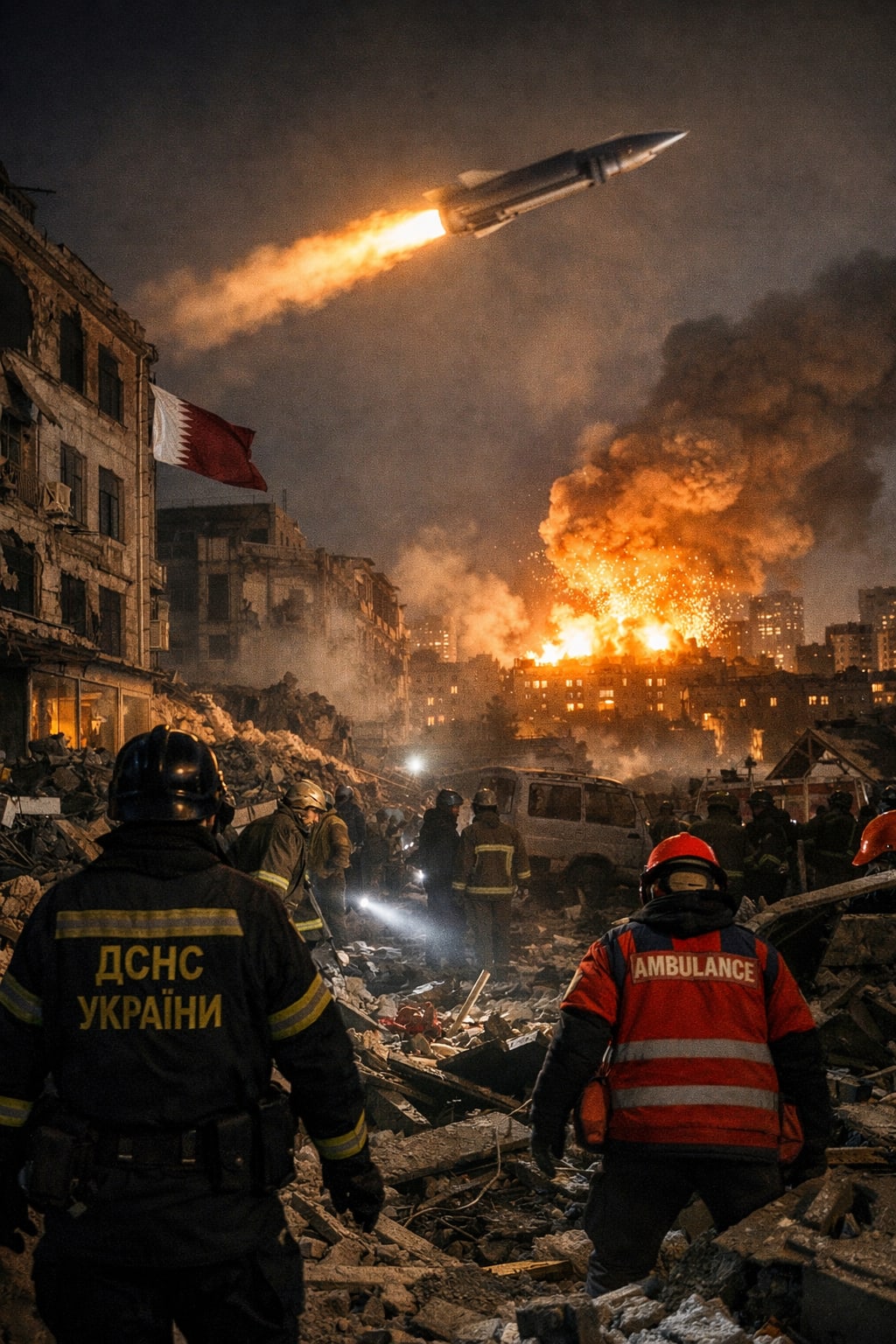
n the early hours of January 9, Russia launched one of its most intense aerial assaults on Ukraine in months, deploying a hypersonic missile alongside dozens of conventional missiles and hundreds of drones. The attack marked one of the rare confirmed uses of Russia’s Oreshnik hypersonic missile, a weapon touted by Moscow as nearly impossible to intercept. As explosions rocked Kyiv and other regions, the strike sent a clear message: the war is entering a more dangerous and unpredictable phase.
A Night of Fire Over Ukraine
According to Ukrainian officials, the overnight barrage included cruise missiles, ballistic missiles, and more than 200 drones aimed at major cities and critical infrastructure. Air defenses intercepted many of the incoming threats, but not all. Several missiles struck residential areas in Kyiv, killing at least four civilians and injuring dozens more. Power outages and damage to water systems were reported across multiple districts.
Among the most concerning aspects of the attack was Russia’s use of the Oreshnik hypersonic missile, reportedly launched at targets in western and central Ukraine. This marked only the second known deployment of the system since the start of the full-scale invasion, underscoring its symbolic and strategic significance.
Ukrainian authorities condemned the strike as a deliberate attack on civilians, while emergency crews worked through the night to rescue survivors from damaged buildings.
What Is the Oreshnik Hypersonic Missile?
Hypersonic missiles travel at speeds exceeding Mach 5, or five times the speed of sound, and can maneuver mid-flight, making them far more difficult to track and intercept than traditional ballistic or cruise missiles. Russia claims the Oreshnik can reach speeds of Mach 10 or higher and carry either conventional or nuclear warheads.
Military analysts note that while hypersonic weapons are often portrayed as “game changers,” their real impact depends on accuracy, payload, and integration with broader military strategy. In this case, the missile appears to have carried a conventional warhead, but its use still carries powerful psychological and political weight.
“The message is as important as the damage,” said one European defense analyst. “Russia is signaling technological reach and escalation dominance, even if the battlefield effect is limited.”
Russia’s Justification and Ukraine’s Response
The Kremlin claimed the strike was retaliation for alleged Ukrainian attacks on Russian territory, including a purported drone threat near President Vladimir Putin’s residence. Kyiv has firmly denied these claims, calling them a pretext for intensified bombardment.
President Volodymyr Zelenskyy addressed the nation shortly after the attack, urging Western allies to accelerate delivery of advanced air defense systems. “Every delay costs lives,” he said, emphasizing that no city in Ukraine can be considered truly safe without stronger defensive support.
Ukraine’s military acknowledged that hypersonic missiles remain extremely difficult to intercept, even with advanced Western-supplied systems such as Patriot batteries. Still, officials stressed that layered air defenses significantly reduced casualties compared to what could have occurred.
Why This Strike Matters Globally
Russia’s use of a hypersonic missile goes beyond the immediate battlefield. It raises broader concerns about global security and arms control, particularly as hypersonic weapons remain largely unregulated by existing international treaties.
Western leaders reacted with alarm. NATO officials described the strike as “deeply concerning” and warned that attacks near Ukraine’s western regions—close to EU and NATO borders—risk unintended escalation. While there is no indication the alliance plans direct involvement, calls for increased military aid to Ukraine are growing louder.
For many observers, the strike also highlights a troubling normalization of advanced weapons in conventional warfare. What was once experimental technology is now being used against cities, blurring the line between deterrence signaling and active combat.
Impact on Civilians and Infrastructure
As with many large-scale attacks in the war, civilians bore the brunt of the damage. Apartment buildings, schools, and diplomatic facilities were reportedly hit or damaged by blast waves. In some areas, families sheltered in basements and metro stations for hours as air raid sirens echoed through the night.
Humanitarian organizations warned that repeated strikes on energy infrastructure during winter could worsen conditions for millions of Ukrainians. Rolling blackouts and heating disruptions are especially dangerous as temperatures drop, compounding the human cost of the conflict.
“This is not just about military targets,” said a spokesperson for a European aid group. “It’s about wearing down a population.”
A Dangerous Trajectory
The deployment of the Oreshnik missile does not necessarily change the balance of power overnight, but it does signal a willingness to escalate and to showcase weapons with nuclear-capable potential. Even when armed conventionally, such systems carry strategic implications that extend far beyond Ukraine.
As diplomatic efforts remain stalled and both sides seek leverage, the risk of miscalculation grows. Hypersonic weapons shorten decision times, leaving less room for error and increasing the chance that a single strike could spiral into a broader confrontation.
Looking Ahead
For Ukraine, the attack reinforces an urgent need for stronger air defenses and sustained international support. For Russia, it serves as a demonstration of capability and resolve. For the rest of the world, it is a stark reminder that modern warfare is evolving faster than the systems designed to contain it.
As the war grinds on, one reality is becoming clear: the introduction of advanced weapons like hypersonic missiles raises the stakes for everyone. Whether this marks a turning point or a warning shot depends largely on what comes next—and on whether global leaders can prevent further escalation before technology outruns diplomacy.
About the Creator
sehzeen fatima
Sehzeeen Fatima is a writer with a Master’s in Science who shares inspiring stories about sports, life, and people. She writes in simple, clear language to connect with readers and spark meaningful thought.
Keep reading
More stories from sehzeen fatima and writers in The Swamp and other communities.
Russia launches air attack on Kyiv as Zelenskyy prepares for crucial Trump meeting
In recent days, Ukraine’s capital city, Kyiv, has once again come under heavy air attack from Russia. Drones and missiles were launched toward the city and surrounding regions, shaking buildings, damaging infrastructure, and sending residents into shelters. These attacks didn’t just cause fear and destruction — they also came at a very sensitive political moment. Ukrainian President Volodymyr Zelenskyy is preparing for an important meeting with U.S. President Donald Trump, and the timing has drawn attention from leaders and media around the world.
By sehzeen fatima14 days ago in The Swamp
Stocks, Bonds and Oil Steady as Investors Downplay Venezuela Upheaval
Global financial markets showed little reaction as political upheaval in Venezuela unfolded, with stocks, bonds, and oil prices largely steady. Investors appeared to downplay the immediate risks posed by developments in the South American nation, choosing instead to focus on broader macroeconomic indicators, central bank policy expectations, and global growth prospects. The muted response highlights how markets often prioritize systemic risks over localized political crises, even in countries with significant energy resources.
By Ayesha Lashari5 days ago in The Swamp


Comments
There are no comments for this story
Be the first to respond and start the conversation.