
Hurricane Melissa Death Toll Rises to 28 in Jamaica
Rescue teams race against time as communities struggle with flooding, power outages, and widespread devastation.

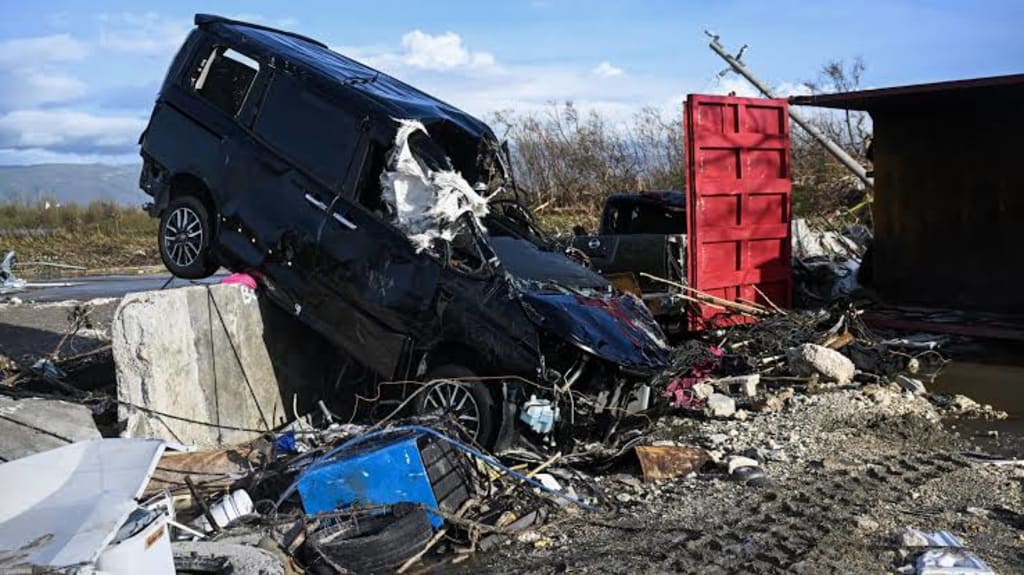
When Hurricane Melissa struck Jamaica last week, few could have imagined the scale of the destruction it would bring. What began as a strong tropical storm quickly intensified into a powerful Category 4 hurricane, leaving behind a trail of chaos, heartbreak, and loss.
As of today, officials confirm that 28 people have lost their lives, while dozens more remain missing. Entire neighborhoods are submerged under water, and much of the island’s infrastructure lies in ruins. The Jamaican government has declared a national emergency, calling the situation “one of the worst natural disasters in decades.”
---
A Nation in Mourning
The sound of heavy rain and roaring winds has finally faded, but the aftermath tells a story of devastation. In communities like Portmore, St. Mary, and Kingston, homes are reduced to rubble. Roads are blocked by fallen trees, and power lines hang dangerously over flooded streets.
Rescue workers and volunteers have been working tirelessly to locate survivors. “It’s like nothing we’ve ever seen,” said Captain Andre Lewis, a member of Jamaica’s Disaster Response Team. “Entire towns are cut off. We’re using boats to reach people trapped on rooftops.”
Shelters across the island are overflowing as thousands of residents have been displaced. Many have lost everything — homes, jobs, and loved ones. “I’ve lived through hurricanes before, but this one was different,” said Maria Thompson, a resident of Kingston who lost her home. “The wind just wouldn’t stop. It felt like the sky was falling.”
---
Government and International Response
Jamaican Prime Minister Andrew Holness has addressed the nation several times since the storm made landfall. “This is a tragedy that touches every corner of our country,” he said. “We mourn those we’ve lost and pledge to rebuild stronger.”
The government has mobilized the Jamaica Defence Force to assist in rescue and recovery operations. Emergency teams are distributing food, clean water, and medical aid to affected regions. Still, access remains difficult in some areas due to washed-out bridges and landslides.
Help is also coming from abroad. The United Kingdom, United States, and Canada have sent relief supplies, including portable generators, tents, and medicine. The Caribbean Disaster Emergency Management Agency (CDEMA) has deployed a regional team to coordinate logistics and assess damage.
---
The Power of Nature
Meteorologists say Hurricane Melissa formed unusually quickly, fueled by record-high ocean temperatures in the Atlantic. Over just 48 hours, the storm intensified from a tropical depression into a Category 4 hurricane, with winds exceeding 140 miles per hour (225 km/h).
Scientists have warned that climate change is making such storms more frequent and more dangerous. “We’re seeing a trend where hurricanes gain strength faster and bring heavier rainfall,” explained Dr. Leighton Grant, a climate researcher at the University of the West Indies. “Warmer oceans act like fuel for these systems.”
This reality has led many Jamaicans to ask difficult questions about the future. How can small island nations prepare for storms that grow stronger each year? What investments are needed to protect coastal communities and rebuild sustainably?
---
Stories of Courage and Survival
Amid the tragedy, there are powerful stories of hope and heroism. In the town of St. Ann’s Bay, a group of fishermen used their boats to rescue trapped families, ferrying them to safety as winds tore through their neighborhood.
Local teacher Denise Clarke opened her school to shelter over 80 people during the storm. “We had no power, no food, and the water kept rising,” she said. “But we had each other. That’s what kept us strong.”
Community groups, churches, and youth volunteers have also stepped in to deliver supplies and comfort to those in need. “Even in our darkest moment, Jamaica’s spirit shines bright,” said Prime Minister Holness in his latest address.
---
Rebuilding and Recovery
Rebuilding after Hurricane Melissa will not be easy. Early government estimates suggest billions of Jamaican dollars in damage to infrastructure, agriculture, and housing. Electricity remains out in large parts of the island, and water treatment facilities have been severely damaged.
The tourism industry — a major part of Jamaica’s economy — has also taken a hit. Hotels along the northern coast have reported flooding and structural damage. However, officials are already planning recovery programs to restore the island’s natural beauty and visitor appeal.
International aid agencies like the Red Cross and UNICEF are on the ground, providing relief packages and helping children who have been displaced. The Jamaican diaspora community has also begun organizing donation drives in New York, London, and Toronto.
---
A Call for Global Awareness
Hurricane Melissa is another reminder of how climate disasters disproportionately affect developing nations. Jamaica, like many Caribbean countries, contributes very little to global carbon emissions but faces some of the harshest impacts of global warming.
Environmental advocates are urging wealthier nations to step up their commitments to climate resilience and financial support for vulnerable countries. “We need more than sympathy — we need action,” said Dr. Grant. “If we don’t change our global response, storms like Melissa will keep claiming lives.”
---
A Nation Unbroken
Even as the cleanup begins, the people of Jamaica are determined not to be defeated. Across the island, volunteers are clearing debris, restoring schools, and comforting neighbors. Musicians and local artists are organizing benefit concerts to raise funds for relief.
As one survivor put it, “Jamaica will rise again — because that’s what we do.”
Hurricane Melissa may have taken lives and homes, but it has not taken the country’s strength, faith, or unity. The road ahead will be long, but with global solidarity and local resilience, Jamaica will rebuild — stronger than before.
About the Creator
Fiaz Ahmed
I am Fiaz Ahmed. I am a passionate writer. I love covering trending topics and breaking news. With a sharp eye for what’s happening around the world, and crafts timely and engaging stories that keep readers informed and updated.
Keep reading
More stories from Fiaz Ahmed and writers in The Swamp and other communities.
Trump Tells Military to Prepare for ‘Action’ Against Islamist Militants in Nigeria
In a bold and controversial statement, former U.S. President Donald Trump has urged the American military to “prepare for action” against Islamist militants in Nigeria, citing increasing attacks on Christian communities and the need to “protect innocent lives.”
By Fiaz Ahmed 3 months ago in The Swamp
High-Speed Train Crash in Southern Spain Leaves 39 Dead
A Sunday evening in southern Spain turned into a national tragedy. On January 18, 2026, a high-speed train crash near Adamuz, Córdoba, left at least 39 people dead and scores more injured. The accident shocked Spain, challenged emergency responders, and raised urgent questions about safety on the country’s high-speed rail network.
By Aarif Lashariabout 8 hours ago in The Swamp



Comments
There are no comments for this story
Be the first to respond and start the conversation.