
High-Speed Train Crash in Southern Spain Leaves 39 Dead
“Deadly Collision Near Adamuz Sparks National Mourning and Raises Urgent Questions About Rail Safety in Spain”
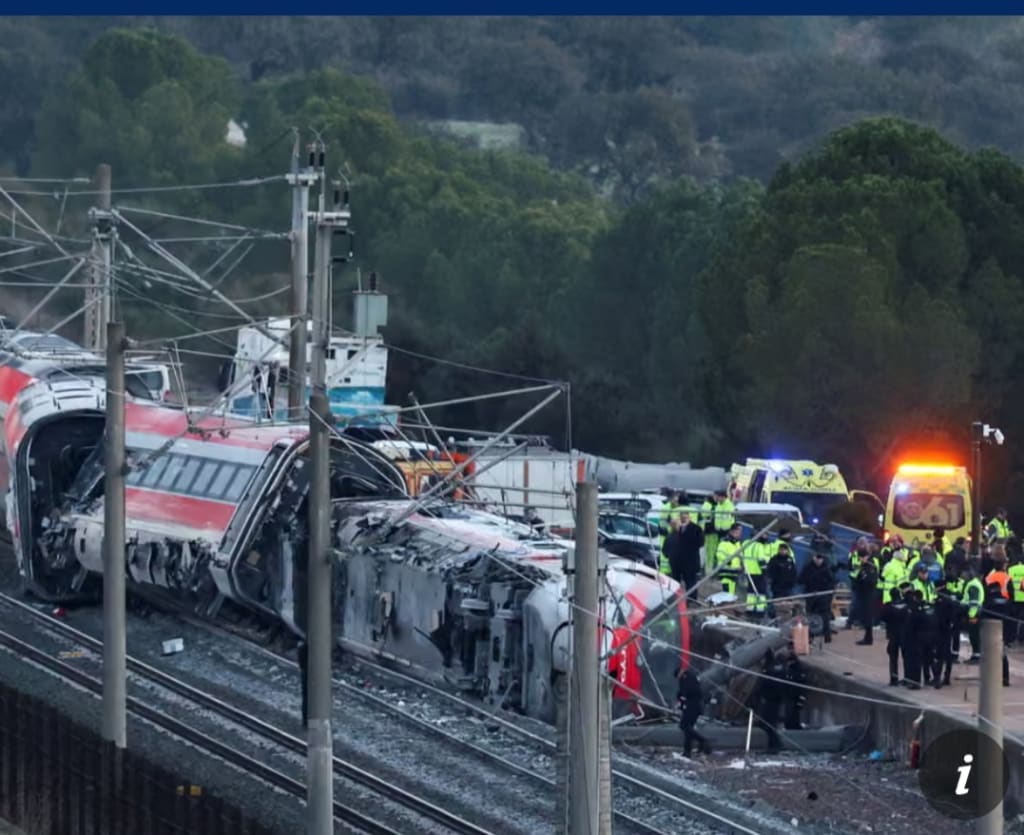
A Sunday evening in southern Spain turned into a national tragedy. On January 18, 2026, a high-speed train crash near Adamuz, Córdoba, left at least 39 people dead and scores more injured. The accident shocked Spain, challenged emergency responders, and raised urgent questions about safety on the country’s high-speed rail network.
A Calm Journey Turns Catastrophic
It was around 7:40 p.m. local time when disaster struck. A high-speed Iryo train traveling from Málaga to Madrid derailed near Adamuz. Moments later, derailed carriages crossed onto an adjacent track and collided head-on with a Renfe train coming from Madrid toward Huelva.
Eyewitnesses described scenes of chaos and devastation, with twisted metal and overturned carriages. By Monday morning, authorities confirmed 39 fatalities, warning that the number could rise as rescue operations continued.
What makes the crash even more perplexing is that it occurred on a recently renovated section of track, normally considered safe and straight.
The Horror on the Tracks
The collision’s impact was severe. Multiple carriages from both trains were thrown off the rails, with at least two Renfe carriages tumbling down a four-meter embankment. Rescue teams faced extreme challenges reaching trapped passengers and recovering victims.
Bodies and debris were scattered over a wide area, complicating rescue efforts and adding to the emotional toll on emergency workers.
Passengers, Casualties, and the Injured
Together, the two trains carried hundreds of passengers: around 300 on the Iryo train and 200 on the Renfe service. Over 150 people were injured, some critically, including children and the elderly.
Emergency services deployed mobile field hospitals and coordinated with the Red Cross and local responders to evacuate the injured. Psychological support was also provided to survivors and families grappling with shock.
Rescue and Recovery Efforts
Rescue operations were slowed by the remote location of the crash. Access for heavy equipment was limited, forcing emergency workers to navigate darkness and challenging terrain. DNA collection was initiated to help identify victims amid the wreckage.
Political leaders quickly responded. Prime Minister Pedro Sánchez canceled public engagements and visited the crash site, offering condolences and promising government support. Local officials and the Spanish royal family expressed solidarity with families of the victims.
A Nation in Mourning
The tragedy struck a nation proud of its world-class high-speed rail system, the second-largest in the world. Social media filled with condolences, prayers, and shock as Spaniards mourned the victims.
Transport unions and rail workers expressed grief, noting that safety is usually a top priority. The fact that the derailment occurred on recently refurbished track has raised serious concerns about infrastructure, maintenance, and oversight.
Investigating the Cause
Authorities have not yet confirmed the cause of the crash. Early reports indicate no apparent human error or weather issues, making the incident even more puzzling.
Investigators are analyzing black box data, track infrastructure, and crew reports. Their findings could not only explain what went wrong in Adamuz but also shape rail safety protocols across Spain and Europe.
International Reactions
The accident drew immediate attention from European leaders, many offering condolences and support. Analysts emphasized the importance of shared safety standards and cross-border cooperation in Europe’s rail network.
While high-speed rail is generally safe, this rare disaster serves as a reminder that even advanced systems require vigilance and ongoing investment in safety.
Looking Ahead
Rail traffic between Andalusia and Madrid has been temporarily suspended. Investigators are combing the site, while debris removal and repairs are underway.
Families of the victims face a long road of recovery, identification, and grieving. Survivors may struggle with the trauma of a violent derailment. The Spanish government has pledged financial and psychological support, but the emotional scars will last for months—if not years.
A Tragic Reminder
The high-speed train crash in southern Spain is more than a news headline. It’s a human tragedy, a national crisis, and a stark reminder of the risks inherent even in modern transportation.
As Spain mourns and investigators work tirelessly to uncover the cause, authorities and rail companies may implement new safety measures to prevent such a disaster from ever happening again.
About the Creator
Keep reading
More stories from Aarif Lashari and writers in The Swamp and other communities.
Trump Tariff Threats Over Greenland Prompt Calls for Unprecedented EU Counter‑Measures
Imagine a single statement triggering a transatlantic trade and political crisis. That’s exactly what happened when U.S. President Donald Trump threatened tariffs over Greenland, sparking calls within the European Union for unprecedented counter-measures. What started as a geopolitical dispute over a remote Arctic island has escalated into a potential trade confrontation with serious implications for NATO, global markets, and U.S.-EU relations.
By Aarif Lasharia day ago in The Swamp


Comments
There are no comments for this story
Be the first to respond and start the conversation.