
Trump Tells Military to Prepare for ‘Action’ Against Islamist Militants in Nigeria
The former U.S. president’s warning reignites global debate over America’s role in Africa’s fight against terrorism.

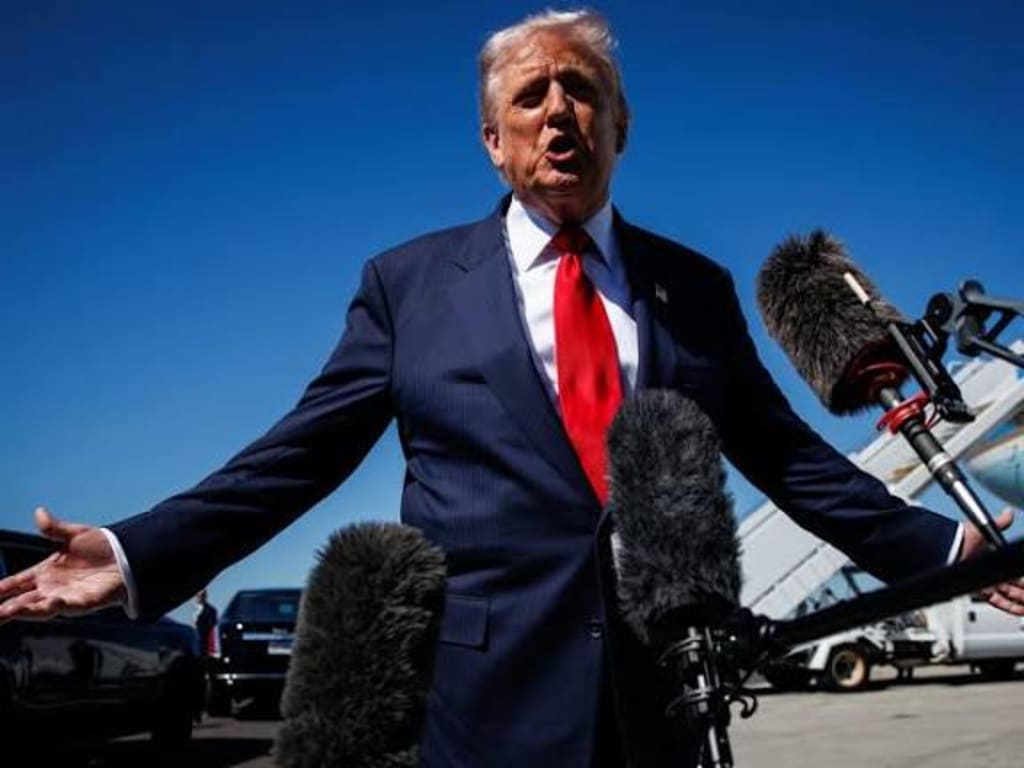
In a bold and controversial statement, former U.S. President Donald Trump has urged the American military to “prepare for action” against Islamist militants in Nigeria, citing increasing attacks on Christian communities and the need to “protect innocent lives.”
The comment, made during a recent rally, has quickly sparked global attention — reigniting questions about the United States’ role in foreign conflicts and the complex fight against terrorism in Africa.
While Trump is not currently in office, his statement has generated serious discussion among international observers, Nigerian officials, and human rights advocates. Many see his remarks as a reflection of broader tensions over security, religion, and foreign intervention in Africa’s largest nation.
---
A Troubled Region
Nigeria has long struggled with Islamist insurgent groups, particularly Boko Haram and the Islamic State West Africa Province (ISWAP). For over a decade, these groups have carried out violent attacks in the country’s northeast, killing tens of thousands and displacing millions.
The conflict has spread beyond Nigeria’s borders, affecting neighboring nations like Chad, Niger, and Cameroon. The violence has included bombings, kidnappings, and assaults on villages, schools, and churches — leaving deep scars on communities across the region.
In recent months, reports from Nigerian media and international watchdogs have shown a worrying rise in militant activity. Villages have been burned, aid workers attacked, and security forces overwhelmed. Many Christian communities in the country’s middle belt have become targets, further deepening ethnic and religious divisions.
---
Trump’s Call to Action
Speaking at a rally in Texas, Trump declared that the U.S. “cannot stand by while Christians are being slaughtered in Nigeria.” He claimed that Islamist extremists have “gone unchecked for too long” and hinted that if he were president again, he would consider direct military action or stronger U.S. involvement in the region.
> “America must lead. We cannot allow radical terrorists to continue these brutal killings,” Trump said. “If the Nigerian government cannot protect its people, we must step in to stop the bloodshed.”
His remarks come at a time when international attention on Africa’s security challenges has been growing. The Sahel region, stretching from Mali to Sudan, has become a hotspot for militant activity, with several countries facing political instability and military coups.
Trump’s critics, however, say his comments risk escalating tensions and undermining Nigeria’s sovereignty.
---
Reactions from Nigeria and Beyond
The Nigerian government responded cautiously. A spokesperson for President Bola Ahmed Tinubu stated that Nigeria “welcomes international cooperation” but “rejects any unilateral action” that could threaten national sovereignty.
> “Nigeria is capable of defending itself,” the spokesperson said. “We value our partnership with the United States, but any foreign involvement must respect our nation’s independence.”
Many Nigerians expressed mixed feelings. Some citizens, especially those in regions affected by Islamist violence, welcomed Trump’s concern, hoping it might lead to renewed international support. Others, however, warned against any U.S. military intervention, pointing to past examples in Iraq, Libya, and Afghanistan — where American involvement brought long-term instability.
---
Experts Weigh In
Security analysts say Trump’s comments highlight the growing global focus on Africa’s security crisis. While the U.S. has provided military aid and training to Nigeria in the past, direct American involvement in combat operations has been limited.
Dr. Charles Ogbu, a Nigerian political analyst, noted that Trump’s words “may resonate with Christian conservatives in the U.S., but they could complicate Nigeria’s internal politics.”
> “Framing this conflict purely as a religious war between Muslims and Christians ignores its deeper roots in poverty, inequality, and government failure,” Ogbu said. “Nigeria’s problems are complex — and outside military intervention rarely solves them.”
Similarly, experts at the Council on Foreign Relations (CFR) warned that increased U.S. military presence could fuel anti-Western sentiment among local populations, potentially strengthening the militants rather than weakening them.
---
A Global Pattern
Trump’s statement also fits into a broader pattern of his foreign policy rhetoric. During his presidency, he often emphasized a tough stance on terrorism and repeatedly linked national security to religious freedom. His comments on Nigeria continue that narrative, appealing to his political base ahead of the 2026 U.S. elections.
However, many critics view his approach as overly simplistic. They argue that counterterrorism in Africa requires long-term investment in education, infrastructure, and diplomacy, not just military power.
The Biden administration, by contrast, has taken a more measured approach — focusing on intelligence sharing, humanitarian aid, and regional partnerships. Officials from the State Department declined to comment directly on Trump’s recent remarks but reiterated the U.S. government’s commitment to “supporting Nigeria’s security and human rights efforts.”
---
The Bigger Question
Trump’s words raise a familiar and difficult question: What role should the United States play in foreign conflicts?
For decades, the U.S. has struggled to balance its desire to promote peace and democracy abroad with the costs and risks of military involvement.
In Nigeria’s case, experts say the best solution may lie in supporting local forces, strengthening governance, and addressing the root causes of extremism — including poverty and political corruption.
As one Nigerian journalist wrote in response to Trump’s remarks:
> “We do not need American soldiers; we need American support — in education, healthcare, and development.”
---
Conclusion
Trump’s call for military “action” in Nigeria has reignited debates about global terrorism, religious freedom, and the limits of U.S. intervention.
While his words have drawn attention to the ongoing suffering caused by Islamist militants, they also serve as a reminder of the complexities that define modern foreign policy.
Whether or not the U.S. acts, Nigeria’s fight against extremism will continue — shaped by local courage, international partnerships, and the hope that one day, peace will return to the communities that have endured so much loss.
---
About the Creator
Fiaz Ahmed
I am Fiaz Ahmed. I am a passionate writer. I love covering trending topics and breaking news. With a sharp eye for what’s happening around the world, and crafts timely and engaging stories that keep readers informed and updated.
Keep reading
More stories from Fiaz Ahmed and writers in The Swamp and other communities.
The New Face of Major Hurricanes
Hurricanes have always been a natural part of life on Earth, especially for those living near coastlines. But in recent years, the storms we face are changing. They are growing faster, hitting harder, and lasting longer than ever before. Scientists say we are witnessing the new face of major hurricanes — storms powered by a warming planet and a shifting climate system.
By Fiaz Ahmed 3 months ago in The Swamp
Suppliers: The Backbone of Global Trade, Communities, and Modern Economies
Suppliers are the often unseen backbone of modern economies, connecting raw materials to finished products and linking local communities to global markets. From small family-owned businesses to multinational corporations, suppliers play a critical role in ensuring that goods and services reach consumers efficiently and reliably.
By Aarif Lashari4 days ago in The Swamp


Comments
There are no comments for this story
Be the first to respond and start the conversation.