
How Trump’s Second Term Will Be Different
A Look at His Policy Plans and Potential Impact

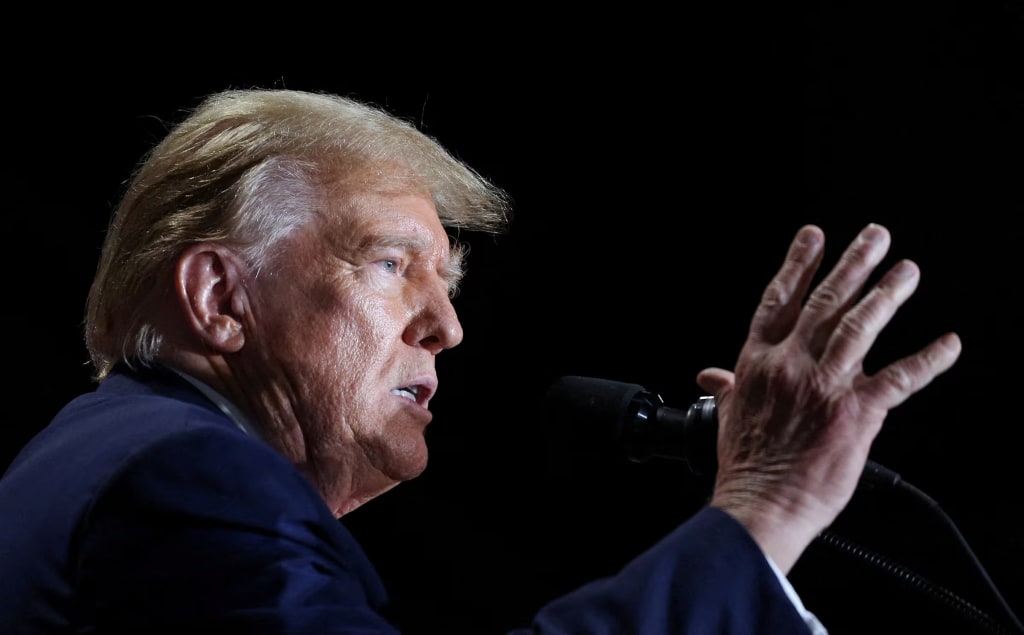
With Donald Trump set to return to the White House for a second term, the political landscape in the United States is poised for a dramatic shift. Unlike his first presidency, which was often marked by internal chaos, legal challenges, and resistance from within his own administration, Trump’s second term is expected to be more organized, strategic, and aggressive in implementing his policies.
From immigration to the economy, foreign policy, and the structure of the federal government, Trump has laid out a clear agenda. With a more conservative Supreme Court, a Congress increasingly aligned with his views, and a political base that remains loyal, he now has fewer obstacles in his path.
Let’s take a closer look at how a second Trump presidency could unfold and what it means for the future of the United States.
A More Determined and Disciplined Trump
During his first term, Trump entered office as a political outsider, often clashing with his own advisers, career officials, and even Republican lawmakers. His policies faced pushback from Congress, the courts, and members of his administration, who resisted some of his more extreme proposals.
Political analyst Andrew Proo describes these institutions as “the guardrails of democracy,” which limited Trump’s ability to unilaterally reshape American policy. However, the dynamics have shifted. Trump is now more experienced, more determined, and backed by a Republican Party that has increasingly embraced his agenda.
Unlike in 2016, when he lacked a fully developed policy blueprint, Trump’s 2024 campaign has been clearer and more focused on specific objectives. His public statements and campaign materials indicate a desire to act swiftly and forcefully in key areas, including immigration, trade, foreign policy, and the restructuring of the federal government.
Immigration: From Border Walls to Mass Deportations
In his first term, Trump made border security a signature issue, repeatedly pushing for the construction of a border wall along the U.S.-Mexico border. While that effort faced legal and financial hurdles, his second-term immigration policy is expected to be even more hardline.
Trump has pledged to launch "the largest deportation operation in U.S. history," aiming to remove millions of undocumented immigrants. This would require:
- Massive investments in law enforcement, including expanding Immigration and Customs Enforcement (ICE).
- Coordination with local police, raising concerns about racial profiling and strained community relations.
- Possible legal battles over the extent of federal power, as many cities and states have sanctuary policies that limit cooperation with federal immigration enforcement.
Immigration reporter Nicole Mara warns that executing such a large-scale deportation effort would be logistically and legally complex, requiring significant resources and potentially overwhelming detention facilities. Critics argue that such a policy could severely disrupt communities, businesses, and the economy, especially industries that rely on immigrant labor.
Judicial Power: More Freedom from Legal Constraints
Another major difference in Trump’s second term is the legal environment he would operate in.
Supreme Court analyst Ian Milhiser points out that recent court rulings have expanded presidential immunity, meaning Trump may have more legal protection for actions taken while in office. A landmark decision could shield him from criminal prosecution for official acts, potentially giving him greater freedom to push executive power to its limits.
With a conservative-leaning Supreme Court and federal courts stacked with Trump-appointed judges, many of his policies could face fewer legal obstacles compared to his first term.
Foreign Policy: A More Unrestrained Approach to Global Affairs
Trump’s first presidency saw major shifts in U.S. foreign policy, from his "America First" doctrine to his contentious relationships with allies. In his second term, he is expected to take an even more aggressive stance on global issues.
Israel and the Middle East
During his first term, Trump moved the U.S. embassy to Jerusalem, recognized Israeli sovereignty over the Golan Heights, and brokered the Abraham Accords, which normalized relations between Israel and several Arab nations.
In a second term, he is expected to give Israel even more leeway, potentially:
- Supporting expanded Israeli settlements in the West Bank.
- Reducing diplomatic pressure on Israel regarding Palestinian statehood.
- Taking a tougher stance against Iran, possibly escalating tensions in the region.
U.S.-China Relations: Trade Wars and Tariffs
Trump has long framed China as America’s greatest economic and geopolitical rival, imposing tariffs and restrictions on Chinese goods and technology. In a second term, he has proposed:
- A 10% tariff on all foreign imports, a move that could dramatically impact global trade.
- Additional restrictions on Chinese companies operating in the U.S., especially in the tech sector.
- Increased pressure on U.S. companies to bring manufacturing back home.
Economists warn that across-the-board tariffs could increase consumer prices and provoke retaliatory measures from China and other trade partners. While protectionist policies often appeal to voters, they carry risks for the global economy.
Reshaping the Federal Government: Dismantling the "Deep State"
One of Trump’s most ambitious goals is to restructure the federal workforce, particularly by expanding the use of Schedule F—a policy that would reclassify thousands of civil service jobs as political appointments.
This change would allow Trump to:
- Fire career government employees more easily.
- Appoint loyalists to key positions.
- Weaken the power of nonpartisan government agencies.
Critics argue that this move would undermine the stability of federal institutions, making them more politically driven rather than policy-driven. Supporters say it would help remove bureaucratic resistance and give elected leaders more control over government agencies.
Abortion: A Strategy of Indirect Restrictions
Trump has avoided outright endorsing a federal abortion ban, likely aware that the issue is politically divisive. However, he could still significantly restrict abortion access through existing laws.
One key legal tool is the Comstock Act, a 19th-century law that bans mailing anything related to abortion services. Legal experts like Rachel Cohen argue that enforcing this law could effectively block abortion pills and medical supplies, significantly limiting access without needing a new federal ban.
Since the Supreme Court’s Dobbs decision overturned Roe v. Wade, many states have already enacted strict abortion bans. A second Trump term could see federal agencies used to enforce these bans more aggressively.
The Big Picture: What’s at Stake?
A second Trump presidency would likely be far more structured and determined than his first. Armed with experience, a Supreme Court more aligned with his policies, and a Republican Party increasingly loyal to his agenda, he has fewer barriers to implementing his vision.
Key takeaways:
- Immigration enforcement would intensify, potentially leading to mass deportations.
- Presidential power could expand, with fewer legal constraints on Trump’s authority.
- Foreign policy could become more aggressive, particularly in the Middle East and trade relations with China.
- The federal workforce could be reshaped, making government agencies more politically aligned with Trump’s views.
- Abortion access could be restricted indirectly, through enforcement of existing laws.
As Trump prepares for a potential return to the White House, his second term promises to be more calculated and transformative than his first. The next four years could bring some of the most significant shifts in American policy and governance in modern history. Whether these changes will be viewed as progress or peril depends on which side of the political spectrum you stand on.
About the Creator
Zamiee
An ambivert with an optimistic spirit, I thrive on creativity—from art to words. A foodie at heart, I find inspiration in flavors, stories, and self-expression. Always exploring and always creating whilst keeping myself conscious and aware.
The Saddest Thing - The Billionaires Who Rule America Aren't Even Enjoying Themselves
This single post says more about our ruling class than a thousand policy papers. The saddest thing about today's system is that the men robbing the rest of us - sabotaging our economic prospects, our pensions, our access to affordable healthcare - are not even happy.
By Scott Christenson🌴27 days ago in The Swamp
Tatt~Master
— Assembly Line Tatt Machine ~ Impressions to Impress — As I begin to understand more about the Tattoo Phenomenon. I've written silly, yet verbatim, dating site anecdotes in 'Frazzled.' So let me ask you: Would you be More attracted to someone slathered with tattoos, or Less?
By Jay Kantor5 days ago in Humor


Comments
There are no comments for this story
Be the first to respond and start the conversation.