
How the United States Was Formed: From Colonies to a Global Superpower
A historical journey through the birth of America — from the 13 colonies and independence to becoming the world’s most influential nation.

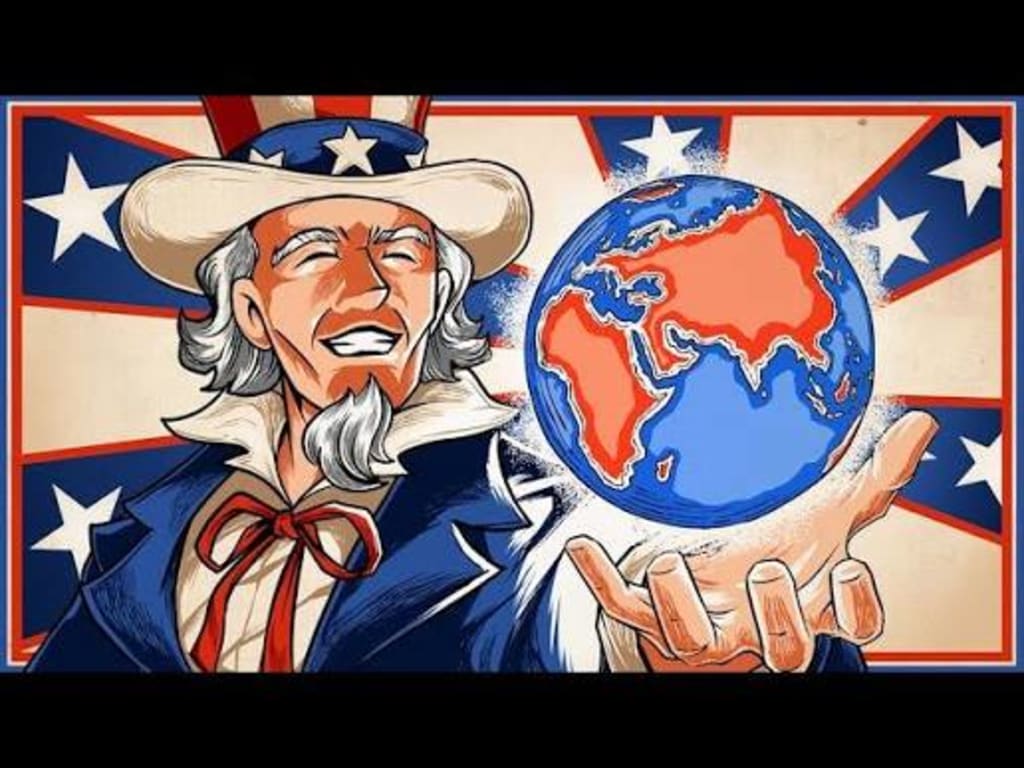
Discover how the United States emerged from its colonial roots to become a global superpower. This article explores the key events that shaped the nation — from the struggles of early settlers and the Revolutionary War to the creation of the Constitution, industrial growth, and America’s rise as a world leader.
Introduction: The Birth of a Nation
The story of how the United States came into existence is not just a chapter of history — it’s a remarkable journey of courage, rebellion, unity, and vision.
From a collection of thirteen struggling British colonies to the most influential democracy in the modern world, the formation of the United States stands as one of humanity’s most powerful transformations.
This article explores how the USA was established, what inspired its creation, and how its founding principles continue to shape global politics today.
1. The Early Colonial Period: Seeds of a New World
Long before independence, North America was a land of explorers, settlers, and dreamers.
In the 1600s, the British established several colonies along the Atlantic coast, beginning with Jamestown, Virginia (1607). Over the next century, thirteen British colonies emerged — from Massachusetts in the north to Georgia in the south.
Life in these colonies was difficult, but the promise of freedom and opportunity kept attracting thousands of settlers from Europe. However, with time, the colonies began to develop their own sense of identity, different from that of Britain.
2. The Growing Tension: Taxation Without Representation
By the mid-18th century, the relationship between Britain and its American colonies began to deteriorate. After the costly Seven Years’ War (1756–1763), Britain imposed heavy taxes on the colonies to recover war expenses.
Acts like the Stamp Act (1765) and the Tea Act (1773) outraged colonists, who protested under the slogan:
> “No taxation without representation.”
They demanded that they should not be taxed by a parliament in which they had no elected representatives. What began as protests soon evolved into a revolutionary movement for freedom.
3. The Spark of Revolution: The Boston Tea Party
The breaking point came in 1773, when American patriots in Boston dumped British tea into the harbor to protest unfair taxation — an event known as the Boston Tea Party.
This act of defiance provoked Britain to tighten control, sending troops and punishing the colonies with harsh laws known as the Coercive Acts.
Rather than silencing the Americans, these actions united them further and gave birth to a spirit of independence.
4. The Declaration of Independence: A New Nation is Born
On July 4, 1776, the Continental Congress adopted the Declaration of Independence, written primarily by Thomas Jefferson.
This document declared that the thirteen colonies were free and independent states, no longer under British rule.
It also proclaimed timeless ideals:
> “All men are created equal… with certain unalienable Rights, that among these are Life, Liberty, and the pursuit of Happiness.”
These words not only defined America’s identity but also inspired countless nations across the world to fight for their own freedom.
5. The Revolutionary War: Freedom at a Cost
The road to independence was not easy. The American Revolutionary War (1775–1783) pitted poorly equipped colonial militias against the powerful British Army.
Yet, with determination, strategy, and the leadership of General George Washington, the revolutionaries gradually gained strength.
Foreign support, especially from France, played a crucial role. The war officially ended with the Treaty of Paris (1783), where Britain recognized the independence of the United States.
It was the moment the world witnessed a new nation rise — built not by kings or empires, but by the will of its people.
6. The Constitution: Building the Foundation of Freedom
After independence, the new states faced a difficult question:
How to unite under a single government while preserving liberty?
In 1787, leaders gathered in Philadelphia to draft the U.S. Constitution, one of the most influential political documents in human history.
It created a system of checks and balances, dividing power between the Executive, Legislative, and Judicial branches, ensuring that no one could become too powerful.
In 1789, George Washington became the nation’s first President, symbolizing the dawn of a new era in governance and democracy.
7. Expansion and Transformation: The Growing United States
Throughout the 19th century, the USA expanded westward through exploration, treaties, and purchases like the Louisiana Purchase (1803).
The belief in “Manifest Destiny” — that Americans were destined to expand across the continent — drove this growth.
However, this expansion also brought internal conflicts, particularly over slavery.
The struggle between free and slave states culminated in the Civil War (1861–1865), one of the bloodiest conflicts in history.
Under President Abraham Lincoln, slavery was abolished, reaffirming the nation’s commitment to liberty and equality.
8. Industrialization and the Rise of a Superpower
By the late 19th and early 20th centuries, the United States transformed into an industrial powerhouse.
Cities grew, railroads connected the nation, and new technologies revolutionized daily life.
Immigrants from around the world came seeking the “American Dream” — freedom, prosperity, and opportunity.
After World War II, the USA emerged as one of the two global superpowers, shaping the political, economic, and cultural order of the modern world.
9. America Today: Challenges and Ideals
Today, the United States continues to be a symbol of freedom and democracy, though not without challenges.
Political polarization, economic inequality, and debates over rights and identity test the nation’s founding principles.
Yet, the same spirit of resilience that guided the founders still defines America’s journey.
The idea that ordinary citizens can shape their destiny remains at the heart of the American identity.
Personal Reflection: What the American Story Teaches the World
In my view, the story of the United States is more than just a national history — it is a human story.
It reminds us that freedom is not granted; it is earned.
It shows that unity can rise from diversity, and that even in moments of chaos, vision and courage can shape a better future.
Every nation can learn from America’s struggles and triumphs — that democracy, justice, and equality are not perfect systems but ongoing efforts.
Conclusion: The Spirit That Never Fades
From the thirteen colonies to fifty united states, the journey of America proves one enduring truth:
A nation’s strength lies in its people’s determination to be free.
The story of the USA is not finished — it continues to evolve, reminding the world that liberty, when protected by faith and courage, can change the course of history forever.
About the Creator
Filmon Ke Raaz | Movie Mysteries Explained
Filmon Ke Raaz is a storytelling platform where movies are explained in a simple and engaging way. We uncover hidden meanings, untold facts, and deep mysteries behind thriller, horror, and mystery films.
Keep reading
More stories from Filmon Ke Raaz | Movie Mysteries Explained and writers in The Swamp and other communities.
Why Americans Are Rising Up: The New Wave of Economic Protests Across the U.S.
An honest look at why frustration is spreading among American workers, students, and families. Over the past few months, America has witnessed a growing wave of public protests, labor strikes, and mass demonstrations that echo a deep sense of frustration among ordinary citizens. These movements are not limited to one sector or one city—they are spreading nationwide, from New York to California, from factory workers to young students, and even middle-class professionals.
By Filmon Ke Raaz | Movie Mysteries Explained3 months ago in The Swamp
Historic Meeting in Caracas: CIA Director and Venezuela’s New Leader Discuss Future Cooperation
In a rare and highly significant diplomatic engagement, CIA Director John Ratcliffe traveled to Caracas, Venezuela, for a two-hour meeting with the country’s interim president, Delcy Rodríguez. The encounter — held on Thursday and confirmed by multiple international media outlets — marks the highest-level dialogue between the United States and Venezuelan leadership since the recent political upheaval in the country. �
By Ayesha Lashariabout 20 hours ago in The Swamp



Comments
There are no comments for this story
Be the first to respond and start the conversation.