
Why Americans Are Rising Up: The New Wave of Economic Protests Across the U.S.
A personal and analytical look into why frustration is spreading among American workers, students, and families.

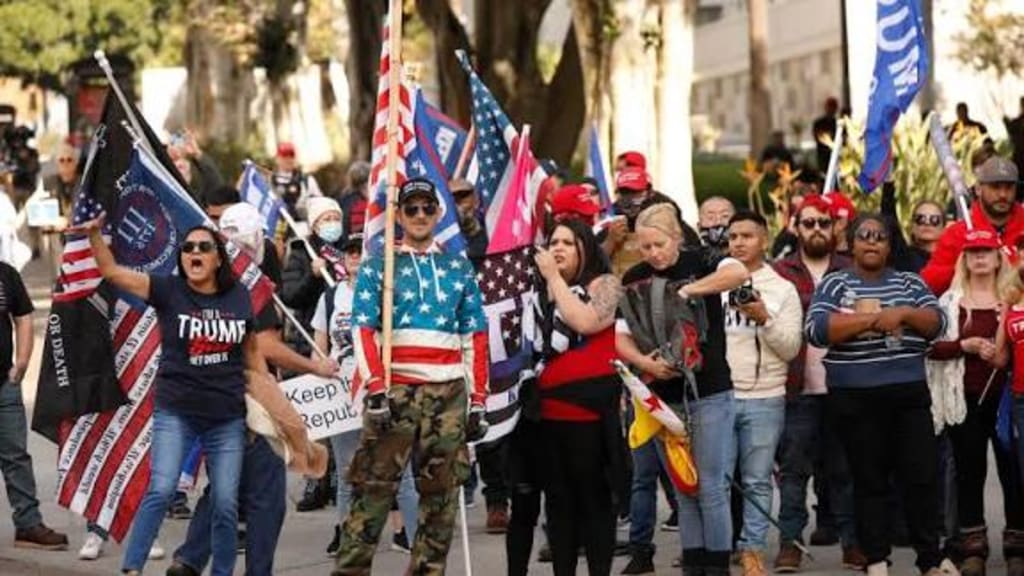
An honest look at why frustration is spreading among American workers, students, and families.
Over the past few months, America has witnessed a growing wave of public protests, labor strikes, and mass demonstrations that echo a deep sense of frustration among ordinary citizens. These movements are not limited to one sector or one city—they are spreading nationwide, from New York to California, from factory workers to young students, and even middle-class professionals.
The question is simple yet urgent: Why are Americans protesting now?
1. The Rising Cost of Living: A Nation Under Pressure
For many Americans, life has become financially unbearable. Inflation has soared over the past few years, pushing up the prices of basic necessities—food, rent, gas, and healthcare. Even though official government reports suggest that inflation is “slowing,” people’s daily experiences tell a different story.
Imagine earning the same paycheck you did three years ago, but now paying double for groceries and rent. That’s the reality for millions of families. Parents are forced to choose between bills and meals, while young adults are drowning in debt just to survive.
This economic squeeze has triggered anger and resentment. People are no longer silent—they are marching in the streets, demanding fair wages, affordable housing, and economic justice.
2. Job Insecurity and Corporate Greed
Another major cause behind the protests is job insecurity. While corporate profits have skyrocketed, workers’ wages have remained stagnant. Many companies, especially in the tech and manufacturing sectors, are laying off thousands of employees while top executives enjoy record bonuses.
It’s this growing inequality—the feeling that the system is rigged in favor of the wealthy—that fuels the outrage.
Employees are no longer willing to accept low pay and poor working conditions while billionaires expand their wealth. Unions have become active again, and strikes are becoming more organized, from Hollywood screenwriters to auto industry workers.
This revival of labor activism signals a powerful shift: the American worker is reclaiming their voice.
3. The Youth Movement: Generation Frustrated
The younger generation—students, recent graduates, and new professionals—has become one of the loudest groups in this new wave of protests. Many of them entered adulthood during economic instability and social chaos.
They face record-high tuition fees, crushing student loans, and a housing market completely out of reach. Even with good degrees, many struggle to find stable jobs that pay enough to live independently.
For them, the “American Dream” has turned into a myth.
Their protests are not just about money—they’re about dignity, equality, and the future.
These young voices are demanding structural change, not empty promises.
4. Political Polarization and Public Distrust
Politics has also played a significant role. Many Americans have lost trust in both major parties—Republicans and Democrats. They see political leaders more focused on power games than on solving people’s real problems.
Whether it’s healthcare, education, or immigration, the public feels that Washington is disconnected from reality. Social media has amplified this distrust, exposing corruption, lobbying, and policy failures in real-time.
As a result, protests are becoming less about left vs. right, and more about the people vs. the system.
5. The Global Dimension: America’s Internal Struggles Go Public
Interestingly, these protests are drawing international attention. The world once saw the U.S. as a model of stability and opportunity. Now, foreign observers see rising homelessness, racial tensions, and a struggling middle class.
In a globalized world, America’s internal struggles have become symbolic of a much bigger question:
Is capitalism still working for the people—or only for the elite?
6. My Personal Reflection
As someone observing these events closely, I believe these protests are not merely acts of rebellion—they are acts of awakening. For too long, ordinary Americans have endured financial and emotional pressure in silence. But now, silence has broken.
This isn’t about politics; it’s about humanity.
When people can’t afford rent, when parents skip meals so their children can eat, when college graduates live in cars—something is deeply wrong with the system.
The protests are a call to rebuild fairness, to reimagine a society that values people over profit.
7. What’s Next for America?
The coming months will be crucial. Will the government listen and introduce reforms? Or will the divide grow deeper, pushing people toward more radical action?
If history has taught us anything, it’s this: when people unite for justice, change becomes inevitable.
From the Civil Rights Movement to modern labor strikes, every major transformation in America began when ordinary citizens stood up and said, “Enough is enough.”
Final Thoughts
The protests sweeping across the United States are not random acts of chaos—they are signs of a nation in transition. Americans are demanding a new economic reality—one where hard work is rewarded, healthcare is accessible, and basic living doesn’t feel like a luxury.
Whether you agree or disagree with the protesters, one thing is clear: a new chapter in American social justice has begun.
And this time, the voices rising in the streets might just reshape the future of the world’s most powerful democracy.
About the Creator
Filmon Ke Raaz | Movie Mysteries Explained
Filmon Ke Raaz is a storytelling platform where movies are explained in a simple and engaging way. We uncover hidden meanings, untold facts, and deep mysteries behind thriller, horror, and mystery films.
Keep reading
More stories from Filmon Ke Raaz | Movie Mysteries Explained and writers in The Swamp and other communities.
Zinc Methionine Chelates Market Size and Forecast 2025–2033
Introduction As global agriculture enters a new era of efficiency, sustainability, and precision nutrition, the role of advanced feed additives is becoming more critical than ever. Among these, Zinc Methionine Chelates are gaining notable attention for their superior bioavailability, environmental benefits, and impact on animal productivity. Once considered a niche solution, chelated trace minerals are now reshaping livestock nutrition strategies across developed and emerging economies alike.
By jaiklin Fanandish6 days ago in The Swamp
My New Book is Finally Here
My poetry collection Beautiful and Brutal Things is done. It's actually done and finally published over 270 pages. Over a year of my life went into this book. More than a year, really. Long days at my computer, sometimes seven days a week because I couldn't stop even when I probably should have. Then two months of editing that felt harder than the writing itself. But it's finished, and I'm still standing, and the book is real.
By Tim Carmichael2 days ago in BookClub



Comments
There are no comments for this story
Be the first to respond and start the conversation.