
How January 6 Shook My Faith in America
Shattered Assumptions

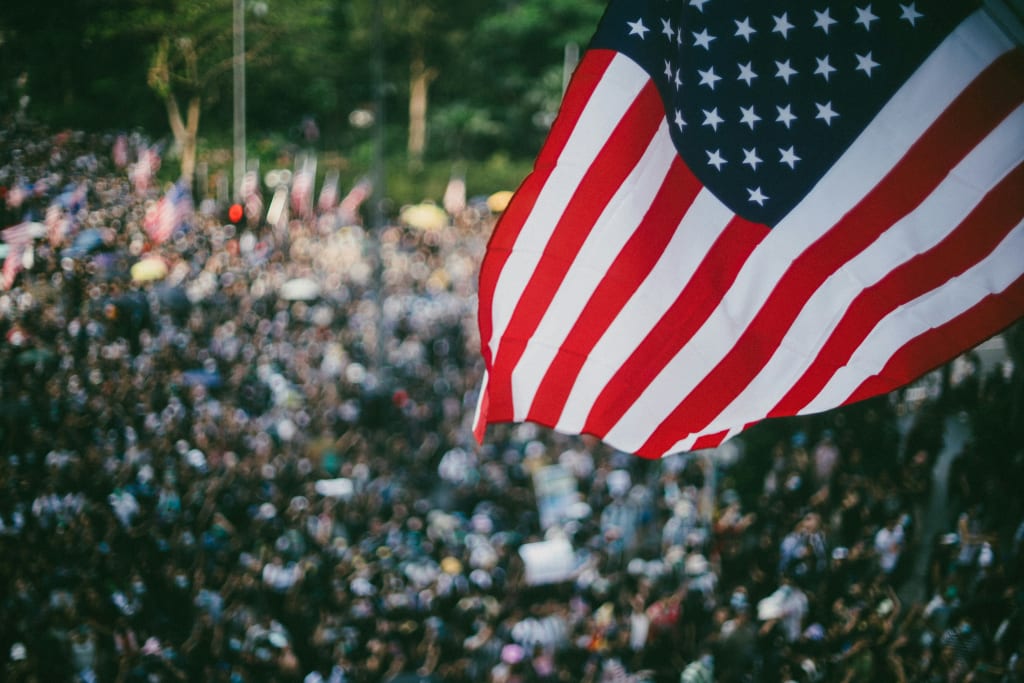
January 6, 2021, is etched in my memory as a day that fundamentally changed my faith in democracy in the United States. For over six decades, I believed that despite the intensity of political campaigns or occasional controversy over election results, the peaceful transition of power—a hallmark of our democracy—was an unshakable certainty. That belief was shattered on this fateful day.
That fateful day began like any other for me but quickly spiraled into an unprecedented crisis. Galvanized by claims of a stolen election, protesters gathered in Washington, D.C. The crowd was diverse: some came with peaceful intentions to express their grievances, while others arrived with a more destructive agenda. The nation watched with curiosity and concern as they marched toward the U.S. Capitol. What followed was a series of events that would leave an indelible mark in my mind.
The breach of the Capitol—a place that symbolizes the very heart of American democracy—was shocking and surreal. Windows shattered, doors were forced open, and the chambers that had long housed debates about the nation's future were suddenly overrun. Lawmakers, staff, and journalists were hurriedly evacuated or barricaded in their offices as the mob roamed the halls. The imagery was disturbing to watch as individuals draped in flags, others dressed in tactical gear, and the chaos of confrontation between the rioters and the overwhelmed law enforcement officers.
The human toll of that day was profound. According to police reports, 150 officers were injured. These officers, tasked with protecting the Capitol and the democratic process, were outnumbered and attacked. Tragically, one protestor was shot and killed during the chaos, a police officer suffered a fatal stroke, and another officer’s trauma from the event led him to take his own life shortly thereafter. These are not mere statistics; they are human lives irrevocably altered by the events of January 6.
The nation’s response to this day has been as divided as the political climate that led to it. On one hand, some insist that violence—especially against law enforcement—must not go unpunished. Law enforcement agencies and many Americans view the actions of the violent rioters as an affront to the rule of law and a direct attack on democracy. On the other hand, some individuals, including some politicians, downplay or even question the events of that day. Senator Tommy Tuberville’s January 21, 2025, remarks illustrate this divide. When he stated that he did not believe the violence occurred because he hadn’t seen the video, it underscored the difficulty of achieving a shared understanding of what happened.
The recent pardons granted to virtually all the protestors on January 21, 2025, further highlight this divide. For some, these pardons represent a miscarriage of justice, a failure to hold accountable those who threatened the democratic process. For others, they are a necessary step toward healing and reconciliation in a nation deeply fractured along ideological lines. I choose not to pass judgment on the pardons themselves; instead, I focus on the more profound implications of January 6 and what it means for the future of democracy in this country.
For me, the most devastating consequence of that day was not the violence itself, though it was horrifying. It was the realization that I no longer live in a country where the peaceful transfer of power is taken for granted. This fundamental cornerstone of democracy, which I had assumed was unassailable, now feels precarious. The events of January 6 revealed a fragility in the democratic process that I had never contemplated.
I recall watching the news as the chaos unfolded, seeing images of individuals smashing windows, storming into offices, and chanting slogans. It starkly contrasted with the serene scenes of past inaugurations or the solemnity of legislative proceedings. In those moments, I felt a profound sense of loss—not just for the immediate damage being done to the Capitol, but for what it symbolized. It was as if the very idea of democracy was under siege.
This sense of loss was compounded by the rhetoric I heard from some politicians and commentators in the aftermath. Statements suggesting that a peaceful transition of power was conditional—dependent on the perceived fairness of the election—were deeply troubling. This conditional approach to democracy is a dangerous precedent that erodes trust in the institutions designed to safeguard our freedoms.
I think back to previous moments in history when election results were contested. The 2000 election between George W. Bush and Al Gore stands out. The controversy over Florida’s vote count, the hanging chads, and the Supreme Court’s decision in Bush v. Gore created significant tension. Yet, despite these challenges, the transition of power occurred without violence. Although laden with disappointment, Al Gore’s concession speech was a testament to his commitment to the democratic process. I assumed this was the norm that no matter how fierce the political battles, the transition of power would remain peaceful. January 6 shattered that assumption.
As I reflect on the events of that day and their aftermath, my thoughts turn to the future. I worry about the world my children and grandchildren will inherit. Will they grow up in a country where democracy thrives or falters under the weight of division and distrust? Will they see elections as a means of resolving differences or as flashpoints for conflict? These questions weigh heavily on my mind.
The events of January 6 have renewed my sense of urgency about protecting and strengthening our democratic institutions. This task cannot be left to politicians alone; it requires the active engagement of all citizens. It means fostering a culture of respect for differing viewpoints, holding leaders accountable, and ensuring the rule of law applies equally to all.
Ultimately, January 6, 2021, was a wake-up call. It exposed vulnerabilities in our democracy and reminded us that the rights and freedoms we cherish are not guaranteed—they must be actively defended. While I grieve for what was lost that day, I also find hope in the resilience of those who stood firm in their commitment to the democratic process, from the lawmakers who returned to certify the election results that evening to the citizens who continue to advocate for justice and accountability.
This hope fuels my belief that, while I may no longer take the peaceful transition of power for granted, we should all strive to preserve it. By confronting the challenges revealed on January 6 and working together to tackle them, we can ensure that our democracy will survive for future generations.
About the Creator
Anthony Chan
Chan Economics LLC, Public Speaker
Chief Global Economist & Public Speaker JPM Chase ('94-'19).
Senior Economist Barclays ('91-'94)
Economist, NY Federal Reserve ('89-'91)
Econ. Prof. (Univ. of Dayton, '86-'89)
Ph.D. Economics
Keep reading
More stories from Anthony Chan and writers in The Swamp and other communities.
Fleeting Leaves
Autumn leaves drift down, Beauty fades as time rushes Life, too, feels so brief.
By Anthony ChanExclusive • 4 months ago
WEF: Donald Trump Set to Dominate Davos 2026
When world leaders, billionaires, CEOs, and policy architects gather in the Swiss Alps for the World Economic Forum (WEF) in Davos, they usually arrive with carefully balanced messages about cooperation, stability, and long-term planning. But in 2026, one figure is expected to overshadow all others—Donald J. Trump. According to analysts and political observers, Trump’s influence is set to dominate Davos 2026, whether he appears in person or not. His policies, rhetoric, and potential return to the White House are already shaping conversations about trade, security, globalization, and the future of Western democracies. For an event traditionally associated with liberal internationalism, Trump’s looming presence marks a dramatic shift. Why Trump Matters at Davos The World Economic Forum has long been a symbol of elite global consensus—an annual meeting where governments, multinational corporations, and international institutions attempt to align their visions. Donald Trump, by contrast, has consistently positioned himself as an outsider to that system. During his previous presidency, Trump openly criticized global institutions, questioned NATO commitments, challenged free-trade agreements, and promoted a fiercely nationalist “America First” agenda. Those policies reshaped global markets and alliances, making Trump impossible to ignore—even for the very elites he often criticized. As Davos 2026 approaches, Trump’s political comeback has forced attendees to confront an uncomfortable reality: global decision-making may once again revolve around a leader who rejects many of the forum’s foundational ideas. A Forum Forced to Adapt Unlike past years, Davos 2026 is expected to focus less on long-term climate targets and more on immediate geopolitical uncertainty. Trump’s potential return to power has triggered renewed debate over tariffs, defense spending, and global supply chains. Executives attending the forum are reportedly recalculating investment strategies in anticipation of stricter U.S. trade policies. Trump’s past willingness to impose tariffs—even on allies—has made corporations wary of overreliance on globalized production networks. At the same time, European leaders are preparing for the possibility of reduced U.S. commitment to multilateral agreements. Trump’s skepticism toward institutions like the World Trade Organization and the Paris Climate Agreement remains a central concern at Davos. Trade, Tariffs, and Economic Nationalism Few topics are expected to dominate Davos discussions more than trade protectionism. Trump’s previous presidency saw aggressive tariff policies aimed at China, the European Union, and even Canada. Those moves disrupted global markets but also appealed to voters who felt left behind by globalization. At Davos 2026, business leaders are expected to debate whether the era of unrestricted global trade is permanently over. Trump’s influence has legitimized economic nationalism in ways that many global elites once dismissed. For emerging economies, this shift raises difficult questions. Should they continue betting on export-driven growth, or pivot toward regional self-sufficiency? Trump’s worldview has forced Davos attendees to reconsider assumptions that defined the post-Cold War global economy. Security and NATO Back on the Agenda Trump’s approach to security alliances is another reason his presence looms so large. His past criticism of NATO—especially his insistence that European allies increase defense spending—changed the alliance’s internal dynamics. At Davos 2026, security experts are expected to openly discuss whether the U.S. would remain a reliable security guarantor under another Trump administration. This uncertainty has already pushed European nations to rethink military budgets and strategic autonomy. For global investors, geopolitical instability is no longer an abstract risk. Trump’s unpredictability, supporters argue, brings leverage; critics say it introduces dangerous volatility. Either way, Davos cannot ignore the impact. Climate Policy in Trump’s Shadow Climate change has traditionally been a centerpiece of the World Economic Forum. However, Trump’s skepticism toward international climate agreements has complicated that narrative. While global corporations continue to promote sustainability goals, there is growing concern that political momentum may shift away from aggressive climate regulation if Trump regains power. At Davos 2026, climate discussions are expected to reflect a more cautious tone—focused on market-driven solutions rather than binding international commitments. This represents a significant shift for a forum that once championed ambitious global climate action as inevitable. Why Trump Dominates Even Without Attending What makes Trump’s influence unique is that he doesn’t need to attend Davos to dominate it. His policies, rhetoric, and political movement have reshaped the global conversation. Panels discussing China, supply chains, AI regulation, defense spending, and even democracy itself are all framed by a single question: How would a Trump-led America respond? In many ways, Trump has forced the World Economic Forum to confront its own limitations. The assumption that global elites can guide the world toward consensus no longer holds. Political polarization, nationalist movements, and voter backlash against globalization have changed the rules. A Divided Reaction Among Davos Attendees Reactions to Trump’s looming dominance are deeply divided. Some executives privately welcome his transactional approach, arguing that it brings clarity and decisive action. Others fear that his unpredictability undermines stability and long-term planning. For policymakers, Trump represents both a challenge and a reality check. His rise exposed a disconnect between elite institutions and large segments of the global population—an issue Davos has struggled to address convincingly. What Davos 2026 Represents Davos 2026 may go down as a turning point—not because of any single announcement, but because of what it symbolizes. The forum is no longer setting the global agenda; it is reacting to political forces it once underestimated. Donald Trump’s dominance of the conversation reflects a broader transformation in global politics. Power is shifting away from consensus-driven institutions toward leaders who thrive on disruption and national interest. Whether one views Trump as a destabilizing force or a corrective to global overreach, his shadow over Davos 2026 is undeniable. Conclusion The World Economic Forum was designed as a place where the world’s most powerful actors could shape the future together. In 2026, that future is being shaped elsewhere—by elections, populist movements, and leaders like Donald Trump. Davos 2026 will still host speeches, panels, and promises. But the most influential presence may be the one challenging its very foundations.
By Muhammad Hassanabout 21 hours ago in The Swamp



Comments (3)
No better time to remember than right now. Thanks for well written reminder Anthony!
Watching this unfold was surreal Being form Canada I was amazed and saddened Lives were taken that day and not all should be pardoned and all who entered should face consequences But I’m an outsider looking in
Hong Kong protesters trash Parliament, it ignites my belief in Democracy! Ukrainian protesters trash Parliament, it vindicates Democracy! American protesters trash(=sit in pelosi's chair?) the Capitol, it shakes my faith in Democracy! So easy to fall for the cnn/nyt headlines imho.