
Hamas Ordered to Disarm as US Brings in Gaza Transitional Government
A Major Shift in Gaza’s Political Landscape A dramatic shift is underway
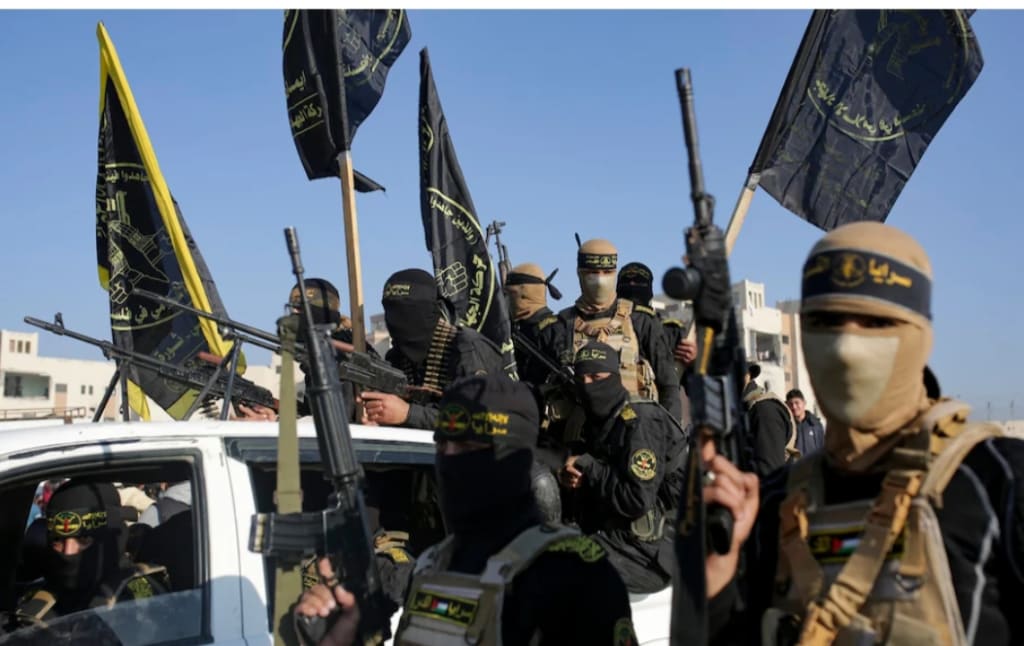
A dramatic shift is underway in Gaza as Hamas has reportedly been ordered to disarm following the establishment of a US-backed transitional government in the territory. The move marks one of the most significant political and security changes in Gaza in decades, reshaping power dynamics in the region and raising urgent questions about stability, governance, and the future of Palestinian self-rule.
According to diplomatic and regional sources, the transitional administration has been tasked with restoring basic governance, coordinating humanitarian aid, and preparing the ground for longer-term political arrangements after months of devastating conflict.
The Role of the US-Led Transitional Government
The newly formed transitional government is backed by the United States with support from several international partners. Its mandate includes maintaining civil order, rebuilding critical infrastructure, and preventing Gaza from becoming a renewed base for armed conflict.
US officials have emphasized that the administration is temporary in nature, designed to stabilize Gaza rather than permanently govern it. However, one of its first and most controversial steps has been the directive for Hamas to disarm and relinquish control of military assets.
Washington argues that sustainable peace and reconstruction are impossible while armed groups operate independently of any civilian authority.
Hamas Faces Mounting Pressure
Hamas, which has governed Gaza since 2007, now faces unprecedented pressure. The order to disarm strikes at the core of the group’s identity as both a political and military organization.
While Hamas has not formally accepted the directive, its options appear limited. Years of blockade, conflict, and international isolation have weakened its position. Analysts suggest the group may attempt to negotiate partial compliance or seek guarantees regarding political inclusion and the safety of its leadership.
For many Palestinians, the question is whether Hamas will resist the order, risking further instability, or adapt to a new political reality under international oversight.
Security Concerns and Enforcement Challenges
Enforcing disarmament in Gaza presents enormous challenges. The territory is densely populated, heavily damaged by war, and home to multiple armed factions beyond Hamas. The transitional government reportedly plans to rely on a combination of local security forces, international monitoring, and intelligence cooperation to oversee the process.
Critics warn that forced disarmament without broad political consensus could spark internal violence. Supporters counter that allowing armed groups to retain weapons would doom any attempt at long-term stability.
Security experts stress that success will depend on credible guarantees, gradual implementation, and economic incentives tied to compliance.
International Reactions
The international response has been mixed but largely cautious. European governments have welcomed efforts to restore governance in Gaza, while emphasizing the need for humanitarian protection and respect for Palestinian self-determination.
Arab states have expressed concern over the optics of US involvement but acknowledge that Gaza’s current condition requires immediate intervention. Some regional actors are pushing for the transitional government to pave the way for a reformed Palestinian Authority to eventually assume control.
Israel has publicly supported the disarmament order, viewing it as essential to preventing future attacks. However, Israeli officials remain skeptical about whether the plan can be fully implemented.
Humanitarian Implications
Beyond politics and security, the situation has profound humanitarian consequences. Gaza’s population faces widespread displacement, food insecurity, and infrastructure collapse. Aid organizations argue that disarmament must be paired with rapid humanitarian relief and reconstruction funding.
The transitional government has promised to prioritize reopening crossings, restoring electricity and water systems, and coordinating aid delivery without political interference. Whether these commitments can be met amid ongoing tensions remains uncertain.
For ordinary Gazans, the primary concern is survival—not geopolitics. Many hope the new arrangement, however imperfect, will bring relief from years of war and isolation.
Risks of Resistance and Fragmentation
One major risk is fragmentation within Gaza. If Hamas splinters or hardline elements refuse to comply, smaller militant groups could fill the vacuum, undermining security efforts.
There is also the possibility that disarmament could push resistance underground rather than eliminate it. History in conflict zones shows that durable peace requires political inclusion alongside security reforms, not force alone.
Observers note that excluding Hamas entirely from future political processes could fuel resentment and destabilization.
What Comes Next for Gaza
The coming months will be decisive. Key questions remain unanswered:
Will Hamas agree to disarm fully or partially?
Can the transitional government maintain legitimacy among Palestinians?
Will international funding materialize quickly enough to prevent further humanitarian collapse?
US officials insist the process is part of a broader vision aimed at eventually enabling Palestinian self-governance under a unified, civilian authority. Critics argue that without a clear political horizon, the plan risks becoming another failed intervention.
Conclusion: A Fragile Turning Point
The order for Hamas to disarm as a US-backed transitional government takes charge of Gaza represents a fragile but pivotal moment in the territory’s history. It offers the possibility of stability and reconstruction, but also carries significant risks of backlash and renewed conflict.
Whether this initiative leads to lasting peace or deeper instability will depend on inclusive governance, credible security arrangements, and genuine international commitment to Gaza’s recovery. For now, Gaza stands at a crossroads—caught between the hope of renewal and the shadow of unresolved conflict.
About the Creator
Keep reading
More stories from Aarif Lashari and writers in The Swamp and other communities.
Greenland’s Defence Is a ‘Common Concern’ for NATO, Danish PM Says as European Troops Fly In
Greenland, the world’s largest island, has once again become a focal point of international security and geopolitical interest. With European troops deploying to the island, Danish Prime Minister Mette Frederiksen emphasized that Greenland’s defence is a “common concern” for NATO, highlighting the strategic importance of the Arctic in modern global security.
By Aarif Lasharia day ago in The Swamp
Do You have a Support Network?
Life is harder when you’re on your own. Human beings are social creatures, and we usually feel better when we have support from a strong social network around us. For most people, it’s our families that hold us together like glue.
By Elizabeth Woodsabout 19 hours ago in Psyche


Comments
There are no comments for this story
Be the first to respond and start the conversation.