
Greenland’s Defence Is a ‘Common Concern’ for NATO, Danish PM Says as European Troops Fly In
Greenland’s Strategic Significance
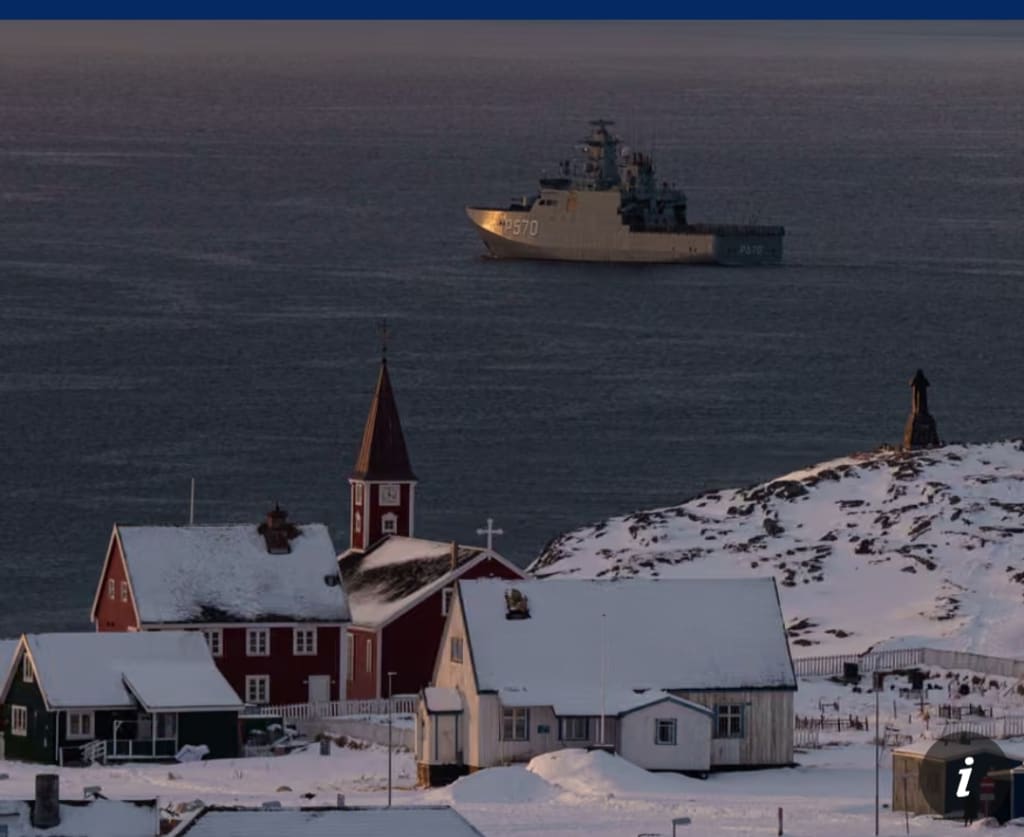
Greenland, the world’s largest island, has once again become a focal point of international security and geopolitical interest. With European troops deploying to the island, Danish Prime Minister Mette Frederiksen emphasized that Greenland’s defence is a “common concern” for NATO, highlighting the strategic importance of the Arctic in modern global security.
Located between North America and Europe, Greenland occupies a critical position for military operations, Arctic surveillance, and global shipping routes. Its vast natural resources, including rare earth minerals and energy reserves, further elevate its geopolitical relevance.
European Troop Deployment
European forces have begun arriving in Greenland as part of a defensive initiative, aimed at supporting Danish sovereignty and bolstering NATO’s presence in the Arctic. The deployment includes troops from several NATO member states, equipped to coordinate with Danish forces on surveillance, infrastructure protection, and rapid response operations.
Officials stress that the mission is not a provocation, but rather a demonstration of solidarity. The presence of European troops reassures Greenland and Denmark that any threats to sovereignty or security will be addressed collectively.
Danish PM on NATO’s Role
Prime Minister Mette Frederiksen underlined the importance of NATO cooperation, stating:
“Greenland’s defence is not just a Danish responsibility—it is a common concern for all NATO allies. We must ensure that the Arctic remains stable, secure, and free from unilateral action by any actor.”
Her remarks highlight a broader commitment to multilateral security arrangements and the necessity of shared responsibility in strategic regions.
Geopolitical Context
Tensions in the Arctic have increased due to growing interest from global powers, including the United States, Russia, and China. As ice melts and shipping lanes open, the Arctic has transformed into a region of economic opportunity and strategic competition.
Recent disputes over Greenland, particularly involving U.S. interest in military and economic expansion, have underscored the island’s sensitivity as a geopolitical chess piece. European troop deployments signal that NATO allies are actively engaging to prevent unilateral dominance and maintain regional balance.
NATO’s Strategic Interests
NATO’s involvement in Greenland aligns with several strategic objectives:
Arctic security: Monitoring military activity and ensuring territorial integrity
Resource protection: Safeguarding access to critical minerals and energy resources
Alliance solidarity: Demonstrating collective defense commitments under Article 5 of the NATO treaty
Geopolitical deterrence: Countering potential influence from non-allied powers in the Arctic
By framing Greenland’s defence as a collective concern, NATO sends a clear message that the region is not solely the responsibility of Denmark or any single nation.
Local and International Reactions
Greenland’s government has welcomed the NATO presence as a stabilizing factor. Local leaders emphasize the importance of protecting sovereignty, environmental resources, and indigenous communities while maintaining constructive relationships with foreign powers.
Internationally, the deployment has drawn mixed reactions:
Allied nations support the initiative as a demonstration of strategic unity.
Russia and China have criticized increased NATO activity, warning against military escalation.
United States maintains interest in Arctic operations, viewing Greenland as a critical point for monitoring global security dynamics.
The situation reflects the complex interplay between sovereignty, alliance commitments, and strategic positioning in a rapidly changing region.
Challenges Ahead
Despite strong NATO coordination, several challenges remain:
Logistics: Deploying and sustaining troops in Greenland’s harsh Arctic environment requires extensive planning and resources.
Climate impact: Melting ice and extreme weather conditions create operational risks.
Diplomatic balance: Maintaining strong international alliances while deterring rival powers requires careful negotiation.
Local concerns: Ensuring that foreign military presence respects Greenland’s autonomy and local population is essential.
Experts emphasize that addressing these challenges requires cooperation, technological investment, and clear operational protocols.
The Future of Arctic Security
Greenland’s status as a strategic hub is likely to grow in the coming years. NATO’s focus on the island demonstrates recognition of the Arctic as a vital domain for security, research, and economic activity.
Prime Minister Frederiksen’s statements reinforce the message that collective responsibility and multilateral engagement are key to maintaining stability. The deployment of European troops is therefore not just a temporary measure but a long-term strategic commitment.
Conclusion: Shared Responsibility in the Arctic
Greenland’s defence is no longer solely a Danish concern; it has become a shared responsibility for NATO and its allies. With European troops on the ground, the alliance signals its commitment to safeguarding the island, ensuring regional stability, and deterring potential unilateral actions by global powers.
As climate change, resource competition, and geopolitical rivalries intensify, the Arctic—and Greenland in particular—will remain a critical arena for international security and cooperation. NATO’s proactive engagement highlights the importance of unity, strategic foresight, and respect for sovereignty in protecting this unique and vital region.
About the Creator
Keep reading
More stories from Aarif Lashari and writers in The Swamp and other communities.
Europe Once Again Dominates Passport Power Ranking, with 30 Countries in the Top 10
Europe continues to dominate global passport rankings, reaffirming the continent’s unparalleled mobility and influence. According to the latest Henley Passport Index, 30 European countries now feature among the top 10 globally, allowing citizens visa-free or visa-on-arrival access to more than 190 destinations worldwide.
By Aarif Lashari5 days ago in The Swamp
Trump Says Microsoft Will Pay More for Its Datacenters’ Electricity
When it comes to energy, politics, and Big Tech, things just got interesting. President Donald Trump recently announced that Microsoft will pay more for the electricity used by its massive datacenters, a statement that has stirred debate from boardrooms to living rooms. The move highlights a growing tension: how do we balance America’s technological growth, particularly in artificial intelligence, with rising energy costs for everyday people? Let’s unpack what’s happening, why it matters, and what it could mean for communities, companies, and consumers alike. Datacenters Are Hungry for Power Datacenters are the backbone of cloud computing and AI development. These massive facilities store and process the data that powers everything from your video calls to advanced AI programs. And all that processing requires energy — lots of it. In fact, some datacenters use as much electricity as a small city. With AI workloads growing exponentially, electricity consumption in these centers could double by the mid‑2020s. That’s not just a tech problem — it affects local electricity grids, utility rates, and environmental resources. Trump’s announcement reflects a broader concern: he wants ordinary Americans to avoid paying higher utility bills just because tech companies need more power. Why Microsoft’s Response Matters Microsoft didn’t push back. Instead, the company unveiled its “Community-First AI Infrastructure” plan, aimed at addressing energy concerns while continuing its AI expansion. The plan includes: Paying electricity rates that cover the full cost of their datacenters. Working with local utilities and regulators to support grid improvements. Investing in job creation and AI training in host communities. Reducing environmental impacts, including water usage. Paying full property taxes without requesting incentives. In short, Microsoft is trying to show that it’s willing to internalize its energy costs rather than let local communities shoulder the burden. The Political Angle This announcement is more than just corporate strategy — it’s political theater. With voters concerned about rising costs and inflation, Trump is signaling that his administration is protecting consumers from the hidden costs of AI infrastructure. However, critics warn that forcing tech companies to pay higher electricity bills could slow investment in U.S. datacenters. Some clean energy advocates also argue that expanding renewable energy capacity is a more effective solution than simply redistributing costs. The debate shows that AI isn’t just a technological revolution — it’s also reshaping energy policy, economics, and local politics. Community Reactions People living near datacenters have had mixed reactions. Some welcome the news, hoping that higher corporate contributions will prevent electricity bills from climbing. Others remain skeptical, worried that new projects might still strain local resources or that energy-intensive operations could continue despite higher costs. Communities in states like Wisconsin and Virginia have already pushed back against new datacenters, citing water usage, environmental concerns, and electricity demand. Microsoft’s commitments aim to reassure local residents and reduce community resistance — but whether it works remains to be seen. Broader Implications for the Tech Industry If Microsoft’s plan is successful, it could set a new standard for the entire tech industry. Other companies, like Amazon, Google, and Meta, may follow suit, paying closer attention to electricity costs, local infrastructure, and community relations. This could encourage more sustainable datacenter development, better corporate accountability, and even influence where AI infrastructure is built in the future. AI, Energy, and the Future of Policy The Trump-Microsoft electricity issue is more than a headline. It’s a window into how AI, energy consumption, and public policy intersect. Datacenters are no longer invisible infrastructure — their energy needs have direct economic, social, and environmental impacts. By calling on Microsoft to pay more, Trump has spotlighted the challenges of maintaining rapid AI growth while protecting consumers. And Microsoft’s “Community-First” plan shows one way a tech giant can respond: balancing expansion with responsibility. Conclusion: Powering Technology Without Powering Up Costs At the heart of this story is a simple question: how do we ensure AI innovation doesn’t come at the expense of everyday Americans? Trump’s directive and Microsoft’s response offer one potential path forward: let tech companies cover their own energy costs, invest in communities, and reduce environmental impacts. Whether this model becomes the industry standard remains to be seen. For now, it’s a clear reminder that the future of AI isn’t just about algorithms and servers — it’s about people, power, and policy.
By Muhammad Hassan6 days ago in The Swamp
Wild Card Weekend Recap: What Happens Now?
I think I figured out why I love Wild Card Weekend so much. It's because it's the first playoff anything of the calendar year. The NFL season starts in the fall, and once upon a time, the champion was crowned either on or slightly before New Year's. The evolution of the NFL schedule has resulted in the playoffs starting just into the New Year, and currently, the final week of the season falls on the first weekend of the New Year, with Wild Card Weekend coming a week after that. So yes, chronologically, the NFL's Wild Card Weekend serves as the first playoff anything of the calendar year.
By Clyde E. Dawkins7 days ago in Unbalanced



Comments
There are no comments for this story
Be the first to respond and start the conversation.