
Grave Moment’: End of US-Russia Nuclear Pact Comes at Worst Possible Time, UN Chief Warns
Why the Collapse of a Key Arms Control Agreement Is Raising Global Alarm
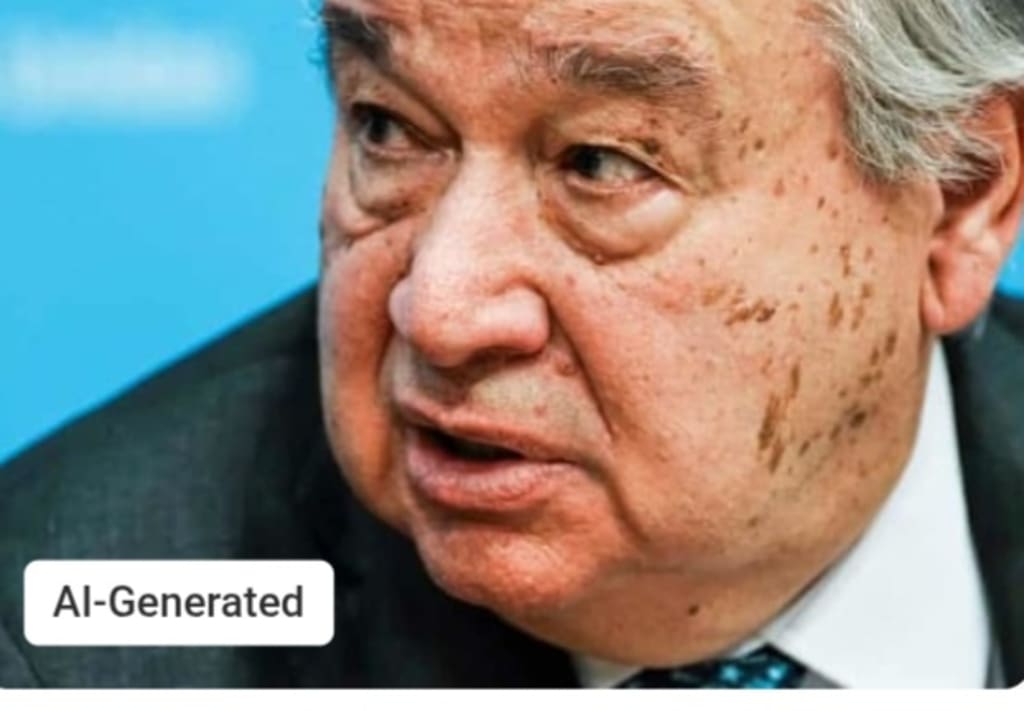
The world has entered a perilous new chapter in global security. On February 5, 2026, the last major nuclear arms control treaty between the United States and Russia—New START—officially expired.
United Nations Secretary-General António Guterres described this as a “grave moment for international peace and security,” warning that the timing could not be worse. Global tensions are high, conflicts are ongoing, and the mechanisms that have kept the world’s two largest nuclear powers in check are gone.
What New START Was—and Why It Mattered
New START (Strategic Arms Reduction Treaty) was signed in 2010 by U.S. President Barack Obama and Russian President Dmitry Medvedev. It had three key components:
Caps on deployed strategic warheads: 1,550 for each country.
Limits on delivery systems: Intercontinental ballistic missiles (ICBMs), submarine-launched ballistic missiles (SLBMs), and heavy bombers.
Verification mechanisms: On-site inspections and data exchanges to ensure transparency.
This treaty provided predictable structures for strategic stability, even when U.S.-Russia relations were strained. With its expiration, the world loses its last legally binding framework that limited nuclear arsenals and reduced miscalculation risks.
Why the Timing Is So Dangerous
The UN chief emphasized that this moment is unprecedented: for the first time in over 50 years, the world’s two largest nuclear powers will operate without formal limits. Some factors making this particularly dangerous:
Ongoing conflicts: Europe, the Middle East, and Asia-Pacific are already hotspots.
Strained U.S.-Russia relations: Russia’s invasion of Ukraine in 2022 has deepened mistrust.
Modernizing nuclear forces: Other nuclear powers, including China, India, Pakistan, and North Korea, are expanding or enhancing their arsenals.
Guterres warns that these conditions increase the risk of nuclear miscalculation and global instability.
Practical Implications of the Expiration
The end of New START does not mean an immediate nuclear war—but it removes key safeguards:
No limits on warheads and delivery systems: Both nations can expand their arsenals freely.
Loss of transparency: Inspections and data exchanges end, increasing uncertainty.
Higher risk of miscalculation: Without visibility, false alarms or worst-case assumptions become more likely.
Potential arms race: Competitive buildup may begin, reviving Cold War-style dynamics.
Global Reactions
World leaders and international organizations have expressed serious concern:
UN Secretary-General: Called the moment grave and urged renewed negotiations.
European and Asian leaders: Emphasized the urgent need for a successor treaty.
Pope Leo XIV: Urged both powers not to abandon the spirit of the treaty and pursue meaningful disarmament.
U.S. and Russia: While both expressed caution, tangible negotiations for a new framework have not yet started.
Looking Ahead: Risks and Opportunities
The expiration of New START presents both peril and a fragile opportunity:
Risks: Increased global instability, renewed nuclear competition, and potential for misunderstanding during crises.
Opportunities: Possibility of reimagined arms control for the 21st century, including:
Inclusion of more nuclear states
Addressing emerging technologies like hypersonic weapons and cyber threats
Renewed multilateral engagement for strategic stability
Success will depend on trust, diplomacy, and transparency—qualities currently in short supply.
Conclusion
The end of New START marks a historic shift in international security. As António Guterres warns, this is a “grave moment”—a turning point that could either:
Catalyze unprecedented diplomatic engagement, or
Lead to a renewed nuclear rivalry with uncertain consequences.
The next few months will be critical in shaping the future of global arms control and peace.
References:
United Nations News
Arab News
Investing.com
About the Creator
Keep reading
More stories from Ayesha Lashari and writers in The Swamp and other communities.
The message, reported by The Times of Israel, highlights growing regional concern over US deterrence and Iran’s actions
A recent message reported by The Times of Israel has reignited a long-standing debate in the Middle East: is the United States still a credible deterrent against Iran? Across the region, from Israel to the Gulf states, policymakers and security analysts are increasingly voicing concern that Washington’s warnings no longer carry the weight they once did. As Iran continues to expand its military footprint, support proxy groups, and advance its nuclear capabilities, doubts about American resolve are becoming harder to ignore.
By Ayesha Lashariabout 15 hours ago in The Swamp
Why Black History Matters in America?
The United States of America is celebrating their 250th anniversary in 2026. I'm proud to be an American and as someone who was born here, I wouldn't imagine myself living anywhere else. This is a country where opportunities are possible. Where anyone can be successful in anything they desire to do. Equality, community, and togetherness are the backbones of what America is and should be about. However, we have an administration who wants to erase and disregard those who have made positive, meaningful impacts in our country, specifically Black figures, such as Martin Luther King, Jr., Rosa Parks, and Maya Angelou. President Trump and his administration have been constantly complaining and fighting against what they call the "Woke agenda". They use this excuse as a distraction from other issues they refuse to address, such as the high cost of living, climate change, and inflation. That equality is dividing America, when in reality, it's bringing us together. Being woke is not tied to a specific political party. No matter where you stand on the political spectrum, you can still care about other people and their plights. Compassion and empathy for others isn't tied to a political party, either. We were taught as children to treat others the way we want to be treated and not judge others because they're different from us. Caring about others isn't a personal attack on your beliefs. It doesn't make you any less of a person. People who are easily offended over African American figures, past or present, or anything related to it, are grasping at straws. Current and future generations need to know who people like Harriet Tubman and Shirley Chisholm were, especially in the classroom. Black History is part of American History. It should be recognized, not hidden or forgotten. Besides, you can't shield children from everything, just because your feelings are easily hurt.
By Mark Wesley Pritchard 4 days ago in The Swamp
Deepfakes Spreading and More AI Companions: Seven Takeaways From the Latest Artificial Intelligence Safety Report
The latest artificial intelligence safety report has raised significant global discussion by highlighting key trends shaping the future of AI. Among the most notable findings are the rapid spread of deepfake technology and the growing popularity of AI companions designed to simulate emotional or social relationships with users.
By Aarif Lashari2 days ago in The Swamp
Self Help: Grifters' Gospel
On Self-Help, Snake Oil, and the Illusion of Change Psychology professionals and students can be imagined on two opposite sides of a line called self-help books: likely a larger group opposes pop-science and step-by-step manuals filled with talk of success, journaling, and not giving a f**k; others love them, but they aren’t many.
By Avocado Nunzella BSc (Psych) -- M.A.P 4 days ago in BookClub


Comments
There are no comments for this story
Be the first to respond and start the conversation.