
Government Shutdown 2025
What We Know, What to Expect, and How to Help


The United States is currently experiencing a government shutdown for the first time in nearly seven years that began on October 1st, 2025, a situation that has far-reaching consequences for federal operations, employees, and citizens across the country. As we trudge through the third week of the shutdown, let’s take a look at the causes behind it, its immediate and long-term impacts, and the potential paths toward resolution.
A government shutdown occurs when Congress fails to pass appropriations bills or continuing resolutions necessary to fund federal agencies and programs. Without these funds, non-essential government operations cease, and many federal employees are furloughed or work without pay. Essential services, such as national security and emergency healthcare, typically continue to operate, although sometimes at reduced capacity.
Non-essential government operations include things like:
• Cultural services: national museums, art galleries, national parks.
• Administrative support: policy development, research, grant administration.
• Regulatory agencies: functions that do not pose a direct threat to health or safety, such as environmental reviews or permit processes.
• Long-term research projects: research that does not have immediate implications for public safety or health
Federal employees working within these non-essential operations are at risk of being involuntarily furloughed during a government shutdown with no pay.
While these operations may be deemed non-essential, the implications can still be felt across the board. Local businesses will suffer economic hardship in touristic areas due to national parks and cultural sites shutting down, which can affect the economy as a whole. Approximately 1.4 million federal employees are on involuntary unpaid leave or working without pay, with the Trump administration pushing to layoff an additional 4,000 workers as the shutdown continues. This has been blocked by a federal judge, temporarily.

The shutdown was triggered by a budget impasse between Democrats and Republicans in Congress. Even though a stopgap bill was designed to try to avoid the shutdown and passed in the House, it failed in the Senate. Key areas of disagreement include:
• Policy Riders: Contentious policy provisions attached to funding bills—such as immigration reforms, climate initiatives, and healthcare measures—have complicated compromise efforts.
• Healthcare Disputes: The shutdown was mainly the result of our elected officials being unable to come to a compromise regarding the federal funding bill. Democrats have continued asking for the bill to include an extension of expiring tax credits that make health insurance cheaper for millions of Americans. They have also requested a reversal of recent Medicaid cuts to avoid steep increases to individuals’ healthcare costs. Republicans argued that these issues would be better addressed separately from the funding bill, even though they are, quite literally, part of that funding bill, and they only want to pass a “clean resolution.”
• Attempts to Compromise: Republicans have also introduced bills that would cover federal funding through November 21st to ensure federal employees could continue receiving a paycheck, but with restrictions that Democrats say would allow the government to decide which employees “deserve” payment (such as those who were forced to continue working due to safety concerns, rather than those who were involuntarily furloughed).
• Partisan Gridlock: Polarization in Congress has made consensus difficult, with both major parties prioritizing divergent priorities and refusing to concede on core issues. Another issue is that they must come to an agreement on a bill that Trump will actually sign—which is an area of concern for the requests Democrats are making. The Trump administration has offered no insight and has made it clear they believe Democrats are singly responsible for the shutdown, further deepening the divide among the two sides.

The shutdown has led to the closure of numerous federal offices and national parks, delayed processing of government benefits (such as SNAP, Social Security, and federally funded preschool programs), and interruptions in non-essential services. Hundreds of thousands of federal employees face furloughs, leaving them without pay until the shutdown is resolved. Contractors and businesses that rely on government work have also been affected, with ripple effects felt throughout the broader economy.
If the shutdown continues for an extended period, the economic impact could intensify, especially for small businesses. Disruptions to federal research, infrastructure projects, and regulatory activities may slow growth and undermine public trust in government institutions. The uncertainty may also affect financial markets and consumer confidence, potentially leading to wider economic repercussions. This comes at a time when the economy is already on a steep downward trend, and millions of Americans continue to struggle with rising costs.
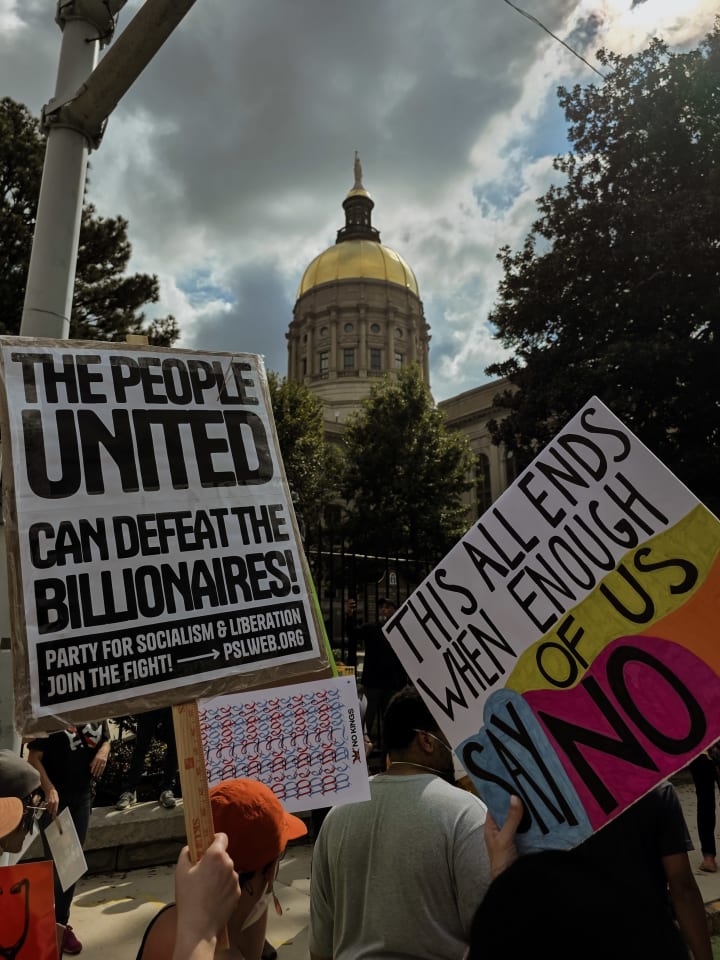
Public frustration is mounting as the shutdown drags on, with protests and advocacy groups urging lawmakers to find common ground. Polls indicate that most Americans blame both parties for the stalemate, though some hold specific leaders accountable. The shutdown has become a focal point of national debate for some, shaping discussions in the media and among voters, while others continue on with little to no immediate acknowledgement.
Efforts to end the shutdown are ongoing, with bipartisan talks underway to reach a funding agreement. Many lawmakers on both sides are meeting with opponents outside of the Chamber to discuss ways to move forward. Possible solutions include temporary continuing resolutions to reopen the government while negotiations continue, or a comprehensive budget deal that addresses key disputes. The timing and outcome of these negotiations remain uncertain, but pressure is mounting on lawmakers to restore government operations as soon as possible. Call your Senators. Call your Representatives. Write emails, letters. Tag them on social media. Use your voice to let our leaders know how you feel about the ongoing shutdown.
The 2025 government shutdown highlights the challenges of legislative compromise in a polarized political environment. While the immediate impacts are significant, the long-term consequences could be even more profound if a resolution is not reached soon. As the situation develops, continued public engagement and bipartisan leadership will be crucial to restoring normalcy and addressing the underlying causes of the crisis.
As the holidays grow closer, many people and organizations are coming together to provide food and necessities to those in need in their communities. November and December are also known to be filled with food and toy drives for families struggling. If you’re willing and able, organize an event or donate to those less fortunate and spread a little love this holiday season. The people need to come together to help our neighbors in this time while our elected officials on both sides are using us, and money, as bargaining chips. Let’s show them we’re stronger together.
About the Creator
Shaley Speaks
Wife. Mom. Creator.
Politics. Life. Motherhood. Fiction. Music.
I love it all. I hope you do, too.
Keep reading
More stories from Shaley Speaks and writers in The Swamp and other communities.
No Kings Mental Health Monday!
Happy Mental Health Monday, friends! Today, we actually have some great things to take in. With the endless “breaking news” headlines and events so trashy they’re difficult to believe are real (like Trump’s AI video of him dumping shit on the American people while wearing a crown), this weekend brought light back into the lives of many Americans.
By Shaley Speaks4 months ago in The Swamp
The Saddest Thing - The Billionaires Who Rule America Aren't Even Enjoying Themselves
This single post says more about our ruling class than a thousand policy papers. The saddest thing about today's system is that the men robbing the rest of us - sabotaging our economic prospects, our pensions, our access to affordable healthcare - are not even happy.
By Scott Christenson🌴24 days ago in The Swamp
When the Shelter Closes
Across the street from my house, a man slept under a tree, his dog by his side. My first, naive thought: he must be traveling through. But he kept coming back, often sleeping there during the day. Then it hit me—that person might not have a home.
By Bride of Sound5 days ago in Humans


Comments
There are no comments for this story
Be the first to respond and start the conversation.