
Gold Sheds Rs61,050 per Tola in Two Days: What Triggered the Sharp Slide and What Comes Next
Rapid correction rattles local bullion markets as global cues, dollar strength, and profit-taking converge

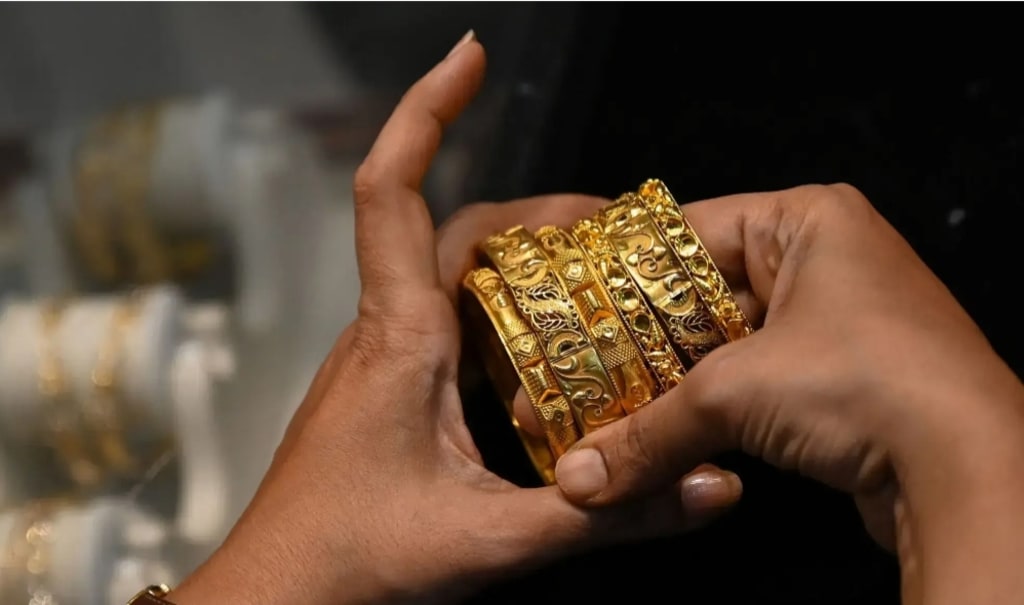
Gold prices in Pakistan have suffered a dramatic correction, shedding a massive Rs61,050 per tola over just two trading sessions, sending shockwaves through bullion markets, jewelry traders, and investors alike. The abrupt fall comes after weeks of heightened volatility, during which gold had surged to record highs on global uncertainty, geopolitical risks, and expectations of looser monetary policy in major economies.
According to market data from local bullion associations, the price of 24-karat gold per tola declined sharply as international prices retreated and the Pakistani rupee showed signs of relative stability against the US dollar. The sudden reversal has raised critical questions: what caused such a steep two-day drop, is the correction over, and what should buyers and investors expect in the near term?
Global gold retreat drives local crash
The primary driver behind the steep decline has been a sharp pullback in international gold prices. After rallying aggressively in recent weeks, global bullion markets entered a phase of profit-taking as investors reassessed their positions. A strengthening US dollar and a rebound in US Treasury yields reduced gold’s appeal as a non-yielding asset, prompting selling pressure across futures and spot markets.
International spot gold prices reportedly fell by tens of dollars per ounce within days, a move that quickly transmitted to local markets. In Pakistan, where gold pricing closely tracks global rates while factoring in the rupee-dollar parity and taxes, even modest international corrections can translate into large rupee-denominated swings.
Market analysts say the speed of the drop suggests speculative excess had built up during the previous rally, leaving prices vulnerable to a sharp unwind once sentiment turned.
Rupee stability adds to downward pressure
Another key factor behind the Rs61,050 per tola decline has been the relative stability of the Pakistani rupee against the US dollar. Over recent sessions, the rupee avoided major depreciation in the interbank market, limiting upward pressure on imported commodities, including gold.
Historically, sharp rupee weakness has often cushioned local gold prices even when global rates fall. This time, however, the absence of currency depreciation meant that the full impact of the international correction was passed on to domestic consumers.
Bullion traders note that even small improvements in exchange-rate expectations can significantly influence gold prices in Pakistan, where the metal is largely imported and priced in dollars.
Jewelry market reacts with caution
The sudden plunge has created mixed reactions in Pakistan’s jewelry markets. While potential buyers see the drop as an opportunity, traders remain cautious, uncertain whether prices have found a floor or if further declines are imminent.
Many jewelers report that footfall has increased modestly following the price fall, but buyers are hesitant to make large purchases, preferring to wait for clearer direction. Wedding-season demand, which often supports prices, has so far failed to offset the broader bearish sentiment.
“Customers are asking whether prices will fall further,” said a Karachi-based gold dealer. “After such a big drop in two days, people are nervous. No one wants to buy today and see prices lower tomorrow.”
Investors reassess safe-haven appeal
For investors, the sharp two-day correction has reignited debate over gold’s role as a safe-haven asset. While gold remains a long-term hedge against inflation, currency weakness, and geopolitical risk, short-term price movements are increasingly influenced by interest-rate expectations and speculative flows.
Recent signals from global central banks suggesting a cautious approach to rate cuts have reduced immediate fears of aggressive monetary easing. This shift has supported the dollar and pressured gold, at least in the short run.
Analysts emphasize that such corrections are not unusual after strong rallies. However, the scale of the Rs61,050 per tola decline underscores how quickly sentiment can reverse in overheated markets.
Is the correction over?
The big question now is whether gold prices have stabilized or if more downside lies ahead. Market watchers say much will depend on upcoming global economic data, particularly inflation readings, central bank commentary, and movements in the dollar index.
If US inflation remains sticky and interest rates stay higher for longer, gold could face continued pressure. Conversely, any renewed geopolitical tensions or signs of economic slowdown could revive safe-haven demand and trigger a rebound.
In the local context, fluctuations in the rupee will remain a decisive factor. Any renewed currency weakness could quickly lift gold prices, even if international rates remain under pressure.
What should buyers do?
Experts advise buyers and investors to adopt a cautious, staggered approach rather than trying to time the exact bottom. For long-term holders, gold still offers diversification benefits, but short-term traders should brace for continued volatility.
For consumers planning jewelry purchases, the recent decline has improved affordability compared to record highs, but patience may pay off if global uncertainty persists.
As one bullion analyst put it, “Gold has not lost its long-term shine, but the last two days are a reminder that prices don’t move in one direction forever.”
With Rs61,050 wiped off the per tola price in just two days, Pakistan’s gold market has entered a new phase—one defined by caution, recalibration, and heightened sensitivity to global cues. Whether this correction proves temporary or marks the start of a deeper pullback will become clearer in the days ahead.
About the Creator
Keep reading
More stories from Salaar Jamali and writers in The Swamp and other communities.
Silver Is Paying for Its Excesses. Silver Miner Stocks May Be a Buy.
Silver’s recent collapse has been swift, painful, and deeply revealing. After months of speculative enthusiasm pushed prices to multi-year highs, the metal has entered a sharp correction that many analysts now describe as a necessary reckoning. In that sense, silver is “paying for its excesses.” Yet while the metal itself struggles to regain footing, a growing number of market watchers argue that silver miner stocks—punished alongside the commodity—may be quietly transforming into attractive long-term opportunities.
By Salaar Jamalia day ago in The Swamp
Live: Blast in Iran’s Bandar Abbas caused by gas leak, fire chief says
A powerful explosion rocked the southern Iranian port city of Bandar Abbas on Saturday, according to local officials, with preliminary investigations pointing to a gas leak as the cause of the blast, the city’s fire chief said. The incident has resulted in casualties, structural damage, and heightened tension amid ongoing geopolitical sensitivities in the region. Reuters +1 Explosion Rocks Strategic Port City The blast occurred in a residential building in the strategically important port city of Bandar Abbas, located along the Gulf coast near the Strait of Hormuz — one of the world’s most vital maritime shipping lanes. The local fire department chief, Mohammad Amin Lyaghat, told state media that a buildup of gas led to the explosion, but investigations are still underway to confirm the exact details. � LBCIV7 According to Iranian reports, at least one person was killed and 14 others were injured in the blast, with emergency services rushing the wounded to nearby hospitals. State authorities denied social media speculation that the explosion targeted a military figure or was related to any security incident. � Reuters What Happened in Bandar Abbas? Eyewitnesses described chaotic scenes as smoke and debris filled the air following the explosion. The building’s facade was damaged, vehicles nearby were affected, and emergency crews worked to secure the area. Initial assessments suggest that the blast occurred in a multi-story residential complex, but authorities have not yet ruled out other contributory factors. � L'Orient Today The announcement that the blast was caused by a gas leak aligns with official comments from local authorities, but analysts note that inquiries are continuing. This is standard procedure in incidents of this nature, particularly in regions with older infrastructure or limited safeguards in residential gas systems. Casualties and Immediate Response Officials confirmed that at least one fatality and numerous injuries were linked to the explosion, prompting widespread emergency response. Firefighters, paramedics, and police secured the site, evacuated residents from surrounding buildings, and began preliminary rescue and recovery operations. Reuters The injured include civilians of various ages, with several in serious condition. Hospitals around Bandar Abbas have reported receiving multiple patients requiring urgent care, although officials have not yet provided a complete breakdown of the casualties. Infrastructure and Economic Impact Bandar Abbas serves as a crucial hub for Iran’s maritime trade. Beyond its residential areas, the city hosts commercial port facilities, customs operations, and logistics infrastructure supporting international shipping. Any disruption here can have ripple effects on both domestic supply chains and foreign commerce that passes through the Strait of Hormuz. L'Orient Today While authorities stress that port operations and critical services are continuing without major interruption, there is concern about the stability of infrastructure near the blast site. Local officials are conducting safety inspections on nearby buildings and utility lines to prevent secondary incidents. Broader Context The explosion occurred at a time of heightened regional tensions, with diplomatic relations between Iran and several global powers under strain due to geopolitical disputes in the Middle East. Although Iranian officials have dismissed rumors of an attack, saying the blast resulted from a gas leak, some analysts caution that speculation continues on social media. Hindustan Times A separate gas-related explosion in another Iranian city, Ahvaz, earlier on the same day reportedly killed four people, underlining the risks associated with ing gas infrastructure in multiple locations across the country. Anadolu Ajansı Public Reaction and Safety Concerns Residents of Bandar Abbas expressed shock and concern after the blast. Many took to social media to share images and accounts of the explosion’s immediate aftermath, including videos of smoke plumes rising above the city skyline. Some commenters emphasized fears about gas safety and called for better infrastructure maintenance, while others echoed official denials of any malicious intent. Concerns about routine gas leaks and building safety are particularly acute in regions with older pipelines or limited regulatory oversight. Past incidents in Iran and elsewhere have demonstrated that gas leaks can be deadly when preventive measures are insufficient, and public pressure is mounting for improved safety standards. Investigations Underway Iranian authorities have launched an official investigation to analyze the cause of the blast, secure the site, and prevent potential future incidents. The fire department and crisis management teams are involved in assessing both structural damage and gas system integrity. As with many industrial and residential disasters, investigators are expected to review maintenance records, witness statements, and technical evidence from the site to better understand what triggered the gas buildup. The findings will determine whether the explosion was purely accidental or exacerbated by human error or infrastructure decay. Looking Ahead The blast in Bandar Abbas serves as a stark reminder of the dangers posed by gas leaks and aging infrastructure in densely populated urban areas. As authorities continue their inquiry, residents and policymakers alike are calling for stronger safety measures and preventive strategies. The incident highlights the dual challenges faced by cities like Bandar Abbas — maintaining vital economic activity through port operations while ensuring the safety and well-being of local communities. As families recover and rebuild, the emphasis on accountability, safety reforms, and emergency preparedness will remain central issues in the region.
By Fiaz Ahmed a day ago in The Swamp


Comments
There are no comments for this story
Be the first to respond and start the conversation.