
Global Automotive Seat Market Trends & Summary
How Comfort, Safety, and Smart Technology Are Redefining the Future of Automotive Seating


The Global Automotive Seat Market, valued at US$ 80.35 billion in 2024, is on course to reach US$ 109.71 billion by 2033, growing at a CAGR of 3.97% during 2025–2033, according to Renub Research. This expanding industry is being fueled by rising global vehicle production, the surge in electric vehicles (EVs), regulatory pressure for enhanced passenger safety, and evolving consumer expectations for comfort, ergonomics, and smart in-cabin mobility experiences.
Today’s automotive seats are no longer mere functional components; they are intricate engineering achievements designed to deliver comfort, posture support, luxury, efficiency, and above all, safety. As vehicles trend toward electrification and autonomy, seating systems are becoming central to defining what “premium mobility” truly means.
Global Automotive Seat Market Outlook
Automotive seats form the backbone of a vehicle’s interior, providing essential comfort and safety for drivers and passengers across all vehicle categories. Built using frames, cushioning, ergonomic contours, and upholstery, modern seats integrate cutting-edge technologies such as heating, cooling, ventilation, electronic adjustments, and smart sensors.
Beyond basic comfort, contemporary seats play critical roles in enhancing posture, reducing fatigue, and improving crash safety. High-end models offer massage functions, memory profiles, posture-correction algorithms, and even AI-based occupant monitoring.
Material innovation is also at the forefront — lightweight composites, recycled fabrics, vegan leather, and robust impact-absorbing foams support both sustainability and improved vehicle energy efficiency. These advancements demonstrate how essential seating is to transforming the driving and riding experience.
Key Drivers of Growth in the Automotive Seat Market
1. Rising Demand for Comfort and Ergonomic Seating
As consumers spend more time in vehicles — whether through daily commutes, ride-sharing, long-distance travel, or family mobility—comfort has transitioned from a luxury to a non-negotiable necessity.
Modern seats now feature:
Adjustable lumbar support
Memory foam cushioning
Heated and ventilated seating
Adjustable headrests and bolsters
Personalized memory positions
Luxury carmakers are also scaling up massage-enabled seats and temperature-optimized comfort layers.
A major development includes Lear Corporation’s collaboration with General Motors, beginning Q2 2025, to integrate ComfortMax Seats. These seats employ advanced thermal control technologies that improve heat distribution, cooling performance, and manufacturing efficiency. This signifies how leading brands are now prioritizing occupant comfort as a core engineering goal.
2. EV Growth Boosting Smart, Lightweight, and Energy-Optimized Seats
Electric vehicles require energy-efficient systems, including seats that are:
Lightweight
Aerodynamic
Energy-saving
Digitally integrated
EVs are pushing manufacturers towards slimmer, modular seating designs that free up cabin space and reduce vehicle weight to extend driving range.
Smart seating features such as:
In-seat climate control
Embedded screens
Biometric sensors
AI-based posture adjustment
Voice-enabled controls
are gaining traction.
ZF Passive Safety Systems recently unveiled a next-generation belt system featuring adaptive force limitation based on occupant weight and size. Such smart safety-seat integrations are becoming increasingly common as vehicles evolve to connected and semi-autonomous formats.
3. Strict Global Safety Regulations Accelerating Innovation
Governments worldwide are enforcing stricter safety standards, compelling automakers to adopt enhanced seating designs. These include:
Side airbags
Advanced seatbelt systems
Anti-whiplash headrests
Reinforced impact-absorbing seat frames
Crash-responsive structures
India’s Bharat New Car Assessment Programme (BNCAP), launched in April 2023, significantly raised consumer awareness around vehicle safety ratings. As per Frost & Sullivan, enhanced safety features are expected to drive passive safety-market revenue from $2.40 billion (2022) to $3.64 billion by 2030.
Similarly, global markets in North America and Europe require compliance with rigorous crash tests, thereby accelerating innovation in impact-optimized seating systems.
Challenges Affecting Market Expansion
1. High Production Costs & Raw Material Price Volatility
Premium seating systems require advanced components such as:
High-density foams
Memory materials
Sensors
Electronic control modules
Lightweight alloys
Airflow mechanisms
Volatile prices of metals, fabric, and synthetic materials, coupled with supply-chain disruptions, increase overall manufacturing costs, squeezing margins for OEMs.
2. Limited Adoption of Advanced Seats in Budget Segments
High-tech seats largely remain confined to premium models. Cost-sensitive consumers in emerging markets limit adoption of advanced features such as:
Massagers
Ventilation
Powered adjustments
AI-based posture correction
Manufacturers must balance affordability with innovation to penetrate volume-driven segments.
Segment Insights: Automotive Seat Market Breakdown
1. Bucket Seat Market
Bucket seats are the hallmark of sports, luxury, and performance vehicles. Built to offer lateral support, they enhance stability during high-speed driving and sharp turns.
Key trends:
Growing use of carbon fiber and composite materials
Rising adoption in premium passenger cars
High demand from performance SUVs and electric sports models
As driving enthusiasts prioritize comfort with sporty aesthetics, bucket seats continue to gain traction.
2. Passenger Car Seat Market
Passenger car sales account for the largest share of global seat demand. Automakers focus on:
Power-adjustable seats
Memory systems
Climate-controlled seating
Sustainable upholstery
Growing adoption of ride-sharing and upcoming autonomous mobility systems will fuel demand for flexible, modular seating configurations that improve cabin versatility.
3. Diesel Vehicle Seat Market
Diesel vehicles—especially trucks, buses, and construction equipment—require heavy-duty seats that can withstand long hours of operation.
Demand highlights:
Ergonomic lumbar-heavy seats for truck drivers
Durable upholstery for rugged conditions
Heated and fatigue-reducing designs
Despite tightening diesel regulations, heavy-duty fleets remain an enduring market.
4. Electric Vehicle Seat Market
EVs are redefining seating design with lightweight structures and smart technologies.
Key developments include:
AI-enhanced massage and climate control
Sustainable, recyclable materials
Ultra-light frames for range optimization
As EV penetration rises globally, this segment is set for exponential growth.
5. Powered Seat Market
Powered seats are no longer exclusive to luxury vehicles.
Features include:
Electric recline
Multi-way adjustments
Memory functions
Ventilation and massage features
Smartphone and voice-controlled adjustment
Affordable variants are boosting mid-segment adoption worldwide.
6. Ventilated Seat Market
In regions with hot and humid climates, ventilated seats have become an essential comfort feature. Using air circulation systems or in-seat micro-fans, these seats:
Prevent sweating
Improve long-drive comfort
Reduce cabin heat load
Formerly limited to luxury vehicles, ventilated seats are rapidly entering mid-range EVs and SUVs.
Regional Market Analysis
United States
The U.S. market thrives on high demand for SUVs, luxury vehicles, and advanced safety features. Consumer preferences lean heavily toward powered, ventilated, and ergonomic seating.
In April 2024, Chicco launched the Fit360 ClearTex Rotating Convertible Car Seat, showcasing innovation in child safety and ease of use — a growing niche within the U.S. automotive seating market.
Germany
Home to engineering giants such as BMW, Mercedes-Benz, and Audi, Germany leads in smart, high-performance automotive seating.
Recent development:
Proma Group’s acquisition of Recaro Automotive GmbH (Dec 2024) is expected to revitalize premium and performance seating production from 2025 onward.
Germany also remains a pioneer in sustainable seating materials.
India
As one of the world’s fastest-growing automotive markets, India seeks affordable but ergonomic seating.
Rising passenger car sales
Rapid urbanization
Government EV incentives
are fueling demand. However, price sensitivity limits advanced seating adoption.
A significant sustainability milestone occurred in Nov 2024 when JLR successfully recycled polyurethane seat foam into new seat production, signalling progress in circular manufacturing.
United Arab Emirates
The UAE's luxury car market fuels demand for:
High-performance seats
Ventilated seating
Climate-resilient upholstery
Extreme weather makes cooling and ventilation essential. However, local manufacturing faces high import dependencies and cost challenges.
Market Segmentation Summary
Seat Type
Bucket
Bench
Others
Vehicle Type
Passenger Car
Commercial Vehicle
Vehicle Energy Source
Gasoline
Diesel
Electric
LPG
Technology
Powered Seats
Standard Seats
Ventilated Seats
Others
Countries Covered (25 Total)
North America, Europe, Asia-Pacific, Latin America, Middle East & Africa — including U.S., China, Japan, India, Germany, UAE, Brazil, South Africa, and more.
Leading Companies Profiled
Aisin Seiki Co. Ltd.
Gentherm Incorporated
IFB Automotive
Magna International Inc.
Tata Autocomp Systems Ltd.
Grammar Seating Systems
Adient Inc.
Lear Corporation
Toyota Boshoku Corporation
These companies focus on expanding product portfolios, adopting smart materials, integrating intelligent seating technologies, and forging strategic partnerships.
Final Thoughts
The Global Automotive Seat Market is entering a new era where comfort, intelligence, sustainability, and safety converge. With the rise of EVs, autonomous driving trends, and growing consumer expectations, seats will evolve from static fixtures to dynamic comfort-engineered systems.
As manufacturers invest in lighter materials, advanced ergonomics, and embedded smart technologies, the next decade will redefine how consumers interact with their vehicles — not just as drivers, but as connected occupants in a smart mobility ecosystem.
About the Creator
Janine Root
Janine Root is a skilled content writer with a passion for creating engaging, informative, and SEO-optimized content. She excels in crafting compelling narratives that resonate with audiences and drive results.
Keep reading
More stories from Janine Root and writers in The Swamp and other communities.
Global LiDAR Market Size and Forecast 2025–2033
The global LiDAR (Light Detection and Ranging) market is entering one of the most transformative decades in its history. According to Renub Research, the LiDAR market is projected to reach US$ 12.81 billion by 2033, rising from US$ 2.31 billion in 2024, expanding at a robust CAGR of 20.96% from 2025 to 2033.
By Janine Root 2 months ago in The Swamp
France Steps Back as G7 Summit Is Rescheduled to Avoid Clash With White House UFC Event
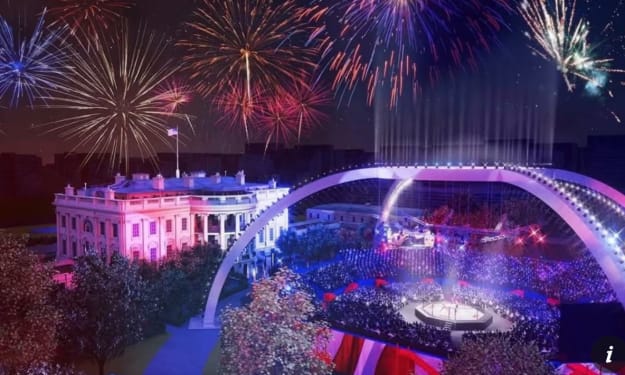
In an unexpected twist that has raised eyebrows across diplomatic circles, France has agreed to step back from its preferred scheduling as the G7 summit was moved to avoid a direct clash with a White House–hosted UFC event. The decision, while seemingly procedural, has sparked wider debate about political priorities, international symbolism, and how global diplomacy increasingly competes with high-profile domestic events for attention. The Group of Seven (G7) — comprising the United States, France, Germany, the United Kingdom, Italy, Canada, and Japan — is traditionally a stage for coordinated responses to the world’s most pressing challenges. From wars and climate change to economic instability and technological regulation, the summit is meant to project unity and seriousness. That is why the rescheduling, reportedly prompted by a clash with a major UFC event linked to the White House calendar, has drawn both criticism and bemusement. How a Scheduling Conflict Became a Diplomatic Issue According to diplomatic sources, France had initially proposed dates for the upcoming G7 meeting that aligned with its broader foreign policy agenda. However, those dates conflicted with a high-profile UFC event scheduled to take place with strong White House backing. Rather than competing for political attention — particularly from U.S. leadership — negotiations led to a decision to move the summit. France, as a key diplomatic player within the G7, ultimately agreed to “tap out,” a phrase borrowed from mixed martial arts that has been widely used by commentators to describe the outcome. While the term adds humor to the situation, the underlying implications are far more serious. At its core, the episode highlights how domestic political events in powerful countries can influence international diplomacy, sometimes in unexpected ways. The White House, Spectacle, and Soft Power The involvement of a UFC event — a sporting spectacle with massive popular appeal — points to a broader trend in modern politics: the blending of entertainment, image-making, and governance. Sporting events have long been used as tools of soft power, from Olympic Games to World Cups. However, the idea that a global diplomatic summit would be rescheduled to avoid clashing with a combat sports event hosted around the White House is a striking illustration of changing priorities. For U.S. officials, the UFC event reportedly carried significant domestic political value, attracting media attention, high-profile guests, and a large public audience. In an era where optics and engagement matter as much as policy substance, the White House appeared unwilling to divide focus. This placed allies like France in a difficult position. Insisting on original dates risked reduced U.S. engagement at the summit — something no G7 country wants, given Washington’s central role in global decision-making. France’s Calculated Compromise France’s decision to accept the rescheduling reflects diplomatic pragmatism rather than weakness. French officials are well aware that the effectiveness of a G7 summit depends heavily on full participation and attention from all members, particularly the United States. By stepping aside on scheduling, France avoided a potential scenario where the summit would be overshadowed, poorly attended, or perceived as secondary. Still, critics argue that the move sets an uncomfortable precedent, suggesting that entertainment-driven political events can take priority over multilateral diplomacy. Supporters of France’s decision counter that diplomacy is about choosing battles wisely. Preserving unity and ensuring productive discussions, they argue, matters more than symbolic rigidity over dates. Reactions From Other G7 Members Other G7 nations have reacted cautiously, with most avoiding public criticism. Privately, however, diplomats have expressed concern that the episode reflects a deeper imbalance in how global governance is conducted. Some European officials worry that repeated concessions could weaken the perceived seriousness of forums like the G7. If summits are seen as flexible around domestic political calendars — particularly those tied to spectacle — their authority may gradually erode. At the same time, countries such as Japan and Canada are said to have supported the compromise, emphasizing the importance of maintaining smooth relations and ensuring the summit remains effective rather than symbolic. What This Says About Global Leadership Today Beyond the immediate scheduling issue, the incident offers insight into the evolving nature of global leadership. Politics today operates in a crowded attention economy, where leaders juggle international crises, domestic pressures, and media-driven events simultaneously. The clash between a G7 summit and a UFC event may seem trivial on the surface, but it reflects how political capital is increasingly tied to visibility and public engagement. Leaders must balance governing with maintaining relevance in a fast-moving media landscape. For traditional diplomatic powers like France, this shift can be frustrating. European diplomacy often emphasizes process, continuity, and institutional strength — values that can clash with more performative political styles. Critics Warn of Slippery Slope Critics argue that accommodating such conflicts risks normalizing the sidelining of diplomacy. Today it may be a UFC event; tomorrow it could be an election rally, a media appearance, or another high-profile spectacle. They warn that global challenges — from ongoing conflicts to climate emergencies — demand sustained, focused leadership. Anything that dilutes the importance of forums designed to address these issues could have long-term consequences. Some commentators have also pointed out the irony of world leaders struggling to align schedules at a time when global cooperation is more urgently needed than ever. Conclusion: Symbolism Matters France’s decision to step back as the G7 summit was moved to avoid clashing with a White House UFC event is more than a quirky headline. It is a reflection of the changing dynamics of power, attention, and symbolism in international politics. While the rescheduling may ensure better participation and smoother logistics, it also raises uncomfortable questions about what global leaders prioritize — and how diplomacy competes with spectacle in the modern age. As the G7 eventually convenes, the real test will not be the date on the calendar, but whether leaders can rise above distractions and deliver meaningful action. Still, the episode will linger as a reminder that in today’s world, even the most serious global gatherings are not immune to the pull of entertainment and domestic politics.
By Muhammad Hassan7 days ago in The Swamp



Comments
There are no comments for this story
Be the first to respond and start the conversation.