
Global Automotive Aftermarket Market Size & Forecast 2025–2033
Rising Vehicle Longevity, Digital Retail, and Customization Trends Drive a US$ 653 Billion Opportunity


Global Automotive Aftermarket Market Overview
The Global Automotive Aftermarket Market is poised for steady and resilient growth over the next decade. According to Renub Research, the market is expected to expand from US$ 458.72 billion in 2024 to US$ 653.47 billion by 2033, registering a CAGR of 4.01% during 2025–2033.
This sustained expansion is fueled by rising global vehicle ownership, increasing average vehicle age, growing demand for customization, and the rapid penetration of digital and e-commerce platforms offering replacement parts and services across both developed and emerging economies.
The automotive aftermarket represents the secondary ecosystem of the automotive industry, encompassing the manufacturing, remanufacturing, distribution, retailing, and installation of vehicle parts, accessories, and services after the original sale of a vehicle. It includes everything from routine replacement components such as tires, batteries, and brake parts to advanced electronic modules, infotainment systems, and performance-enhancing upgrades.
Globally, the aftermarket plays a critical role in keeping vehicles roadworthy, cost-efficient, safe, and compliant with evolving emission and safety regulations. As consumers increasingly hold onto vehicles for longer periods, the aftermarket has become an indispensable pillar of the broader automotive value chain.
Key Growth Drivers Shaping the Automotive Aftermarket
Aging Global Vehicle Fleet
One of the most influential growth drivers is the rising average age of vehicles worldwide. In mature automotive markets such as North America and Europe, vehicles often remain in operation for over a decade, significantly increasing demand for replacement parts, maintenance services, and repair solutions.
Older vehicles require more frequent servicing, directly supporting demand across both professional repair networks and the DIY segment. In the European Union alone, passenger cars now average over 12 years of age, reinforcing consistent aftermarket consumption.
Expansion of E-Commerce and Digital Platforms
Digitalization is transforming how consumers and workshops source automotive components. Online platforms provide price transparency, broader product selection, and faster availability, making them increasingly attractive to individual vehicle owners and independent garages alike.
The rise of B2B e-commerce platforms for distributors and repair shops is further accelerating aftermarket efficiency, reshaping traditional wholesale and retail distribution models globally.
Technological Advancements in Modern Vehicles
The integration of advanced electronics, sensors, ADAS systems, and software-driven components has increased the complexity of vehicles, creating demand for specialized aftermarket diagnostics, electronic parts, and high-value components.
Innovations such as sustainable tires, smart sensors, and connected diagnostics are expanding premium aftermarket segments while also pushing workshops to upgrade skills and equipment.
Challenges in the Global Automotive Aftermarket
Rising Vehicle Complexity
While technological advancements create opportunity, they also pose challenges. Modern vehicles require specialized tools, trained technicians, and software access, raising operational costs for independent repair shops. This limits growth in regions with skill shortages and constrains DIY repair activities.
Counterfeit Parts and Quality Risks
The proliferation of counterfeit and substandard automotive parts remains a major concern, particularly in emerging markets. These products compromise vehicle safety, damage brand reputation, and undermine consumer trust. Strengthening regulations, traceability systems, and consumer awareness is critical for long-term market integrity.
Key Automotive Aftermarket Segments
Global Automotive Tire Aftermarket
Tires remain one of the most frequently replaced automotive components, driven by road wear, climate conditions, and increased vehicle usage. Demand for high-performance, seasonal, and fuel-efficient tires continues to rise, especially in urbanizing regions.
Automotive Exhaust Components Aftermarket
Stricter emission regulations worldwide are fueling demand for aftermarket exhaust systems, including catalytic converters and mufflers. Aging vehicles and periodic inspection requirements support consistent replacement cycles across Europe, North America, and Asia-Pacific.
Automotive Body Parts Aftermarket
Body parts such as bumpers, mirrors, fenders, and hoods are commonly replaced following collisions or wear. Insurance-backed repairs and consumer focus on vehicle aesthetics drive growth, with paint-ready and direct-fit components dominating demand.
Automotive Aftermarket Retail
Brick-and-mortar retailers remain vital for immediate availability, expert guidance, and returns, particularly in North America and Europe. These outlets coexist with online platforms, creating a hybrid omnichannel aftermarket ecosystem.
Do-It-Yourself (DIY) Aftermarket
DIY repairs remain popular among cost-conscious consumers and car enthusiasts, especially in the U.S. and Europe. Easy access to online tutorials and affordable tools supports steady demand for filters, lubricants, and basic replacement components.
Genuine (OEM) Parts Aftermarket
OEM and genuine parts are favored for quality assurance, warranty compliance, and precise fitment. Although more expensive, demand remains strong, prompting OEMs to expand direct-to-consumer and authorized aftermarket networks.
Regional Market Insights
United States Automotive Aftermarket
The United States leads the global aftermarket due to its large vehicle parc, strong DIY culture, and advanced digital infrastructure. Growth in EV-related aftermarket services and diagnostics is shaping future demand. Workforce development initiatives are also gaining traction to address technician shortages.
Germany Automotive Aftermarket
Germany’s market benefits from a strong automotive manufacturing base and strict inspection standards. Consumers prioritize premium and OEM-quality components, while digital diagnostics and connected repair services are gaining importance alongside the shift toward e-mobility.
India Automotive Aftermarket
India is one of the fastest-growing aftermarket markets, supported by rising vehicle ownership, expanding road infrastructure, and increasing awareness of maintenance. While the unorganized sector remains dominant, organized players are rapidly gaining share through digital platforms and franchised service networks.
Brazil Automotive Aftermarket
Brazil’s aftermarket is rebounding with economic recovery and increased used vehicle sales. Demand for suspension, braking, and lighting components is rising, creating opportunities for global suppliers despite logistics and supply chain challenges.
Saudi Arabia Automotive Aftermarket
Harsh driving conditions, high vehicle density, and long travel distances drive frequent part replacement in Saudi Arabia. Tires, batteries, and filters dominate sales, while localization strategies and EV adoption are shaping future market dynamics.
Market Segmentation Snapshot
By Type
Tire
Battery
Brake Parts
Filters
Body Parts
Lighting & Electronic Components
Wheels
Exhaust Components
Turbochargers
Others
By Distribution Channel
Retail
Wholesale & Distribution (W&D)
Service Channel
DIY
DIFM
Original Equipment (OE)
By Certification
Genuine
Certified Parts
Uncertified Parts
By Geography
North America: United States, Canada
Europe: Germany, France, UK, Italy, Spain, Belgium, Netherlands, Turkey
Asia-Pacific: China, Japan, India, South Korea, ASEAN, Australia & New Zealand
Latin America: Brazil, Mexico, Argentina
Middle East & Africa: Saudi Arabia, UAE, South Africa
Key Players in the Global Automotive Aftermarket
The competitive landscape is shaped by global OEMs, diversified component suppliers, and aftermarket specialists. Major players profiled by Renub Research include:
3M Company
Continental AG
Cooper Tire & Rubber Company
Delphi Automotive PLC
Denso Corporation
Federal-Mogul Corporation
HELLA KGaA Hueck & Co.
Robert Bosch GmbH
Valeo Group
ZF Friedrichshafen AG
Each company is analyzed across five viewpoints: overview, key personnel, recent developments, SWOT analysis, and revenue performance.
Final Thoughts
The Global Automotive Aftermarket Market stands as one of the most resilient segments of the automotive industry. While new vehicle sales fluctuate with economic cycles, the aftermarket thrives on vehicle longevity, maintenance necessity, and evolving consumer preferences.
Between 2025 and 2033, opportunities will increasingly emerge from digital commerce, EV-related services, sustainable components, and emerging markets such as India, Brazil, and the Middle East. Companies that invest in technology, authenticity assurance, skilled workforce development, and omnichannel strategies will be best positioned to capture value in this US$ 653 billion global opportunity.
As vehicles become smarter, cleaner, and more connected, the automotive aftermarket will continue to evolve—remaining an essential engine of growth within the global mobility ecosystem.
About the Creator
Renub Research
Renub Research is a Market Research and Consulting Company. We have more than 15 years of experience especially in international Business-to-Business Researches, Surveys and Consulting. Call Us : +1-478-202-3244
Keep reading
More stories from Renub Research and writers in The Swamp and other communities.
United States Kitchen Appliance Market Size and Forecast 2025–2033
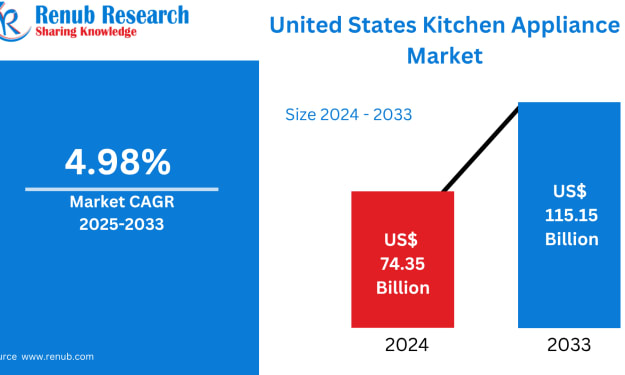
United States Kitchen Appliance Market Overview The United States Kitchen Appliance Market is experiencing steady and resilient growth, reflecting how deeply modern appliances are embedded in everyday American life. According to Renub Research, the market is projected to grow from US$ 74.35 billion in 2024 to US$ 115.15 billion by 2033, expanding at a CAGR of 4.98% during 2025–2033.
By Renub Research18 days ago in The Swamp
The War for Minerals, Oil, and AI
In the modern world, wars are no longer fought solely over land or ideology. Increasingly, global competition revolves around minerals, oil, and artificial intelligence—three pillars that now define economic strength, military power, and technological dominance. Together, they form the backbone of a new kind of conflict: quieter than traditional wars, but no less consequential. From lithium-rich deserts to oil-rich seas and data-driven battlefields, nations are racing to secure the resources that will determine who leads—and who follows—in the decades ahead. Why Minerals Have Become Strategic Weapons Critical minerals such as lithium, cobalt, nickel, and rare earth elements are essential for modern life. They power electric vehicles, smartphones, renewable energy systems, and advanced weapons. Without them, the global transition to clean energy and digital technology simply cannot happen. This has turned mineral-rich regions into geopolitical hotspots. Countries with large reserves suddenly hold enormous leverage, while industrial powers scramble to secure supply chains. China currently dominates the processing of many rare earth minerals, giving it significant strategic influence. Western nations, alarmed by this dependence, are now rushing to diversify sources through Africa, Latin America, and Central Asia. The competition is not just about extraction but control—who mines, who refines, and who sets the rules. Oil Still Fuels Power and Conflict Despite the push toward renewable energy, oil remains a cornerstone of global power. It fuels armies, economies, and transportation networks. Control over oil supplies has shaped international relations for over a century, and that reality has not changed. From the Middle East to the Arctic, oil-rich regions remain flashpoints of tension. Conflicts, sanctions, and diplomatic standoffs often trace back to energy interests. Even as governments pledge to reduce fossil fuel use, oil continues to influence foreign policy decisions and military strategy. Energy independence has become a national security priority, pushing countries to protect supply routes, invest in domestic production, or exert influence over resource-rich states. Artificial Intelligence: The New Battlefield If minerals and oil are the fuel of the modern world, artificial intelligence is the brain. AI is rapidly transforming warfare, surveillance, economics, and governance. Nations that dominate AI research and deployment gain a decisive edge—not just militarily, but economically and politically. AI-driven systems now analyze intelligence data, control drones, predict cyber threats, and optimize supply chains. This has triggered an arms race not unlike the nuclear competition of the Cold War, but faster and far more opaque. The race for AI dominance is inseparable from the race for minerals and energy. Advanced AI systems require massive data centers, powerful chips, and rare materials—all tied back to physical resources. How These Three Forces Intersect The war for minerals, oil, and AI is not three separate struggles—it is one interconnected conflict. Minerals are needed to build chips, batteries, and weapons Oil and energy power data centers, militaries, and global logistics AI optimizes extraction, warfare, surveillance, and economic control Together, they create a feedback loop where control over one strengthens dominance over the others. This is why modern conflicts increasingly involve cyberattacks, sanctions, trade restrictions, and proxy wars instead of direct military confrontation. Developing Nations Caught in the Middle Many of the world’s most valuable mineral reserves are located in developing countries. While this presents economic opportunities, it also brings exploitation, environmental damage, and political instability. Powerful nations and multinational corporations often compete for access, sometimes backing rival factions or influencing local politics. In some cases, resource wealth has fueled corruption and conflict rather than development—a phenomenon often referred to as the “resource curse.” As AI and green technologies expand, pressure on these regions is likely to intensify. Climate Change and Ethical Dilemmas Ironically, the push to fight climate change has increased demand for critical minerals, raising serious ethical questions. Mining operations can devastate ecosystems and displace communities, while oil extraction continues to accelerate environmental damage. Meanwhile, AI introduces concerns about surveillance, job displacement, and autonomous weapons. The technologies meant to secure the future also carry the risk of deepening inequality and instability if left unchecked. The challenge for global leaders is not just winning this resource war—but managing it responsibly. A New Kind of Global Conflict Unlike traditional wars, this struggle rarely involves tanks crossing borders. Instead, it unfolds through trade wars, export bans, investment restrictions, cyber espionage, and technological sabotage. Control over supply chains has become as powerful as military strength. Sanctions on energy exports, restrictions on chip manufacturing, and limits on AI collaboration are now common tools of statecraft. This shift signals a future where power is measured less by territory and more by technological and resource dominance. Conclusion The war for minerals, oil, and AI is shaping the global order in profound ways. It is redefining alliances, fueling new rivalries, and determining which nations will lead the next era of human development. As competition intensifies, the choices made today—about cooperation, sustainability, and ethics—will decide whether this struggle leads to shared progress or deeper division. One thing is clear: the future of global power will be built not only on weapons, but on resources, energy, and intelligence—both human and artificial.
By Muhammad Hassan5 days ago in The Swamp


Comments
There are no comments for this story
Be the first to respond and start the conversation.