
United States Kitchen Appliance Market Size and Forecast 2025–2033
Smart Kitchens, Sustainable Living, and the Future of American Homes


United States Kitchen Appliance Market Overview
The United States Kitchen Appliance Market is experiencing steady and resilient growth, reflecting how deeply modern appliances are embedded in everyday American life. According to Renub Research, the market is projected to grow from US$ 74.35 billion in 2024 to US$ 115.15 billion by 2033, expanding at a CAGR of 4.98% during 2025–2033.
A kitchen appliance refers to any electrical or mechanical device designed to support cooking, food preparation, cleaning, and storage within residential and commercial kitchens. This includes large appliances such as refrigerators, freezers, ovens, dishwashers, and microwaves, as well as small appliances like air fryers, blenders, mixers, coffee machines, and food processors.
In the United States, kitchens have evolved into multifunctional lifestyle spaces. They are no longer just for cooking but for family interaction, entertaining, wellness-focused meal prep, and smart living. Busy lifestyles, growing health awareness, and the rise of smart homes have made kitchen appliances indispensable. Wi-Fi connectivity, voice control, energy efficiency, and sleek designs are redefining consumer expectations, positioning the U.S. kitchen appliance market as one of the most innovative segments within consumer electronics and home furnishings.
United States Kitchen Appliance Market Size and Forecast (2025–2033)
Renub Research highlights that long-term market expansion is being fueled by several structural trends:
Growing penetration of smart and connected appliances
Rising home renovation and remodeling activity
Increased focus on energy efficiency and sustainability
Strong replacement demand in mature households
Expanding urban population and dual-income families
The replacement-driven nature of the U.S. market ensures stability, while innovation-driven upgrades provide sustained growth momentum.
Key Growth Drivers Shaping the Market
Growing Demand for Smart and Energy-Efficient Appliances
U.S. consumers are increasingly drawn toward smart kitchen appliances offering Wi-Fi connectivity, mobile app control, voice assistants, and real-time performance monitoring. Smart refrigerators, ovens, and dishwashers align seamlessly with broader smart home ecosystems.
Government-backed programs such as ENERGY STAR play a major role in accelerating adoption. Consumers now prioritize appliances that reduce electricity and water consumption while maintaining superior performance. Sustainability, long-term cost savings, and environmental responsibility have become decisive purchase factors.
In January 2024, Drew Barrymore’s Beautiful home essentials line launched affordable yet stylish appliances, including air fryers, blenders, coffee makers, kettles, and stand mixers—highlighting how design-forward and energy-conscious products are becoming mainstream.
Expansion of Home Remodeling and Kitchen Renovations
Kitchen remodeling remains one of the strongest catalysts for appliance sales in the U.S. Post-pandemic lifestyle changes encouraged homeowners to invest in upgraded kitchens that combine aesthetics, efficiency, and technology.
Millennials—now one of the largest homeowner demographics—favor smart, integrated, and premium appliances that enhance convenience and visual appeal. Rising disposable income, home equity growth, and real estate activity continue to support this trend. As kitchens increasingly serve as social and entertainment spaces, appliance upgrades are viewed as long-term lifestyle investments rather than discretionary spending.
Urbanization and Changing Consumer Lifestyles
Urban living and smaller housing units have driven demand for compact, space-saving, and multi-functional appliances. Countertop ovens, air fryers, combination microwaves, and modular kitchen solutions are gaining popularity in apartments and condominiums.
At the same time, social media food culture and rising health consciousness are driving sales of blenders, food processors, and specialty cooking appliances. Consumers seek appliances that support healthy eating while reducing preparation time—reshaping buying behavior across all income segments.
In February 2025, Midea unveiled the Flexify Pro Air Fryer Oven at KBIS 2025, underscoring how innovation and versatility are becoming competitive differentiators.
Challenges Facing the U.S. Kitchen Appliance Market
High Product Costs and Inflationary Pressure
Rising raw material prices, labor costs, and transportation expenses have increased appliance prices. Premium and smart appliances, in particular, carry higher price tags that can discourage budget-conscious consumers.
Inflationary pressure forces buyers to delay purchases or opt for entry-level models, impacting revenue growth. Manufacturers must carefully balance innovation with affordability to remain competitive in a price-sensitive environment.
Supply Chain Disruptions and Component Shortages
Ongoing global supply chain disruptions and shortages of electronic components—especially semiconductors—continue to affect production timelines and inventory availability. As appliances become more technologically advanced, dependence on electronic components increases.
Logistics challenges, longer lead times, and fluctuating shipping costs place pressure on manufacturers and retailers, affecting customer satisfaction and delivery efficiency.
Key Market Segments Analysis
United States Dishwashers Market
Dishwashers represent a significant and growing segment within the U.S. kitchen appliance market. Increasing awareness of hygiene, water conservation, and time efficiency has driven adoption. Modern dishwashers feature smart sensors, quiet operation, fast wash cycles, and eco-friendly modes.
Once considered a luxury, dishwashers are now a standard household necessity, particularly among urban and suburban families with busy schedules.
United States Food Processors Market
The food processor segment continues to expand as consumers prioritize home cooking, healthy diets, and convenience. These appliances simplify chopping, grinding, kneading, and blending, making them essential for modern kitchens.
Demand is particularly strong among small households and apartment dwellers who prefer compact yet powerful models. DIY food trends, plant-based diets, and meal-prep culture further support market growth.
United States Residential Kitchen Appliance Market
The residential segment dominates the overall market, supported by steady homeownership and replacement demand. Refrigerators, microwaves, stoves, and coffee machines are ubiquitous across U.S. households.
Post-pandemic cooking habits have increased appliance usage, accelerating replacement cycles. Consumers increasingly favor built-in, integrated, and design-led appliances that complement modern interiors.
United States Kitchen Appliance Specialty Stores Market
Specialty appliance stores remain relevant despite e-commerce growth. These stores provide premium product assortments, expert consultations, live demonstrations, and installation services.
Luxury brands such as Sub-Zero, Viking, and Thermador rely heavily on specialty stores to engage affluent consumers planning high-end kitchen renovations. Personalized service and product education continue to drive foot traffic.
United States Online Kitchen Appliance Market
Online retail is one of the fastest-growing distribution channels. Platforms like Amazon, Best Buy, and Home Depot offer extensive selections, customer reviews, virtual assistance, and competitive pricing.
The rise of mobile commerce, digital payments, seasonal promotions, and easy return policies has strengthened consumer trust in online appliance purchases.
Regional Insights
California Kitchen Appliance Market
California leads the market due to its large population, high incomes, and strong sustainability focus. Demand for ENERGY STAR-rated and smart appliances is especially strong in cities like Los Angeles, San Francisco, and San Diego. Strict environmental regulations further accelerate adoption of eco-friendly appliances.
Texas Kitchen Appliance Market
Texas is a high-growth market driven by residential construction, urban expansion, and a growing middle class. Cities such as Houston, Dallas, and Austin are hubs for new housing and remodeling activity. Consumers prioritize durability, energy efficiency, and value-for-money appliances.
New York Kitchen Appliance Market
New York’s dense urban environment drives demand for compact, space-efficient, and premium appliances. Luxury apartments and condominiums fuel sales of built-in microwaves, combination ovens, and smart appliances that blend style with functionality.
Market Segmentation
By Product Type
Refrigerators & Freezers
Dishwashers
Food Processors
Mixers & Grinders
Microwave Ovens
Water Purifiers
Others
By Application
Residential
Commercial
Others
By Distribution Channel
Supermarkets & Hypermarkets
Specialty Stores
Online Stores
Departmental Stores
Others
Top 10 States Covered
California, Texas, New York, Florida, Illinois, Pennsylvania, Ohio, Georgia, Washington, New Jersey, and Rest of the United States.
Competitive Landscape
The U.S. kitchen appliance market is highly competitive, characterized by innovation, branding, and global manufacturing strength. Key players profiled with five viewpoints (overview, key person, recent developments, SWOT, revenue analysis) include:
Electrolux AB
Groupe SEB
Haier Group Corporation
LG Electronics
Philips Electronics
Whirlpool Corporation
Midea Group
Panasonic Corporation
These companies compete on innovation, energy efficiency, pricing, design, and smart technology integration.
Final Thoughts
The United States Kitchen Appliance Market is entering a transformative phase marked by smart innovation, sustainability, and lifestyle-driven demand. With Renub Research forecasting growth to US$ 115.15 billion by 2033, the market presents strong opportunities for manufacturers, retailers, and investors.
As kitchens become smarter and more connected, appliances will continue evolving beyond utility into lifestyle-enhancing solutions. Companies that balance affordability with advanced features, sustainability with performance, and digital convenience with consumer trust will shape the future of American kitchens.
About the Creator
Renub Research
Renub Research is a Market Research and Consulting Company. We have more than 15 years of experience especially in international Business-to-Business Researches, Surveys and Consulting. Call Us : +1-478-202-3244
Keep reading
More stories from Renub Research and writers in The Swamp and other communities.
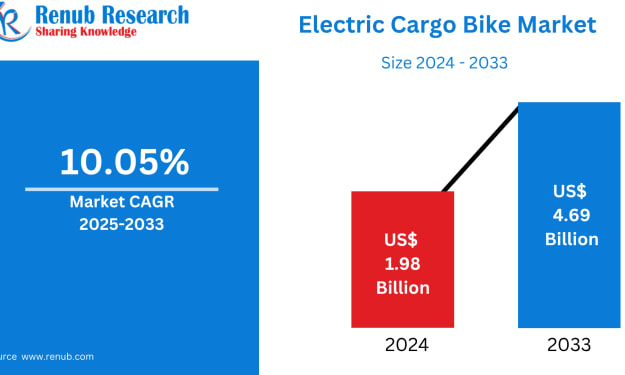
Global Electric Cargo Bike Market Size & Forecast 2025–2033
Global Electric Cargo Bike Market Overview The Global Electric Cargo Bike Market was valued at USD 1.98 billion in 2024 and is projected to reach USD 4.69 billion by 2033, expanding at a CAGR of 10.05% during the forecast period. This growth trajectory reflects a structural shift in how cities, businesses, and households approach transportation—particularly for last-mile delivery and short-distance urban travel.
By Renub Research19 days ago in The Swamp
Pa O’Dwyer
In the world of strength sports, names are often remembered for records lifted or titles won. Yet sometimes, an athlete’s legacy is defined just as much by character, humility, and the inspiration they leave behind. Pa O’Dwyer was one such figure. Known within strength circles as a dedicated competitor and a passionate supporter of the strongman community, Pa O’Dwyer’s life and untimely passing sparked reflection across the sport and beyond. This article looks at who Pa O’Dwyer was, his place in the strongman world, and what is publicly understood about the circumstances surrounding his death—while maintaining the respect such a subject deserves. A Presence in the Strongman Community Pa O’Dwyer, sometimes written as Pa O’Dwyer or Pa Odwyer, was recognized as a strongman athlete whose commitment to training and competition embodied the spirit of the sport. Strongman events demand not only raw power but resilience, discipline, and mental toughness. Those who followed Pa O’Dwyer’s journey often described him as someone who embraced these values fully. Although he may not have been a household name on the level of global icons like Eddie Hall, Pa O’Dwyer represented the backbone of strength sports—the athletes who train relentlessly, compete with pride, and help grow the community at local and national levels. In that sense, his contribution was meaningful, even if quieter than that of world champions. The Human Side of Strength What set Pa O’Dwyer apart was not only physical strength, but his attitude toward others. In strongman culture, camaraderie plays a major role. Athletes often support one another through grueling training cycles, injuries, and the mental strain of competition. Pa O’Dwyer was remembered by peers as someone who showed encouragement and respect, qualities that matter deeply in a demanding sport. For many fans, learning about Pa O’Dwyer was a reminder that strength sports are built on community. Every competitor—whether lifting on the world stage or at a regional contest—helps shape the environment that newcomers enter. Pa O’Dwyer’s Age and Career Stage Questions such as Pa O’Dwyer age or where he stood in his athletic journey have circulated since news of his passing. Publicly available details about his exact age and full competitive record remain limited. What is clear, however, is that he was still actively connected to the strongman world, either through training, competing, or supporting others. In strength sports, athletes often peak later than in many other disciplines, which makes any loss feel especially heavy. The sense that more could have been achieved—more lifts, more competitions, more mentoring—adds to the sadness felt by those who followed his path. What Happened to Pa O’Dwyer? Following reports of his passing, many people began asking difficult questions: What happened to Pa O’Dwyer? How did Pa O’Dwyer die? Such questions are natural when a respected athlete is lost. However, it is important to approach these topics with care. As of public knowledge, specific medical details regarding Pa O’Dwyer’s cause of death have not been widely or officially disclosed. References to “Pa O’Dwyer death” or “Pa O’Dwyer passed away” reflect the confirmed reality of his loss, but not a full public explanation of the circumstances. In cases like this, speculation can be harmful and unfair to loved ones. Strongman as a sport places extreme demands on the body, which sometimes leads to broader conversations about athlete health and longevity. Still, without verified information, it would be irresponsible to draw conclusions or link his passing to any single factor. Addressing the Topic of Strongman Deaths The phrase strongman death has appeared in discussions following Pa O’Dwyer’s passing, often as part of a larger conversation about the physical toll of elite strength sports. While it is true that the sport involves intense strain, it is also evolving, with increasing attention on health monitoring, recovery, and longevity. Pa O’Dwyer’s death has encouraged renewed dialogue about balancing ambition with well-being. Many athletes, inspired by such losses, advocate for smarter training, regular medical checkups, and open discussions about physical and mental health. Community Reaction and Legacy When news spread that Pa O’Dwyer had died, tributes followed. Messages emphasized not just sadness, but gratitude—for his presence, his effort, and his example. In a sport often associated with extremes, these moments remind everyone that athletes are people first. Pa O’Dwyer’s legacy lives on through the lives he touched. Fellow competitors remember shared training sessions, fans recall his determination, and the broader community reflects on the importance of supporting one another beyond the competition floor. Remembering Pa O’Dwyer with Respect It is understandable that searches for terms like Pa O’Dwyer dead or Pa O’Dwyer cause of death continue. Curiosity often follows loss. Yet the most meaningful way to remember Pa O’Dwyer is not through unanswered questions, but through acknowledgment of who he was. He was a strongman who trained hard, competed with heart, and represented the values that make strength sports more than just a test of muscle. His passing is a reminder of life’s fragility, even among those who appear physically unbreakable. Final Thoughts Pa O’Dwyer’s story is not defined solely by how he died, but by how he lived. In remembering him, the strongman community honors dedication, resilience, and mutual respect—qualities that outlast any single competition. As fans and athletes continue to ask what happened to Pa O’Dwyer, it is worth holding space for empathy and restraint. His life mattered, his efforts mattered, and his memory continues to inspire those who believe that true strength goes beyond the weight of the bar.
By Saboor Brohi 7 days ago in The Swamp


Comments
There are no comments for this story
Be the first to respond and start the conversation.