
Global Allies in a US (Trump) Vs Iran Crisis Who Stands With Whom?”
Who Supports America? Who May Support Iran?


As tensions between the United States and Iran escalate in early 2026, global leaders and analysts are weighing the potential fallout of an outright war. Around January 23, 2026, Iran’s clerics publicly warned that any U.S. military action would prompt retaliation targeting U.S. investments across the region. At the same time, the United States deployed a naval “armada” — including an aircraft carrier strike group — toward Iranian waters while publicly hoping to avoid direct conflict.
Although neither side has formally declared war, the current situation is a tinderbox: Iranian leaders have warned that attacking top figures like the Supreme Leader would be considered an act of war, and U.S. threats of action over Iran’s human rights suppression and nuclear program have intensified the risk.
So who might take sides if a U.S.–Iran war actually erupts?
Allies Likely to Back the United States
1. Israel — Strong Military and Strategic Ally
Israel is the United States’ closest partner in the Middle East, coordinating defense and intelligence for decades. The two countries often align on security issues, particularly against Iran’s nuclear ambitions and regional proxy influence. The “Arab–Israeli alliance,” supported by U.S. diplomacy, strengthens this bloc with additional Arab states focused on limiting Iran’s reach.
2. Gulf Arab States — Cautious But Supportive
Countries like Saudi Arabia, the United Arab Emirates, and Bahrain — members of the Gulf Cooperation Council — have moved closer to the U.S. and Israel in recent years, mainly to counter Iran’s regional power. They are unlikely to send ground troops but would support U.S. logistics, intelligence, and bases in the region.
3. NATO Partners — Political Support, Some Military Aid
European NATO members (like the UK, France, and Germany) historically support U.S. security objectives. They might offer logistical or intelligence assistance, economic sanctions enforcement, or naval cooperation, even if they are reluctant to commit combat forces. Their participation would likely be conditional and debated within their governments.
4. Other Western Democracies — Strategic Alignment
Countries like Japan, South Korea, and Australia often align with U.S. foreign policy in major conflicts, providing political support and possibly noncombatant military aid (surveillance, cyber coordination, transport). Their involvement would depend on how the conflict affects global trade and security interests.
Countries or Forces That May Back Iran
1. Russia — Likely Political Backing and Possibly Cyber Support
Many analysts predict Russia would support Iran politically and potentially with military assistance in a limited way. Experts have said Russia could increase military aid to Iran and also launch cyberattacks against the U.S. if the conflict widens.
2. China — Economic and Diplomatic Support
China’s relationship with Iran includes oil, infrastructure investment, and strategic partnership forged over the past decade. While experts suggest China is less likely than Russia to enter militarily, it could offer humanitarian assistance and diplomatic backing, and oppose harsh sanctions.
3. Iran’s Regional Allies — Proxy and Militant Groups
Iran maintains influence with non-state actors and militias in Iraq, Syria, Lebanon (e.g., Hezbollah), and Yemen (Houthi forces). If the conflict expands, these groups could conduct operations that align with Iran’s objectives. Their involvement would make the war more complex and unpredictable.
4. Non-Aligned or Neutral Countries
Some countries (like Turkey, Pakistan, or India) may try to remain neutral, focusing on safeguarding economic ties with both East and West. Their response would be shaped by internal politics, regional stability concerns, and foreign policy priorities.
What This Could Mean Globally
A full-scale war between Iran and the United States wouldn’t just affect the Middle East. Economies and energy markets worldwide could feel shockwaves due to Iran’s role in regional oil exports and global trade routes. Experts also warn that any intensification of conflict raises the risk of nuclear proliferation issues, especially if instability in Tehran makes nuclear material harder to secure.
This conflict is far from certain, and many world leaders still pursue diplomatic and economic pressures instead of open war. But if tensions continue to rise without a negotiated solution, the likely allies on each side reflect decades of military cooperation, regional politics, and global strategic balance.
About the Creator
USA daily update
News, Politics, Technology Updates
Keep reading
More stories from USA daily update and writers in The Swamp and other communities.
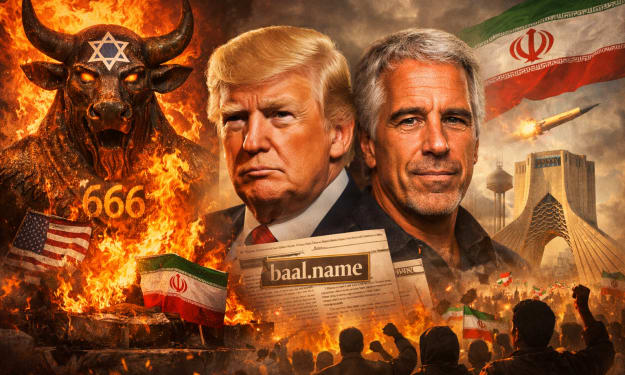
Baal on Fire, Iran’s Fiery Message to the West
1. A Revolutionary Anniversary with a Twist On February 11, 2026, tens of thousands of Iranians took part in state-organised rallies marking the 47th anniversary of Iran’s 1979 Islamic Revolution. These rallies — held nationwide in cities from Tehran to Isfahan — blended political chanting, patriotic slogans and symbolic acts meant to underline Iran’s resistance to perceived foreign enemies.
By USA daily update about a month ago in The Swamp
The Forsyth House Fire
Since 1851, Forsyth House has stood on the corner of Union Street and Gordon Street in the heart of Glasgow. Its iconic, or was... because on Sunday 8th of March, 2026, a fire broke out in a small, seemingly un-named shop in the building and tore all that history down. As I write, the rubble is still unsettled and the street is still blocked off. Central Station is quiet on the upper level, and around 30 small businesses have quite literally gone up in smoke.
By S. A. Crawford3 days ago in The Swamp


Comments
There are no comments for this story
Be the first to respond and start the conversation.