
From Iran to China to Venezuela – How the Seized Tanker Hid Its True Location
A covert maritime trail spanning Iran, China, and Venezuela reveals how the seized tanker masked its identity to evade U.S. sanctions.
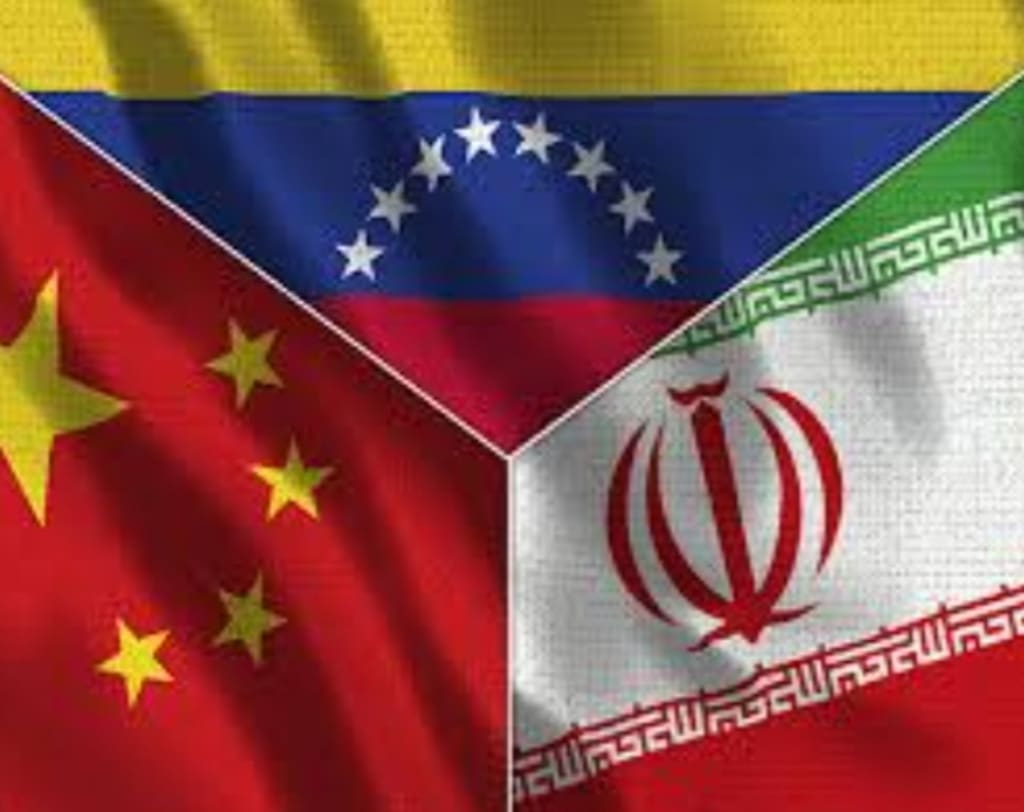
The tanker at the center of the U.S. seizure reportedly followed a covert maritime path that stretched from Iran to China and eventually to Venezuela—an evasive route designed to mask its true origin and activity. According to maritime analysts, the vessel relied on a series of sophisticated tactics increasingly used by ships attempting to circumvent international sanctions. These maneuvers have become common across networks linking Tehran, Beijing, and Caracas, all of which face varying degrees of U.S. economic pressure.
One of the primary methods used involves the deliberate disabling of Automatic Identification System (AIS) transponders, a mandatory tracking tool for international maritime traffic. By intermittently switching off AIS signals, the tanker created long periods of “dark activity,” making it far more difficult for observers to track its movements in real time. Experts say that ships engaged in sanctioned oil trading often pair this blackout method with remote route changes or sudden course shifts to conceal their true destination.
Another tactic frequently linked to Iranian and Venezuelan oil shipments is ship-to-ship (STS) transfers, usually conducted at night or in lightly monitored waters. These transfers allow vessels to exchange cargo without appearing to load oil directly from a sanctioned port. In this case, maritime data suggests the tanker may have participated in one or more such transfers after leaving waters near Iran before heading toward East Asia. By the time the vessel approached China, its cargo identity and point of origin had already been obscured through a network of relay operations.
China’s involvement in the tanker’s route does not necessarily indicate direct participation in sanctions evasion, but analysts note that Chinese ports have long been a hub for blending, storing, or re-routing crude from restricted sources. The tanker’s brief presence near Chinese waters may have been a deliberate maneuver to further complicate tracking efforts—making it appear as though the oil had originated in Asia rather than the Middle East.
From there, the tanker reportedly traveled across the Indian Ocean, through the Cape of Good Hope, and toward the Atlantic, where its course shifted once again as it moved closer to Venezuelan waters. Venezuela, under its own heavy sanctions, has increasingly relied on maritime partners accustomed to operating along “shadow trade routes.” This convergence of interests has created a transnational network of tankers capable of obscuring their footprints from global monitoring systems.
By the time the U.S. intercepted the tanker off Venezuela’s coast, its months-long voyage had become a patchwork of hidden coordinates, AIS gaps, masked cargo transfers, and altered documentation. Washington claims that these methods prove deliberate sanctions evasion. Caracas, however, argues that such tactics are the direct result of sanctions themselves, forcing oil-dependent nations to resort to opaque trade methods simply to survive.
What the tanker reveals is not merely an isolated incident, but an emerging shadow economy of maritime logistics spanning three continents. Iran supplies fuel and crude; China offers logistical and commercial cover; Venezuela receives and redistributes shipments to sustain its internal economy. The U.S. seizure abruptly interrupted this delicate chain, but it also highlighted how globalized and adaptive these networks have become.
As major geopolitical players continue to clash over sanctions, sovereignty, and energy markets, tankers like this one will remain at the heart of a quiet but consequential battle—one fought not in open waters, but in the hidden routes, darkened transponders, and shifting identities of the ships that navigate the world’s most contested maritime corridors.
About the Creator
Keep reading
More stories from Aadil shanawar and writers in The Swamp and other communities.
US Seizes Oil Tanker off Venezuela as Caracas Denounces ‘Act of Piracy’
US Seizes Oil Tanker off Venezuela as Caracas Condemns ‘Act of Piracy’ In a dramatic escalation of tensions between Washington and Caracas, United States authorities have seized an oil tanker operating off the coast of Venezuela, prompting fierce condemnation from the Venezuelan government. Describing the action as an “unacceptable act of piracy,” Caracas has accused the U.S. of violating international law and undermining regional stability. The incident has rapidly grown into a diplomatic flashpoint, highlighting the deep geopolitical rifts that continue to shape the Western Hemisphere.
By Aadil shanawarabout a month ago in The Swamp
As Divisions Over Greenland Grow, Europe Examines Its Options
Europe is facing a growing diplomatic and strategic challenge as tensions over Greenland continue to escalate. The Arctic island, a semi-autonomous territory of Denmark, has long held strategic significance due to its location, natural resources, and role in regional security. Now, with renewed interest and pressure from the United States, European leaders are being forced to weigh their options carefully — balancing sovereignty, alliance cohesion, and global influence.
By Aarif Lashariabout 4 hours ago in The Swamp


Comments
There are no comments for this story
Be the first to respond and start the conversation.