
From Finland to Greenland: How Cracks Are Appearing in the Future of Arctic Ice‑Breaking
“As the Arctic warms and ice patterns shift, nations face new challenges in navigating, defending, and exploring icy waters from the Baltic to Greenland.”

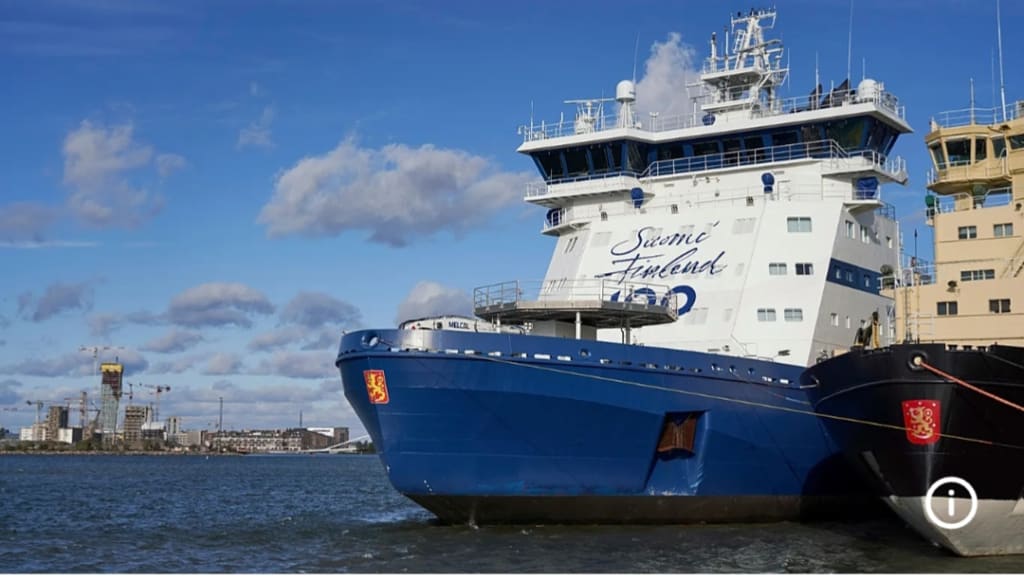
As the Arctic undergoes rapid transformation, the future of ice‑breaking — a critical technology and strategic capability — faces surprising new challenges. From Finland’s seasoned fleet in the Baltic to the expanding ice fields near Greenland, warming seas and shifting geopolitical demands are reshaping how nations navigate, defend, and even imagine the Arctic’s icy waters.
---
The Changing Face of Arctic Ice — Not What Many Expected
It might seem paradoxical: global warming implies less ice, yet the need for ice‑breaking ships is not diminishing — it’s evolving. While the overall Arctic ice cover has declined due to rising temperatures, local ice dynamics are becoming more unpredictable. Winds and currents now drive ice into shallow waters and coastlines, accumulating thicker ridges and compacted patches that pose serious hazards to shipping — even as the total ice area shrinks.
In Finland, which operates one of the world’s most advanced icebreaker fleets for Baltic trade, these changes are already evident. Mild winters delay the start of the ice‑breaking season and shorten its duration, but harsh, variable conditions can still produce unusually thick ice — sometimes up to 10 meters in spots — that demands powerful and reliable icebreakers.
---
Finland: Ice‑Breaking Expertise Under Strain
Finland’s role in Arctic ice‑breaking has long been central to both domestic logistics and international cooperation. Finnish icebreakers ensure year‑round access to ports in the Gulf of Bothnia and the Baltic Sea, enabling vital trade routes during freezing conditions. Operators say that even with milder average ice seasons, extreme events — like stormier winters — are increasing the workload.
As climate patterns shift, Finnish maritime authorities stress the continued importance of maintaining a robust fleet. Despite fewer days of ice cover, when conditions do turn severe, there is no global “backup” capacity available — ports and shipping lanes become impassable without specialized vessels.
Adding to the urgency, technological trends in shipbuilding are reshaping expectations. New commercial vessels optimized for open water — to reduce emissions and comply with international regulations — often lack the power to navigate ice independently, further increasing the demand for capable icebreakers.
---
On the Edge of the World: Greenland’s Ice and Strategic Significance
Far from Finland’s Baltic waters, the Greenland Ice Sheet is exhibiting its own kind of “cracks,” albeit in a literal, geological sense. Scientists have documented a marked increase in fractures and crevasses — deep fissures that indicate faster ice flow and structural weakening — across Greenland’s vast ice mass. These cracks not only reflect accelerated melting but also herald more rapid sea‑level rise in the decades ahead.
Greenland’s extensive ice fields have traditionally been a major obstacle to navigation, isolating coastal communities and hampering access to mineral wealth buried beneath the ice. As the ice sheet shifts, both physically and politically, icebreaking ships are increasingly central to exploration, commerce, and emergency response.
Strategic interest in Greenland has also risen sharply among global powers. The island’s location straddles critical Arctic sea routes and offers access to untapped mineral resources, prompting heightened diplomatic and military focus from countries like the United States, China, and Russia.
---
Geopolitics of Ice‑Breaking: A New Cold Frontier
Ice‑breaking ships are no longer just logistical tools — they are assets with geopolitical implications. Nations with significant Arctic interests view icebreakers as symbols of influence and operational reach. Russia, for example, maintains the world’s largest icebreaking fleet, including nuclear‑powered vessels capable of year‑round Arctic operations.
In North America, the United States has acknowledged a critical gap in its capacity. With only a handful of aging icebreakers, the U.S. has entered agreements to acquire more vessels from overseas shipbuilders — notably from Finland — while also launching domestic construction efforts with partner shipyards.
A trilateral pact between Canada, Finland, and the United States aims to expand and modernize icebreaker fleets, strengthen industrial cooperation, and bolster Arctic readiness. This collaboration — sometimes referred to as the ICE Pact — reflects a shared understanding that no single nation can meet future Arctic challenges alone.
---
Icebreakers and Innovation: Meeting a Shifting Future
Meeting the demands of an evolving Arctic requires innovation. Finnish research institutions and shipbuilders are at the forefront of engineering next‑generation icebreakers and ice‑capable vessels that handle warmer, more chaotic ice conditions. These advances involve new hull designs, hybrid propulsion systems, and optimized structures to reduce environmental impact while maximizing performance.
Even as global warming continues to reshape Arctic realities, experts argue that icebreakers will remain indispensable for many decades. Predictions that the Arctic could be “ice‑free” in summer by the end of this century do not eliminate the need for ice‑going ships; they simply change the seasonal and material dynamics these vessels must confront.
---
Conclusion: A Fragile Balance in the Far North
From Finland’s busy seaways to Greenland’s towering ice sheet, the future of Arctic ice‑breaking is caught between competing forces: warming climates, shifting ice patterns, geopolitical competition, and technological advancement. Rather than dwindling into irrelevance, icebreakers are adapting to become even more crucial in an unpredictable Arctic era.
As nations navigate the delicate interplay of nature and strategy at Earth’s northern edge, maintaining and innovating ice‑breaking capabilities will be vital — not only for safe navigation and commerce but also for scientific research, climate monitoring, and geopolitical stability.
About the Creator
Keep reading
More stories from Salaar Jamali and writers in The Swamp and other communities.
Syrian Army Offensive Overjoys Some, Leaves Others With ‘Existential’ Fear
In late January 2026, a major Syrian army offensive against the Kurdish‑led Syrian Democratic Forces (SDF) shook northeastern Syria, triggering both celebrations and alarm among civilians. As government forces advanced into cities such as Raqqa and Deir Az Zor, many Arab‑majority residents greeted the end of SDF control with jubilation. But for Kurdish and minority communities, the same developments have sparked profound fear about safety, rights, and survival — illustrating the deep divides that continue to shape Syria more than a decade after the civil war began.
By Salaar Jamaliabout 9 hours ago in The Swamp
Russian Court Demands $29 Million from Ukrainian Navy Officer for Sinking of Moskva Missile Cruiser
A Russian court has ordered a Ukrainian navy officer to pay $29 million in damages over the sinking of the Moskva, Russia’s flagship missile cruiser in the Black Sea. The ruling has drawn international attention, reopening debates about war accountability, international law, and the symbolic loss of one of Russia’s most powerful naval vessels. The decision comes nearly two years after the Moskva sank during the early months of the Russia-Ukraine conflict, an event that marked a major turning point in the war at sea. The Sinking of the Moskva: A Brief Overview The Moskva was the flagship of Russia’s Black Sea Fleet and a symbol of Moscow’s naval strength. In April 2022, the warship sank after sustaining severe damage during combat operations. Ukraine claimed responsibility, stating that its forces struck the cruiser with anti-ship missiles, while Russia initially said the ship was damaged by a fire that caused ammunition to explode. Despite conflicting narratives, the sinking shocked military analysts worldwide and dealt a significant blow to Russian naval prestige. The loss of the Moskva also had strategic consequences, limiting Russia’s naval operations in parts of the Black Sea. The Court Ruling Explained According to Russian state media, a court has ruled that a Ukrainian naval officer, identified as being involved in the operation that led to the sinking, is financially liable for the loss of the warship. The court assessed damages at approximately $29 million, citing the cost of the vessel and related losses. Russian authorities argue that the officer’s actions constituted criminal destruction of military property, even though the incident occurred during active warfare. Legal experts say the ruling is largely symbolic, as enforcing such a judgment against a foreign military officer remains highly unlikely. Legal and International Law Questions The ruling has raised serious questions about international law and wartime conduct. Under international humanitarian law, attacks on military targets during armed conflict are generally considered lawful. Many analysts argue that the Moskva was a legitimate military target, making the court’s decision controversial. Critics say the ruling blurs the line between combat actions and criminal liability, potentially setting a dangerous precedent. Supporters of Ukraine maintain that the court decision has no legal standing internationally, especially given the absence of Ukrainian representation or recognition of Russian jurisdiction in the case. Ukraine’s Response Ukrainian officials have dismissed the ruling, calling it politically motivated and legally meaningless. They argue that Ukraine was exercising its right to self-defense and targeting a warship actively involved in military operations. Ukrainian military analysts also note that similar rulings have no enforcement power outside Russia and are unlikely to impact the ongoing conflict. The Ukrainian government has not acknowledged any obligation to comply with the court’s demands. Political and Symbolic Motivations Many observers view the ruling as a political move rather than a legal one. The sinking of the Moskva was a major embarrassment for Russia, both domestically and internationally. By assigning blame and demanding compensation, analysts say Russian authorities may be attempting to: Reframe the narrative around the Moskva’s loss Reinforce domestic messaging about accountability Signal resolve amid ongoing military challenges The ruling may also serve as a warning to Ukrainian military personnel, even if it lacks real-world impact. Military Significance of the Moskva Beyond its symbolic value, the Moskva played a key role in air defense and command operations in the Black Sea. Its loss reduced Russia’s ability to project power along Ukraine’s southern coast. Military experts say the incident forced Russia to reposition naval assets and rely more heavily on long-range missile strikes rather than surface vessels. The sinking also demonstrated the growing effectiveness of modern missile systems against large naval ships, influencing naval strategies worldwide. International Reaction International response to the court ruling has been muted but skeptical. Legal scholars and defense experts have questioned the legitimacy of assigning financial liability for actions taken during wartime. Some analysts warn that if widely accepted, such rulings could criminalize standard military operations, undermining established rules of armed conflict. Western governments have not officially commented on the case, though many continue to support Ukraine’s right to defend itself. Broader Implications While the ruling is unlikely to result in any payment, it highlights the legal battles running parallel to the military conflict. Courts, sanctions, and claims for damages have become tools in the wider geopolitical struggle. The case also reflects how both sides are using legal mechanisms to shape narratives and assert moral authority, even as the war continues on the battlefield. Conclusion The Russian court’s demand that a Ukrainian navy officer pay $29 million for the sinking of the Moskva missile cruiser is a striking development, blending law, politics, and warfare. While the ruling is unlikely to have practical consequences, it underscores the deep divisions and unresolved tensions surrounding the conflict. As the war continues, cases like this show how legal actions are being used alongside military force to pursue accountability, influence public opinion, and redefine responsibility in modern warfare. Whether such rulings carry weight beyond national borders remains highly uncertain, but their symbolic impact is undeniable.
By Fiaz Ahmed 6 days ago in The Swamp
Microsoft Confirms Emergency Update for Millions of Outlook Users
Microsoft has confirmed an emergency update for millions of Outlook users, addressing a critical security vulnerability that could potentially expose sensitive information. This urgent patch highlights the growing importance of cybersecurity in an era where email remains a primary communication tool for individuals, businesses, and organizations worldwide.
By Aarif Lashari3 days ago in The Swamp




Comments
There are no comments for this story
Be the first to respond and start the conversation.