
Syrian Army Offensive Overjoys Some, Leaves Others With ‘Existential’ Fear
How the Syrian government’s recent push into formerly Kurdish‑controlled northeast Syria has split communities between relief and deep anxiety over the future.

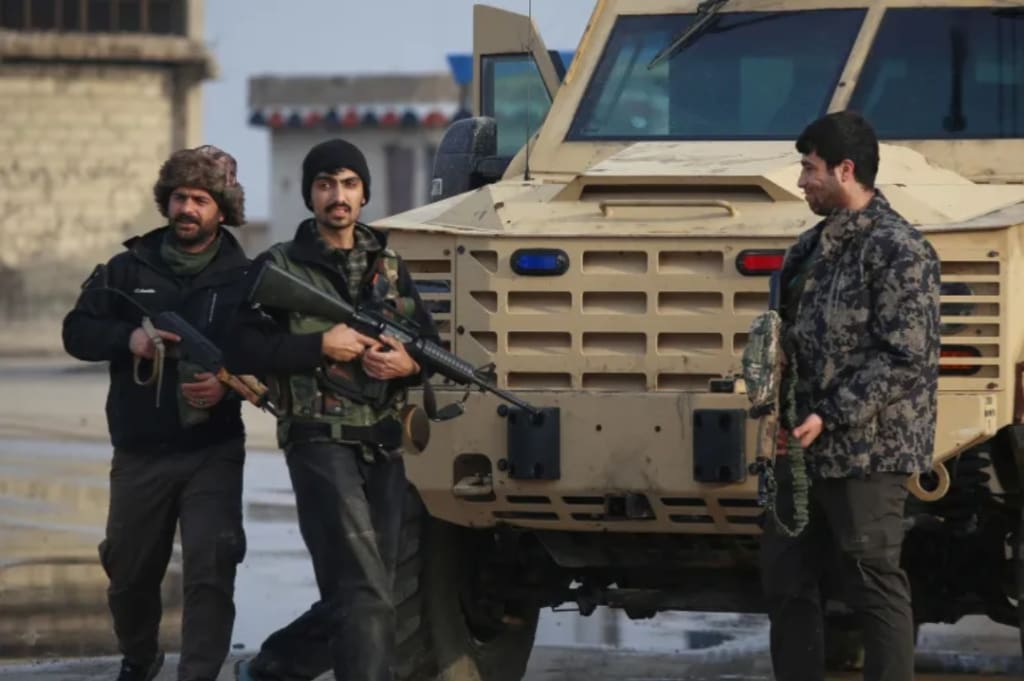
In late January 2026, a major Syrian army offensive against the Kurdish‑led Syrian Democratic Forces (SDF) shook northeastern Syria, triggering both celebrations and alarm among civilians. As government forces advanced into cities such as Raqqa and Deir Az Zor, many Arab‑majority residents greeted the end of SDF control with jubilation. But for Kurdish and minority communities, the same developments have sparked profound fear about safety, rights, and survival — illustrating the deep divides that continue to shape Syria more than a decade after the civil war began.
---
Shifting Control in Northeastern Syria
The offensive took on new momentum after the SDF — long a key player in northeastern Syria, and previously supported by the United States — withdrew from several towns and cities in mid‑January. Images and videos circulated widely showing spontaneous celebrations in places like Raqqa and Deir Az Zor, where some residents felt liberated by the return of Syrian army control after years under Kurdish administration.
This shift reflects a rapid reconfiguration of power in areas east of the Euphrates, where the Syrian military has been advancing and taking over administrative functions. Government troops entering these territories symbolize a reassertion of state authority — a moment that many Syrians who opposed Kurdish rule see as a potential step toward reunification.
---
A Tale of Two Reactions
Uplift and Relief for Some
Among Arab majorities in eastern Syria, there is relief that the SDF’s autonomous governance has ended. Many residents credited the Kurdish leadership with discrimination in resource distribution and governance, believing that the army’s return could bring stability and easier access to central services. These sentiments of liberation are rooted in long‑standing grievances over language, representation, and economic control during the years of SDF administration.
Furthermore, for civilians exhausted by years of conflict, any shift that seems to promise renewed state stability and reduced factional conflict kindles hope. Some in these regions see reunification under Syrian state structures as a pathway to economic revival and normalized governance after more than a decade of disruption.
---
Fear and Anxiety for Others
For many Kurds and other minority groups, the Syrian army’s return has triggered deep existential fear — fears rooted in historical mistrust and memories of past repression. Kurdish civilians in places like Kobani and Hasakah are particularly wary. Many have fled their homes, worried about reprisals, loss of cultural rights, and the erosion of protections they previously enjoyed.
Reports emerging from within Kurdish enclaves describe disrupted supplies, blockaded towns, and limits on humanitarian access. In Kobani, for example, residents have reported cuts to electricity and water and shortages of food and medical supplies, exacerbating humanitarian stress even as formal hostilities decline.
These fears are magnified by broader uncertainty over whether the integration of Kurdish fighters into Syrian state structures can genuinely preserve cultural, administrative, and security rights. Many Kurds remain unconvinced that the government will protect them from discrimination or political marginalization in the long term.
---
Fragile Ceasefire and Ongoing Risks
Although a ceasefire has somewhat reduced direct combat, the situation on the ground remains volatile. Syria’s Defense Ministry acknowledged violations during the clashes and has stated that it is pursuing disciplinary actions. Yet Kurdish communities argue that the security arrangements governing the withdrawal and integration are fragile, and mutual distrust remains high.
Observers note that the ceasefire agreement allows limited Kurdish self‑administration in certain areas but restricts government forces’ entry into major Kurdish cities — a compromise that leaves many questions unresolved. As humanitarian corridors remain active in some regions, large numbers of displaced civilians continue to seek safety amid harsh winter conditions and scarce resources.
---
Humanitarian and Political Consequences
The offensive’s impact extends beyond immediate territorial control. Tens of thousands of civilians have been displaced by the shifts in power, and ethnic tensions — already long simmering — risk boiling over again. Kurds, Arabs, and other minorities now find themselves negotiating a future in which local governance, security, and cultural rights are deeply contested.
Political analysts warn that without substantial guarantees for minority rights and inclusive governance frameworks, the current gains in territorial unity could be overshadowed by new cycles of resentment and instability. The lack of broad trust between communities and governing forces poses a long‑term challenge for any cohesive national solution.
---
Perspectives From Civilians
Voices on the ground reflect the emotional complexity of the moment:
Arab residents express cautious optimism, hoping that renewed Syrian government control will reduce sectarian tensions and improve public services.
Kurdish civilians and local leaders speak of deep fears about cultural repression, security, and being forced into a political identity they do not fully endorse.
Many families, regardless of background, are still coping with the war’s broader consequences — displacement, economic precarity, and psychological trauma.
---
Looking Ahead: Stability or Fragmentation?
As external actors maintain interest in the region — including the United States, Russia, and neighboring states — the Syrian conflict’s broader geostrategic dimensions remain unresolved. The U.S. has publicly expressed conditional satisfaction with the latest developments, framing them as steps toward ending extremist threats, while Russia continues to engage with Damascus on military and political terms.
Yet for ordinary Syrians, the bigger questions persist: Will renewed state control bring lasting peace? Can minority rights be protected? Will economic and social stability return? These questions are not easily answered, especially in a country where more than a decade of war has upended lives and reshaped identities.
---
Conclusion
The Syrian army’s recent offensive is emblematic of a country still grappling with the legacy of war. For some, the army’s advance over Kurdish‑held areas symbolizes hope for reunification and renewed governance. For others — especially Kurds and minority communities — it stirs profound fear about repression, marginalization, and uncertainty about the future. As ceasefires ebb and flow and political negotiations continue, Syria’s path toward peace remains fraught, reflecting the deep divisions and unresolved tensions that have defined the nation for years.
About the Creator
Keep reading
More stories from Salaar Jamali and writers in The Swamp and other communities.
Germany Pushes for ‘Two‑Speed’ Europe With New Bloc of Six Leading Economies
In late January 2026, Germany — together with France and four other major EU economies — launched a high‑profile initiative to create a “two‑speed” European Union model aimed at breaking policy stagnation and enhancing Europe’s global economic and strategic competitiveness. The proposal contemplates a core group of six leading economies within the 27‑member bloc that would cooperate more quickly and decisively on shared priorities, especially where consensus among all member states has traditionally slowed progress.
By Salaar Jamaliabout 11 hours ago in The Swamp
Fatal Shooting of Minneapolis Man by Federal Agents Raises Questions
In a chilling turn of events, a man was shot dead by federal agents in Minneapolis on the morning of January 23, 2026. The incident has sparked both public outcry and a flurry of questions regarding the circumstances that led to the fatal confrontation. While details remain scarce, the shooting has put the spotlight on law enforcement practices and their use of force, drawing scrutiny from local communities, legal experts, and human rights organizations alike.
By Ayesha Lashari4 days ago in The Swamp
US, Ukraine and Russia Delegations Head to Abu Dhabi for First Trilateral Talks
In a move that could shape the trajectory of the ongoing conflict in Eastern Europe, delegations from the United States, Ukraine, and Russia are set to meet in Abu Dhabi for their first trilateral discussions. The historic talks, scheduled to take place at the UAE capital, aim to open channels for dialogue after months of heightened tensions and military escalation.
By Aarif Lashari6 days ago in The Swamp


Comments
There are no comments for this story
Be the first to respond and start the conversation.