
French Prosecutors Ask Appeal Court to Keep Ban on Marine Le Pen Running for Office
Legal showdown threatens Le Pen’s 2027 presidential ambitions Prosecutors argue political ban is needed to protect public trust Appeal ruling may redefine accountability for French politicians National Rally faces uncertain future as courts weigh disqualification Judicial decision sparks debate over democracy and rule of law France’s far-right leader fights to stay on the political stage Court case exposes deep divisions in French politics A verdict that could change the course of France’s next election

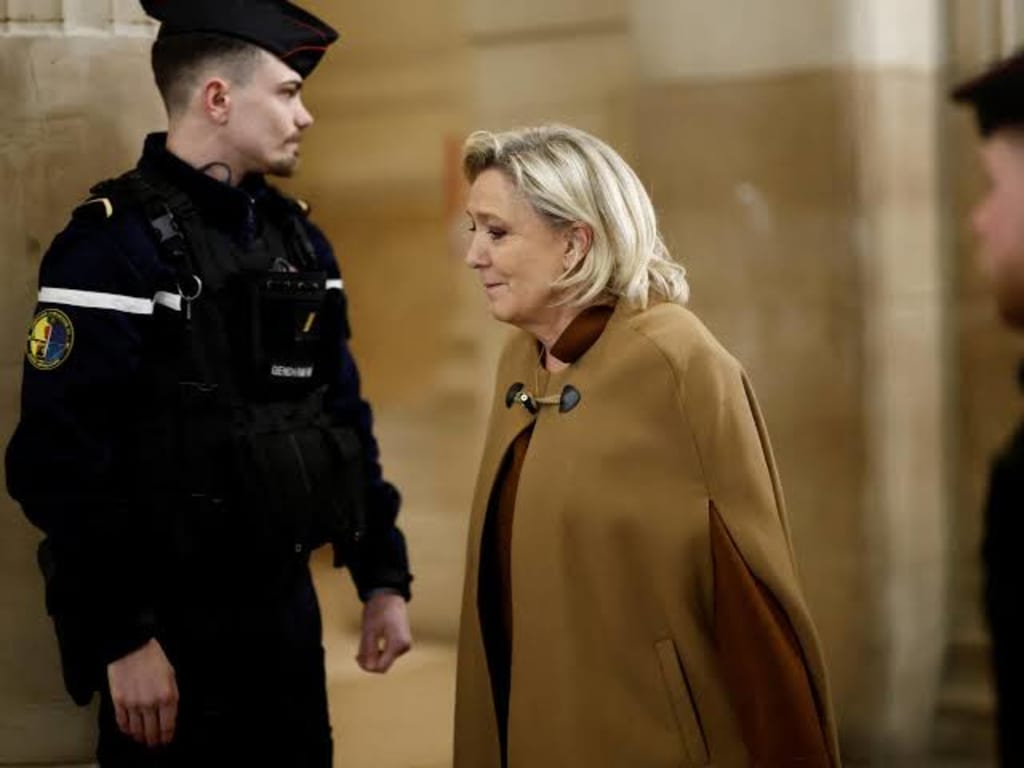
French prosecutors have formally requested that an appeals court uphold a ruling barring far-right leader Marine Le Pen from running for public office, a move that could dramatically reshape France’s political landscape ahead of future elections.
The request follows a lower court decision that found Le Pen guilty of misuse of public funds linked to her party’s management of European Parliament resources. The ruling included a ban on holding or seeking public office, along with a suspended prison sentence and a substantial fine. Le Pen has denied wrongdoing and vowed to fight the verdict, calling it a politically motivated attempt to remove her from democratic competition.
The Paris Court of Appeal is expected to consider the prosecutors’ submission in the coming months, with a final decision likely before France’s next major electoral cycle.
A Case with Major Political Consequences
Le Pen, the longtime leader of the National Rally party and a three-time presidential candidate, remains one of the most influential figures in French politics. Polls consistently place her or her party near the top in voter support, particularly among working-class and rural voters frustrated with inflation, immigration and public services.
If the ban is upheld, Le Pen would be legally prevented from standing in any election, including a potential 2027 presidential run. Analysts say this would create an unprecedented vacuum on the French far right and force her party to accelerate its search for a successor.
Prosecutors argued that the ban is justified by the seriousness of the offense and the need to protect public trust in political institutions.
“This case concerns the misuse of European public funds over several years,” a judicial source said. “The sanction reflects the gravity of the breach and the importance of accountability for elected officials.”
Allegations of Misuse of EU Funds
The case centers on accusations that Le Pen and senior members of her party improperly used money allocated for European Parliament assistants to pay party staff in France. Investigators said the funds were diverted away from legitimate parliamentary work and instead supported the party’s national operations.
Le Pen has consistently rejected the charges, saying the case involves administrative disagreements rather than fraud.
“This is not justice, it is political warfare,” she said after the initial verdict. “They want to stop me from representing millions of French people who vote for us.”
Her legal team has argued that the ruling violates democratic principles by excluding a major opposition figure from elections. They insist that any punishment should be limited to financial penalties rather than political disqualification.
Prosecutors Push Back
In their appeal submission, prosecutors countered that the ban is proportionate and necessary to deter abuse of public resources.
“Public office requires exemplary conduct,” prosecutors wrote, according to court sources. “When that trust is broken, sanctions must be strong enough to restore confidence in democratic institutions.”
They also rejected claims of political bias, noting that the judiciary operates independently and that similar penalties have been imposed in past corruption cases involving politicians from across the political spectrum.
Legal experts say the appeal court will weigh both the legal basis of the conviction and the broader implications of barring a leading political figure from office.
“This is not just a legal matter, it’s a constitutional and political one,” said a Paris-based constitutional lawyer. “The court must balance the rule of law with the democratic impact of its decision.”
Reactions Across the Political Spectrum
The case has sparked fierce debate in France. Supporters of Le Pen accuse the government and judiciary of trying to neutralize a popular opponent through the courts. They point to her strong polling numbers as evidence that the ruling undermines voters’ will.
“This is an attack on democracy,” said Jordan Bardella, president of the National Rally party. “They cannot defeat us at the ballot box, so they try to defeat us in the courtroom.”
Government officials have avoided direct comment on the case, stressing the independence of the judiciary. President Emmanuel Macron’s office reiterated that “the courts decide according to the law, not political convenience.”
Opposition figures on the left and center have offered mixed reactions. Some welcomed the ruling as proof that no one is above the law. Others expressed concern that banning a major political leader could fuel distrust and conspiracy theories among voters.
Impact on the Far Right
If Le Pen is disqualified, attention will turn to Bardella, a rising figure within the party who has cultivated a more youthful and media-friendly image. While popular among younger supporters, he lacks Le Pen’s experience and national recognition.
Political analysts say the party could struggle to maintain unity without its longtime figurehead.
“Marine Le Pen is not just a candidate, she is the brand,” said one political strategist. “Removing her would force a redefinition of the far-right movement in France.”
However, some observers believe the controversy could strengthen the National Rally by portraying it as a victim of elite institutions.
“Martyrdom has historically benefited populist movements,” said a political scientist at Sciences Po. “This could energize their base rather than weaken it.”
Awaiting the Court’s Decision
The appeals court is not expected to rule immediately, but the prosecutors’ request ensures the case will remain at the center of political debate for months to come.
For Le Pen, the stakes could not be higher. A confirmed ban would mark the end of her personal presidential ambitions after more than a decade of campaigning. For France, the outcome could reshape the 2027 election and redefine the boundaries between justice and politics.
As the country watches the legal process unfold, the case highlights a fundamental tension in modern democracies: how to enforce accountability while preserving the right of voters to choose their leaders. Whether the court sides with prosecutors or overturns the ban, the decision is certain to leave a lasting impact on France’s political future.
About the Creator
Fiaz Ahmed
I am Fiaz Ahmed. I am a passionate writer. I love covering trending topics and breaking news. With a sharp eye for what’s happening around the world, and crafts timely and engaging stories that keep readers informed and updated.
Keep reading
More stories from Fiaz Ahmed and writers in The Swamp and other communities.
People Are Dying, You Have to Help’: Guardiola Decries Wars in Sudan, Ukraine and Palestine
Manchester City manager Pep Guardiola has used his global platform to speak out against the ongoing wars in Sudan, Ukraine and Palestine, urging world leaders and ordinary citizens alike to do more to protect civilians and prevent further suffering. Speaking at a press conference ahead of a domestic league fixture, Guardiola departed from football matters to address what he described as a “moral responsibility” to acknowledge human tragedy beyond the pitch. His remarks followed a question about the role of athletes and public figures in responding to international crises. “People are dying every day,” Guardiola said. “Not soldiers only. Families, children, mothers, innocent people. You have to help. You cannot just look away because it’s not in your country.” A Rare Political Intervention Guardiola is known for occasionally addressing social and political issues, but his comments were unusually direct and wide-ranging. Referring to conflicts in three different regions, he stressed that humanitarian suffering should transcend political divisions. “In Sudan, in Ukraine, in Palestine – it doesn’t matter where,” he said. “The pain is the same. A child who loses his home in Gaza feels the same fear as a child who loses his home in Kyiv or Khartoum.” The Spanish coach made clear that his message was not aimed at assigning blame but at emphasizing compassion and action. “I’m not a politician. I’m not a general. I’m a football manager,” he said. “But I’m a human being. And as human beings, we cannot accept that this is normal.” Spotlight on Forgotten Crises Guardiola’s inclusion of Sudan alongside Ukraine and Palestine drew attention to a conflict that has received comparatively limited international coverage. Sudan’s civil war, which erupted in 2023 between rival military factions, has displaced millions and caused widespread famine and disease. Aid agencies estimate that Sudan now faces one of the world’s worst humanitarian disasters, with entire cities cut off from food, clean water and medical care. Guardiola said he was particularly troubled by how quickly global attention shifts from one crisis to another. “Some wars are on television every day. Others are invisible,” he said. “But for the people who live there, it is their whole life.” War and the World of Football Guardiola acknowledged that football exists in a bubble of wealth and entertainment, often disconnected from the realities faced by ordinary people in war zones. However, he argued that this privilege brings responsibility. “We play games, we talk about tactics, about titles, about contracts,” he said. “Meanwhile, there are people who don’t know if they will eat tomorrow. That contrast is very hard to accept.” The manager praised players who have used their platforms to raise funds for humanitarian causes and called on football institutions to do more to support relief efforts. “Football has power,” he said. “Millions listen. If even a small part of that helps save lives, then it is worth speaking.” Mixed Reactions Guardiola’s comments quickly spread across social media and news outlets, drawing praise from some and criticism from others. Supporters applauded him for highlighting humanitarian suffering and showing empathy beyond sport. “More public figures should speak like this,” one fan wrote online. “It’s about humanity, not politics.” Critics, however, accused him of oversimplifying complex conflicts or stepping outside his professional role. Some argued that football managers should avoid political statements altogether. Asked about potential backlash, Guardiola remained calm. “I understand not everyone will agree,” he said. “But silence is also a choice. And I don’t want to choose silence when people are suffering.” The Human Cost of Conflict Guardiola referenced images of destroyed neighborhoods, hospitals under fire and families fleeing their homes. He said such scenes should challenge people everywhere to rethink their priorities. “When you see a mother carrying her child with nothing but a bag, you ask yourself: what kind of world are we building?” he said. “We spend so much energy on hate and weapons. Imagine if we spent that energy on helping.” He also emphasized that compassion should not be selective. “It cannot be only for one country or one people,” he said. “If you cry for Ukraine, you must cry for Palestine. If you cry for Palestine, you must cry for Sudan. Otherwise, it is not justice. It is politics.” A Call for Action While Guardiola did not propose specific policy solutions, he urged governments and international organizations to prioritize humanitarian corridors and ceasefires. He also encouraged individuals to support charities and remain informed. “Helping does not always mean stopping a war,” he said. “Sometimes it means sending food, medicine, shelter. Sometimes it means raising your voice so the world does not forget.” His remarks echo a growing trend of athletes and coaches engaging in global issues, reflecting the influence sports figures now hold beyond stadiums. Beyond Football As Guardiola returned to questions about his team’s next match, his earlier words lingered. For many, the sight of one of football’s most successful managers speaking emotionally about war underscored how deeply global conflicts resonate even in spaces designed for escape and entertainment. “Football is beautiful,” Guardiola said in closing. “But life is more important. And right now, life is being destroyed in too many places.” In an era when sports and politics often collide uneasily, Guardiola’s message was simple and human: suffering anywhere should concern people everywhere. Whether his plea will translate into greater awareness or action remains uncertain, but his voice added to a chorus calling for empathy in a fractured world.
By Fiaz Ahmed 4 days ago in The Swamp
Why Black History Matters in America?
The United States of America is celebrating their 250th anniversary in 2026. I'm proud to be an American and as someone who was born here, I wouldn't imagine myself living anywhere else. This is a country where opportunities are possible. Where anyone can be successful in anything they desire to do. Equality, community, and togetherness are the backbones of what America is and should be about. However, we have an administration who wants to erase and disregard those who have made positive, meaningful impacts in our country, specifically Black figures, such as Martin Luther King, Jr., Rosa Parks, and Maya Angelou. President Trump and his administration have been constantly complaining and fighting against what they call the "Woke agenda". They use this excuse as a distraction from other issues they refuse to address, such as the high cost of living, climate change, and inflation. That equality is dividing America, when in reality, it's bringing us together. Being woke is not tied to a specific political party. No matter where you stand on the political spectrum, you can still care about other people and their plights. Compassion and empathy for others isn't tied to a political party, either. We were taught as children to treat others the way we want to be treated and not judge others because they're different from us. Caring about others isn't a personal attack on your beliefs. It doesn't make you any less of a person. People who are easily offended over African American figures, past or present, or anything related to it, are grasping at straws. Current and future generations need to know who people like Harriet Tubman and Shirley Chisholm were, especially in the classroom. Black History is part of American History. It should be recognized, not hidden or forgotten. Besides, you can't shield children from everything, just because your feelings are easily hurt.
By Mark Wesley Pritchard 6 days ago in The Swamp
Japan’s record-breaking snowfalls – in pictures
Japan is enduring one of its harshest winters in decades as record-breaking snowfall blankets large parts of the country, creating scenes of striking beauty while causing serious disruption to daily life. From the snow-laden rooftops of rural villages to frozen city streets, images captured across the nation reveal both the power of nature and the resilience of communities facing extreme weather. Meteorological authorities confirmed that snowfall levels in several northern and western prefectures have surpassed historical records, with some regions receiving more than three meters of snow in less than a week. The most heavily affected areas include Niigata, Toyama, Fukui, and parts of Hokkaido, where persistent storms driven by cold Siberian air masses have combined with moisture from the Sea of Japan to produce relentless downpours of snow. Photographs from these regions show entire neighborhoods transformed into narrow corridors between towering snowbanks. Cars are buried almost completely, and only the tops of road signs and fences remain visible. In mountain towns, residents have been forced to carve tunnels through snow just to reach shops and medical facilities. Daily Life Under Heavy Snow In cities such as Niigata and Kanazawa, commuters struggled to navigate icy pavements and snow-clogged streets. Rail services were delayed or suspended as crews worked around the clock to clear tracks. Airports in northern Japan reported dozens of flight cancellations due to reduced visibility and hazardous runway conditions. Rural communities faced even greater challenges. Several villages were temporarily isolated after mountain roads became impassable. Local governments dispatched emergency teams to deliver food, fuel, and medical supplies to residents cut off by the storms. One widely shared photograph shows elderly residents working together to shovel snow from the roof of a traditional wooden house. Authorities have warned that clearing rooftops is particularly dangerous due to the risk of falls and collapsing structures, yet many households have little choice as the weight of snow threatens buildings. Schools in affected areas closed for several days, while local councils urged people to avoid unnecessary travel. Emergency shelters were prepared for those experiencing power outages or heating failures during the coldest nights. Infrastructure Under Strain Japan’s infrastructure, known for its preparedness against natural disasters, has been tested by the sheer volume of snow. Specialized snow-clearing trains were deployed to keep key rail lines operational. Highway maintenance crews worked in rotating shifts to reopen major routes and prevent accidents. Power companies reported scattered outages after snow-laden tree branches fell onto transmission lines. Hospitals and care facilities implemented contingency plans to ensure staff could reach work safely, sometimes arranging overnight accommodation for essential personnel. Images from the storms highlight the scale of the response: convoys of snowplows pushing through blizzard conditions, soldiers assisting residents with snow removal, and volunteers distributing hot drinks to stranded travelers. Beauty Amid Hardship Despite the disruption, the snowfall has produced scenes of extraordinary beauty that have captivated photographers and social media users worldwide. Iconic temples and shrines appear draped in white, while historic villages such as Shirakawa-go resemble winter postcards with steep-roofed houses crowned by thick layers of snow. In Kyoto and Kanazawa, tourists gathered to photograph snow-covered torii gates and lantern-lit streets glowing softly through falling flakes. Hot spring resorts framed by icy trees became symbols of calm amid the chaos. Ski resorts reported exceptional conditions, with fresh powder drawing winter sports enthusiasts from across the country. However, resort operators warned visitors about avalanche risks and urged strict adherence to safety guidelines. “These images show both sides of winter,” said a Tokyo-based photographer whose work documenting the storms spread widely online. “There is beauty, but also struggle. Each photo represents people trying to live their lives in extreme conditions.” Climate and Weather Patterns Meteorologists explained that the record snowfall was driven by a powerful cold front from Siberia interacting with warm, moisture-rich air over the Sea of Japan. This created repeated snow bands that stalled over the same regions for days. Climate scientists note that while heavy snowfall is common in parts of Japan, the intensity and persistence of this year’s storms raise questions about changing weather patterns. Warmer oceans can hold more moisture, increasing the potential for heavy precipitation when cold air systems arrive. “Climate change does not simply mean warmer winters,” said a climate researcher. “It also increases the likelihood of extreme events. When cold air meets higher moisture levels, snowfall can become more intense.” Human Stories of Resilience Among the most compelling images are those showing community spirit. Volunteers helped elderly neighbors clear paths to their homes. Shopkeepers used heaters and hot water to keep entrances open. Children turned snow-covered schoolyards into playgrounds during brief breaks from the storms. One resident in Toyama described waking to find his front door blocked by nearly two meters of snow. “It looked beautiful from the window,” he said. “But then I realized I couldn’t even step outside.” Local authorities launched safety campaigns urging residents to wear protective helmets when clearing snow and to work in pairs whenever possible. Looking Ahead Forecasters warned that further snowfall could occur in the coming days, although temperatures are expected to rise gradually later in the week. The melting snow, combined with rain, could raise the risk of flooding and landslides in vulnerable areas. For now, Japan remains under the grip of a winter that will likely be remembered for its severity. The images captured during these storms serve as a powerful visual record of nature’s force and the human capacity to adapt. As cameras continue to document snow-covered streets, temples, and villages, they tell a story not only of record-breaking weather but also of endurance, cooperation, and the fragile balance between beauty and danger in one of the world’s most winter-hardened nations.
By Fiaz Ahmed Brohi3 days ago in The Swamp
Writing About Writing: The Rainbow Trap
The good thing about living in modern times is that LGBTQ representation in media is increasing. Not just in niche and Independant media, either, but also in mainstream media. Books, movies, TV shows, comics... they're finally catching on that LGBTQ+ people form a significant part of their audience, and deserve to see themselves on screen and in fiction, not just as victims in documentaries and true crime shows.
By Natasja Rose4 days ago in Writers



Comments
There are no comments for this story
Be the first to respond and start the conversation.